Islamist attacks and great-power manoeuvres place the revolution in existential threat
~ Blade Runner ~
Recent weeks’ clashes between Syrian state forces and Kurdish forces have developed into a multi-front assault on Rojava, threatening open war as a means of forcing it to integrate into an Islamist state structure. Syrian Democratic Forces (SDF) are resisting sustained attacks using drones and heavy weapons by Damascus-affiliated militias in Hasakeh and Raqqa, including near two prisons housing thousands of Islamic State (ISIS) fighters. SDF confirmed that repeated assaults on al-Shaddadi prison were initially repelled at heavy cost before the facility ultimately fell with thousands of ISIS fighters escaping, despite its proximity to a US-led coalition base that did not intervene.
The SDF has lost significant territory over the past week, including large areas it previously controlled east of the Euphrates. Grassroots channels report Islamist forces are encircling Kobane, a city pressed against the Turkish border to the north. Northeast Syria’s ruling seizing Union Party (PYD) has called on “Kurdistani forces to declare a general mobilisation,” warning that “Kurds in Rojava face the threat of extermination.”
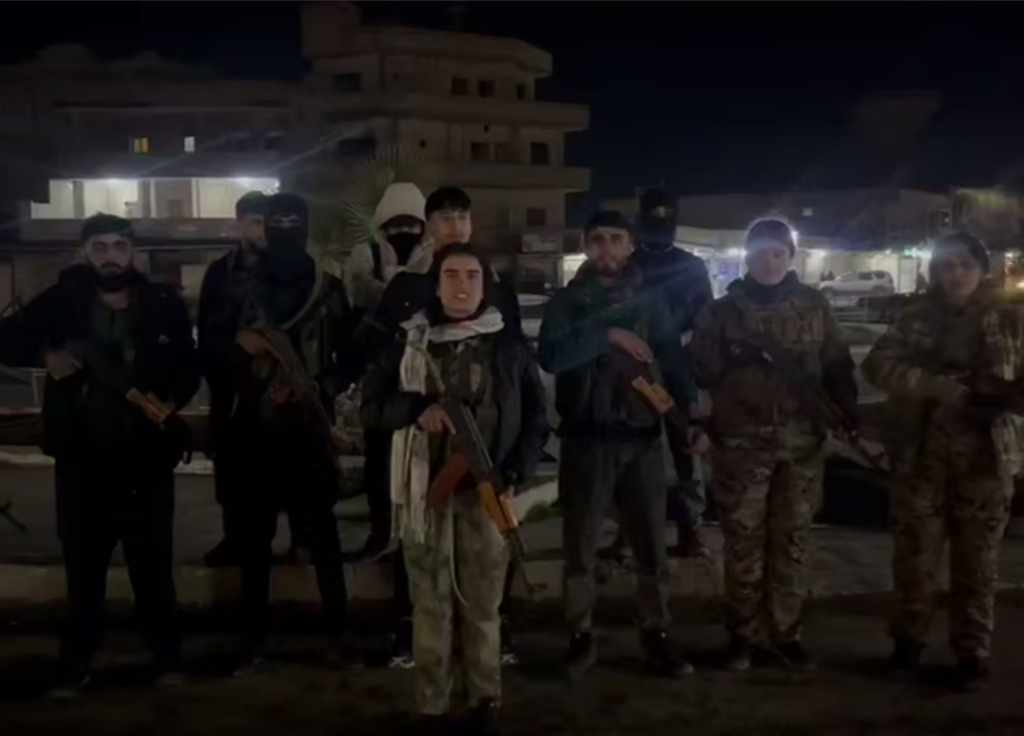
The ceasefire declared on Sunday 18 January is being widely ignored on the ground by the coalition of Islamist forces — described in much of the mainstream media as the “Syrian government forces” — with attacks on SDF and YPJ (Women’s Protection Units) positions and civilian areas continuing. Reports include femicides in Raqqa, executions of captured fighters, and assaults on residents attempting to prevent kidnappings. This escalation follows a wider wave of massacres across Syria, which the SDF, YPJ and Internal Security Forces have been attempting to contain.
SDF leadership confirmed that following a meeting with the leader of Hayat Tahrir al-Sham (HTS) and de facto Syrian president Ahmed al-Sharaa, alongside US envoy Tom Barrack, on 18 January, a 14-point agreement was signed under which its forces would begin pulling back from Raqqa and Deir ez-Zor. The SDF stated that agreeing to the ceasefire was necessary to avoid open civil war and to limit civilian bloodshed, as the Islamist coalition advanced west of the Euphrates into areas previously under SDF control, pursuing confrontation marked by severe violence and displacement.
Under the agreement, SDF fighters are expected to be merged individually into Syria’s defence and interior ministries. Control of border crossings, oil and gas fields — including the al-Omar field, where Shell moved to exit just as Damascus control was being consolidated — and detention sites holding Islamic State prisoners is set to transfer to Damascus. Limited concessions allow the SDF to nominate some officials for central government roles, and Hasakeh province is expected to receive a consensus-appointed governor. The agreement also requires the expulsion of foreign members linked to the Kurdistan Workers’ Party (PKK), which fought a decades-long insurgency in Turkey.
In return, Damascus has offered concessions on language recognition and citizenship rights for Kurds, framed as steps toward national reconciliation. Kurdish political forces have rejected these measures as attempts to hollow out the autonomy project while delegitimising Rojava’s self-defence structures and collective institutions that guarantee safety and freedom for all ethnic and religious communities.
The timeline for implementation remains unclear, but mainstream coverage increasingly presents a Syrian government portrayed as sufficiently consolidated to impose an impossible strategic choice on Rojava — a trajectory that could effectively terminate the revolutionary project. SDF leadership reportedly confirmed a further meeting with al-Sharaa in Damascus on Monday 19 January, after which additional details were to be be made public.
The SDF confirmed withdrawal from Deir ez-Zor — Syria’s main oil and wheat region — and from Raqqa, home to major hydroelectric infrastructure, abandoning border crossings and its main base in the area and redeploying to rearward positions.
Earlier in Aleppo, the self-administered Kurdish neighbourhoods — long a refuge for persecuted minorities — came under sustained attack by jihadist forces, resulting in heavy civilian casualties and mass displacement. SDF units withdrew alongside thousands of residents to avoid escalation into urban warfare. Subsequent advances pushed toward the surrounding countryside and the Euphrates corridor previously under SDF control.
Alongside frontline fighting, autonomous sources reported attempts to destabilise the administration from within, including counter-insurgency agitation in Raqqa and around Hasakeh linked to entrenched tribal power structures. These networks, rooted in patriarchal clan authority and local economic control, have historically functioned as mechanisms of social discipline, suppressing women and exploiting precarious labour, and are reportedly being mobilised to undermine self-administration.
State-aligned outlets circulated footage videos showing the destruction of a statue of a woman YPJ fighter — a symbol of women’s resistance against ISIS. The political symbolism is unmistakable: misogynistic violence remains embedded within forces now being quietly rehabilitated as state authority.
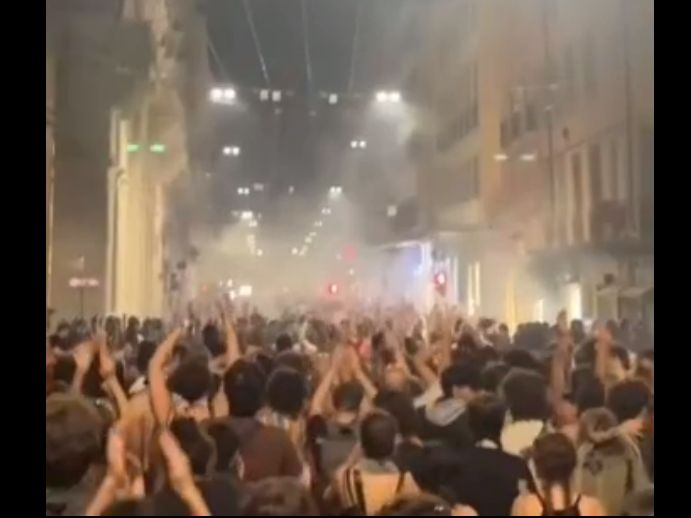
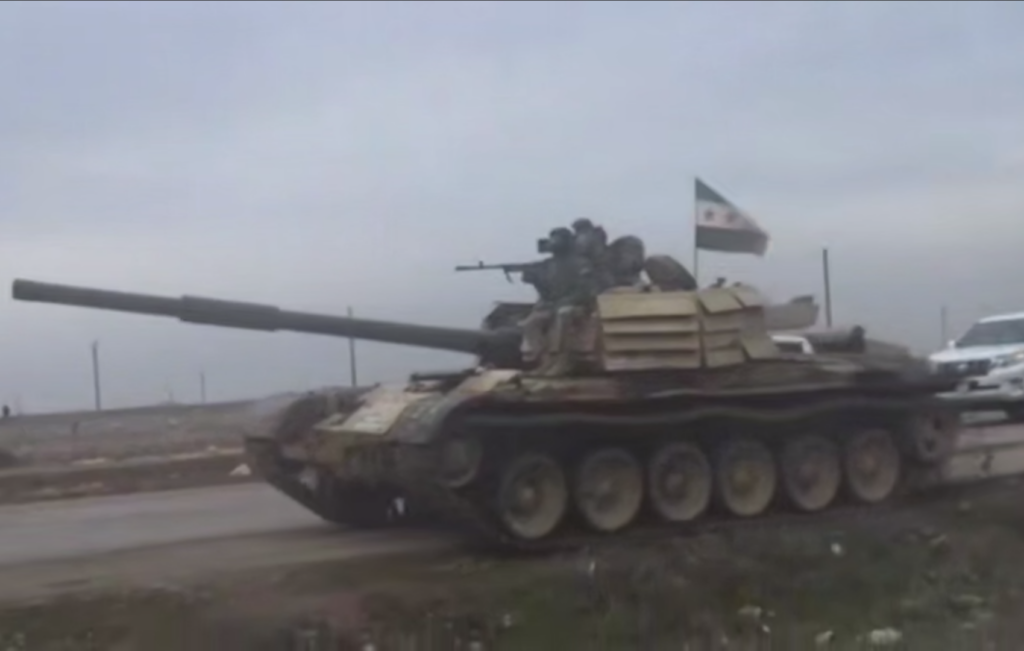
Around the Tishreen dam, SDF forces resisted Turkish-backed Islamist attacks, with armed groups repositioning in nearby villages after tactical withdrawals. In Raqqa, SDF units detonated bridges across the Euphrates to slow advancing forces, while clashes continued inside and around the city. SDF and YPJ units reported ambushes and sniper operations against Islamist formations, including former ISIS sleeper cells. At the same time, mainstream media adopted narratives highlighting “crowds celebrating the city’s liberation.”
The new agreement builds on an earlier draft signed in March 2025 that vaguely outlined integration into a unified Syrian nation-state — a framework fundamentally incompatible with Rojava’s confederal administration and the region’s multi-ethnic reality. Rojava has consistently proposed a horizontal, decentralised confederal model for Syria, which the US, Turkey and other major powers have declined to support.
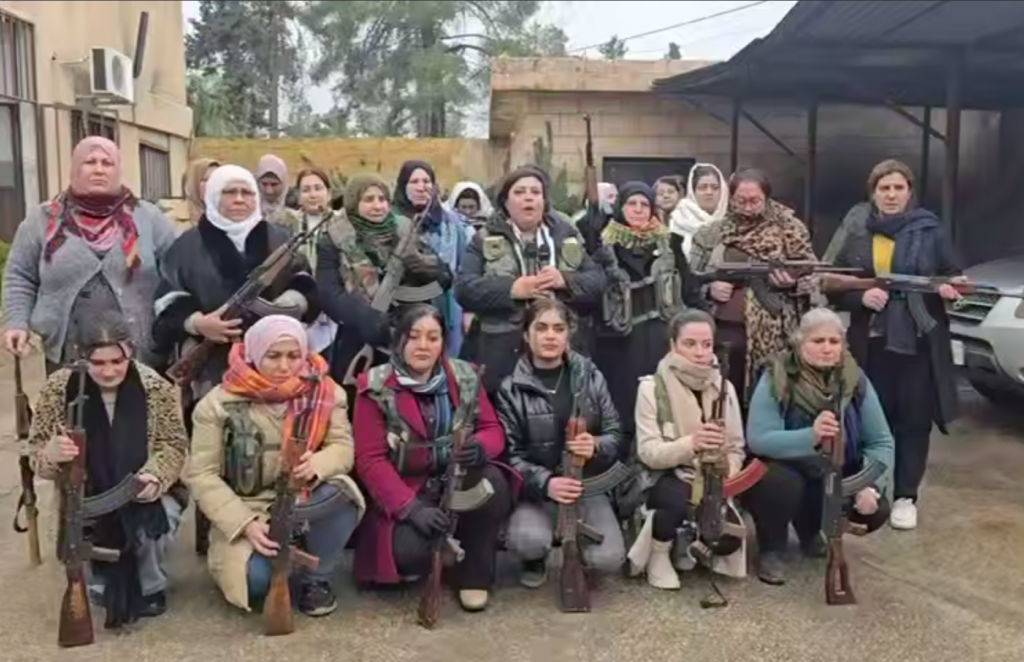
Turkish forces have meanwhile remained heavily mobilised along the border, signalling readiness for further escalation to compel integration. Kurdish organisations interpret US-brokered talks between Israel and Damascus on 5 January as part of a broader attempt to formalise informal zones of influence, with Israeli consolidation expanding in the south and northwest and Turkish pressure intensifying against Rojava under tacit international consent.
The current regime in Damascus is openly backed by Ankara, which has pursued the elimination of Kurdish autonomy for decades as a long-term strategic priority. Kurdish self-administration in Syria and Iraq has also shaped political expectations among Kurdish populations in Iran, deepening Ankara’s anxiety over regional continuity of Kurdish autonomy and the possibility of a fourth Kurdish zone emerging within Turkey itself — a development incompatible with both Turkish state doctrine and western models of centralised state stability.
According to PYD representatives, the new Syrian regime increasingly functions as an Islamist caliphate imposing religious governance while drawing on networks of former jihadist fighters and dormant ISIS cells assembled during the post-Assad transition. Remzi Kartal, co-chair of People’s Congress of Kurdistan or Kongra-Gel (KGK), reiterated that any arrangement imposed on Rojava that excludes democratic autonomy “will not be accepted,” warning that the military balance in Rojava would not mirror the collapses seen in Tabqa or Aleppo. The Kurdistan Communities Union (KCK) likewise called for mobilisation and resistance, invoking the historic siege of Kobanê and urging that “the spirit of resistance of Kobanê must rise.”
As fighting, ceasefire manoeuvres and diplomacy unfold in parallel, the struggle over Rojava is also being fought in how the conflict itself is framed. Mainstream outlets such as Reuters, AP, BBC and the Guardian present the situation primarily as a problem of territorial stabilisation, sectarian rivalry and nation-state restoration. This framing obscures a deeper political confrontation between authoritarian Islamist consolidation and a long-running experiment in communalist, feminist and multi-ethnic self-administration. The information war surrounding Rojava forms part of a broader effort to contain and neutralise the social revolution while legitimising the ultra-authoritarian forces now being rehabilitated as Syria’s governing authority — threatening communities with renewed repression, gendered violence and ethnic cleansing.