A brief historical overview of Black anarchist militance in the early Brazilian labour movement (1906-1930)
~ Carlos Junior ~
Although only a few pages have been dedicated to Black libertarian militants in Brazil, they were at the forefront of important events and achievements in the Brazilian labour movement.
The chronology would undoubtedly begin with the teacher, philosopher, and journalist Antônio Pedro de Figueiredo (1814–1859). Figueiredo founded the magazine O Progresso (1846–1848) which featured contributions from other writers who, like Figueiredo, were influenced by French “utopian” socialism.
In Recife during the 1840s, there was a small colony of French migrants, including the socialist engineer Louis Vauthier, who brought several books by socialist authors such as Saint-Simon, Owen, and Fourier, as well as the already self-proclaimed anarchist Proudhon. In 1849, Figueiredo condemned slavery and large landownership in Pernambuco based on Proudhon’s maxim: “destroy despotism embodied in large landed property.” Because of his socialist ideas, Figueiredo suffered constant racist insults from his opponents.
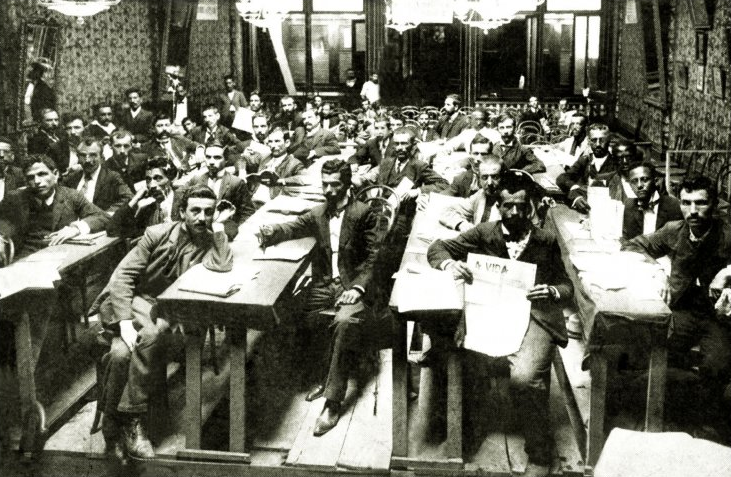
The first Black anarchists began appearing frequently in newspapers and periodicals during the 1910s and 1920s. At that time, Kropotkin’s libertarian communism, Pouget’s revolutionary syndicalism, Ferrer’s pedagogy, and, to some extent, Tolstoy’s ideas were the major influences on libertarians, associations, and strike movements. Photographs from the First Brazilian Workers’ Congress (1906), held in Rio de Janeiro, show that a large portion of the syndicalist representatives present were Black.
Between 1917 and 1920, major general strikes with strong anarchist influence erupted throughout Brazil. The country’s regional capitals and industrial centres—Rio de Janeiro, São Paulo, Porto Alegre, Belém, Salvador, and Recife—became epicentres of movements that brought thousands of workers into the streets demanding anything from the eight-hour workday and wage increases to the end of private property and the abolition of the state.
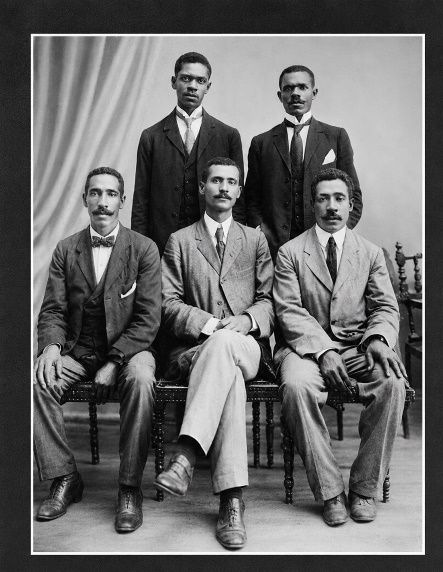
We remember numerous Black anarchists participated in these strikes and were arrested, tortured, or killed: João da Costa Pimenta, Armando Gomes, Hermogêneo Silva, Custódio Paes, Eustáquio Marinho, Justiniano Silva, Pedro Lessa, Olímpio Santana, João Lopes, Minervino Oliveira, Sinval Borges, Cândido Costa, José Argolo, José Leandro, Sebastião Silva, Tomaz Derliz Borges, Laudelina Silva, Domingos Passos, José da Silva Gama, Abílio José, José Domiense, Luiz França, Djalma and Cristiano Fettermann.
Cândido Costa was one of the most active anarchists in Rio de Janeiro during the 1910s. His anticlerical and libertarian lectures attracted hundreds of workers. He also took part in the Second Workers’ Congress (1912). During one speech to workers, Costa was brutally beaten by the police and by people participating in a religious procession that happened to pass near the rally.
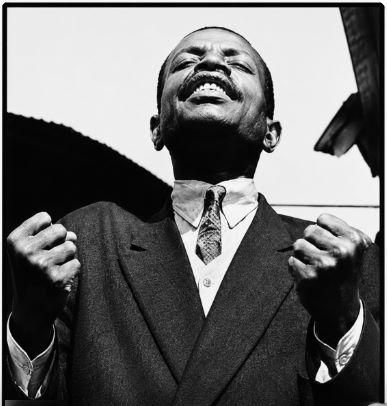
The Black marble worker Minervino Oliveira, born in Bahia but active in Rio de Janeiro, was one of the leading representatives of marble workers. He participated in various labour rallies and libertarian associations. Laudelina Silva, a seamstress, became a symbol in the struggle against racism, worker exploitation, and sexual violence. She was arrested while protesting in front of her employer’s house against her own dismissal and that of her coworkers. Before calling the police, the employer declared that he did not want “that lazy Black woman” in front of his house. Laudelina and the other workers were not intimidated and continued the protest until they were taken to the police station.
In the 1910s, in Porto Alegre, the southernmost capital of Brazil, the Fettermann brothers were anticlerical anarchists, educators, syndicalists, and illegalists active for several years. Cristiano Fettermann published articles in the newspaper O Exemplo. The paper’s editors founded a night workers’ school with the same name. The newspaper also published texts by the Black socialist Tácito Pires. Djalma Fettermann worked as a journalist and taught French and Portuguese at the Modern School in Porto Alegre. He actively participated in the 1917 Strike in Porto Alegre and, according to some historians, manufactured bombs that were thrown at police.
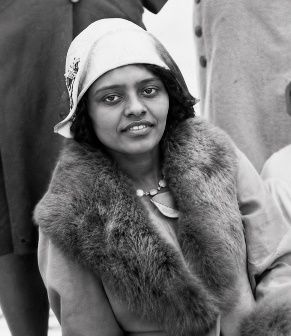
In Belém do Pará, in northern Brazil, the Black siblings Almerinda Farias Gama and José Gama stood out as important figures in anarcho-syndicalism. José Gama was an influential labor representative of the typographers. He also published articles in workers’ newspapers in Belém, such as O Semeador. Gama opposed racial prejudice and the expulsion of foreigners from Brazil. Alongside Plácido de Albuquerque, he represented workers’ associations at the Third Workers’ Congress (1920) in Rio de Janeiro. Almerinda Gama began her political career as a libertarian, giving lectures to typographer workers in her own home.
In the city of Campinas, in the interior of São Paulo, Armando Gomes was a railway worker active both as an anarchist and as a member of Black associations such as the Humanitarian League of Men of Colour, which fought prejudice and advocated for Black rights. In Maceió, Olympio Santana emerged as an anarchist leader. He belonged to anarchist collectives in the city and published texts in workers’ newspapers. Luiz França was another Black anarchist militant born in Maceió but active in Rio de Janeiro. In Recife, the libertarian dockworker Pedro Lessa was killed by police during a port strike. In Salvador, the Union of Masons, Carpenters, and Other Trades (SPCDC) was founded in 1919 by Black workers committed to revolutionary syndicalism. The union introduced several tactics previously unheard of in the region, such as sabotage, boycotts, and the general strike.
During the 1920s, anarchism began losing ground within workers’ associations while Marxist communism advanced through an aggressive campaign in the unions. Many anarchists became communists, especially after the founding of the Brazilian Communist Party (1922). In addition to competition from the PCB, anarchism suffered repression from state authorities. During the authoritarian government of President Arthur Bernardes (1922–1926), many opponents were sent to the notorious penal colony of Clevelândia in Oiapoque, at the extreme northern tip of Brazil. Of the 1,500 people sent there, half died in less than two years. Many anarchists were deported to this “green hell,” as it became known. The Uruguayan Black illegalist Thomas Derliz Borche, and Domingos Passos, a Black libertarian communist active in Rio de Janeiro, managed to escape.
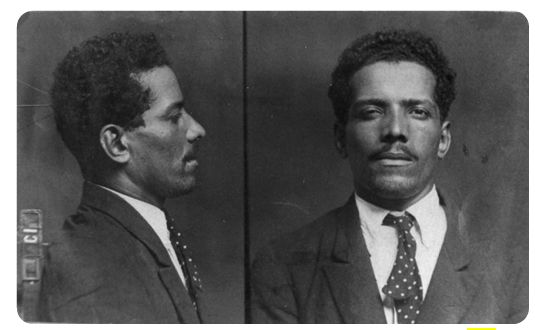
Passos, the grandson of Indigenous and Black ancestors, was undoubtedly the most persecuted Brazilian anarchist and one of the most active figures in the labour movement during the 1920s. While many anarchists defected to the ranks of the PCB, the bricklayer and carpenter Domingos Passos fiercely defended libertarian communism in rallies, strikes, and workers’ associations. He also published articles on libertarian communism in workers’ newspapers such as Spartacus, Voz do Trabalhador, and A Plebe. He participated in theatre groups in both São Paulo and Rio de Janeiro. In 1925, Passos was arrested and sent to Clevelândia, from where he escaped by crossing the Amazon rainforest until he reached French Guiana, then Pará, and finally Rio de Janeiro in 1927.
The trial of the Black anarchist cook José Leandro, arrested in 1921 after an altercation that resulted in the deaths of three people—including a police officer—in Rio de Janeiro, received attention in workers’ newspapers throughout Brazil and neighbouring countries. The trial took place in 1924 and ended with José Leandro’s unanimous acquittal.
Black anarchists also wrote and organised through periodicals and workers’ newspapers. The anticlerical newspaper A Lanterna counted among its editors the mixed-race anarchist poet Raimundo Reis, also known as Beato da Silva. In Porto Alegre, Black socialists, syndicalists, and libertarians wrote, edited, and published the Black newspaper O Exemplo. Cristiano Fettermann, for example, published articles on education. O Semeador was published by Bruno de Menezes and Silva Gama, Black anarchists from Belém do Pará. They also belonged to anarchist propaganda groups and taught in Modern Schools in the city. In Salvador, the newspaper Germinal was founded in 1919 by the mixed-race socialist lawyer Agripino Nazareth, while Voz do Trabalhador was founded by the Black anarcho-syndicalist Eutachio Marinho.
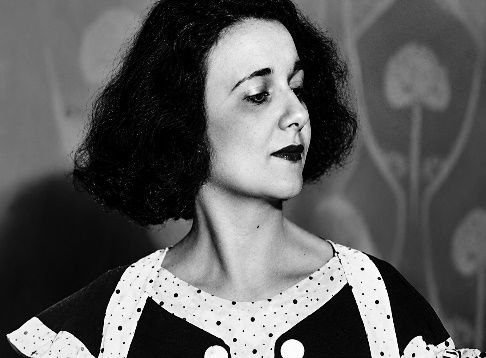
In literature, many Brazilian writers—whether libertarian or not—were influenced by anarchist authors such as Émile Zola, Guerra Junqueiro, and Leo Tolstoy. Raimundo Reis and Adalberto Viana were Black anarchist poets widely published in libertarian periodicals between 1910 and 1920. Pereira da Silva was a poet influenced by Tolstoy. Gilka Machado was a writer famous in her time, especially among workers and libertarians. Her poetry was erotic in nature. Bruno de Menezes, besides being a journalist, was also a poet dedicated to social issues and Afro-Brazilian culture.
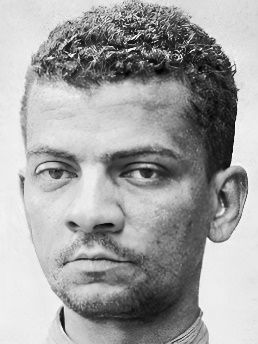
Lima Barreto was a Black libertarian journalist and writer born in Rio de Janeiro, then the capital of Brazil. His chronicles remain one of the greatest sources for studying Brazil’s First Republic. They denounced racism, militarism, and the hypocrisy of the Brazilian elite. Barreto was even confined to psychiatric institutions, where he wrote The Cemetery of the Living, an autobiographical work.