Concerns about communal democracy and gender equality in the region, despite constitutional guarantees for Kurds
~ Blade Runner ~
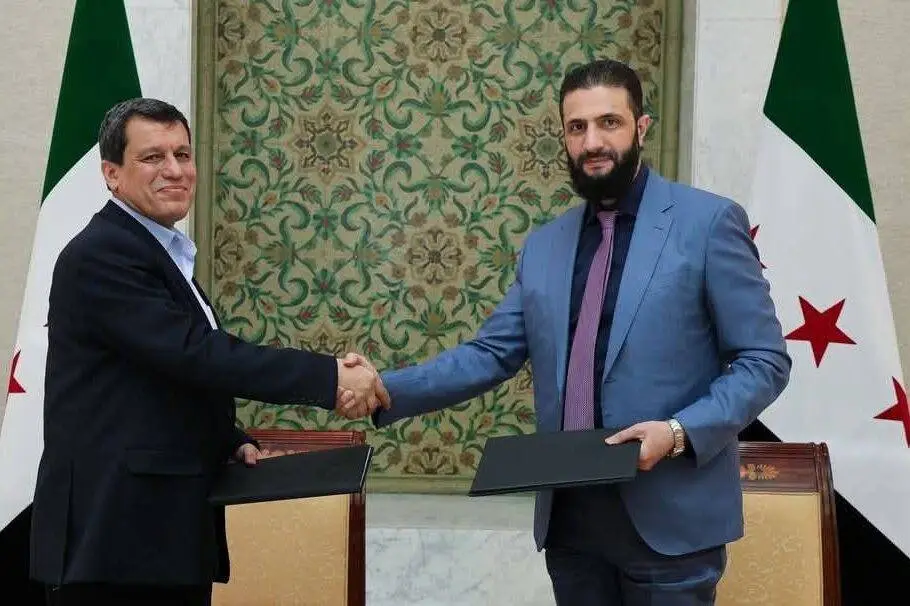
On 10 March, Syrian Democratic Forces (SDF) commander Mazloum Abdi Kobani was transported to Damascus aboard a U.S. military helicopter to sign an agreement with Syria’s new ruler Ahmad al-Sharaa. The deal, set to be fully implemented by the end of the year, follows months of turmoil in Syria amid geopolitical shifts, escalating Turkish-backed offensives, and more than a decade of armed struggle and revolutionary social transformation in Rojava.
All of Rojava’s civilian and military institutions are to be integrated into the Syrian government, including border crossings, airports, and oil and natural gas fields. The Syrian government thereby gains control over energy reserves and transportation infrastructures—critical assets for consolidating its rule during this transitional period. There is recognition of the Kurdish population with constitutional rights granted to all religious and ethnic groups. However, enforcement of these rights now depends on a government led by former jihadist factions.
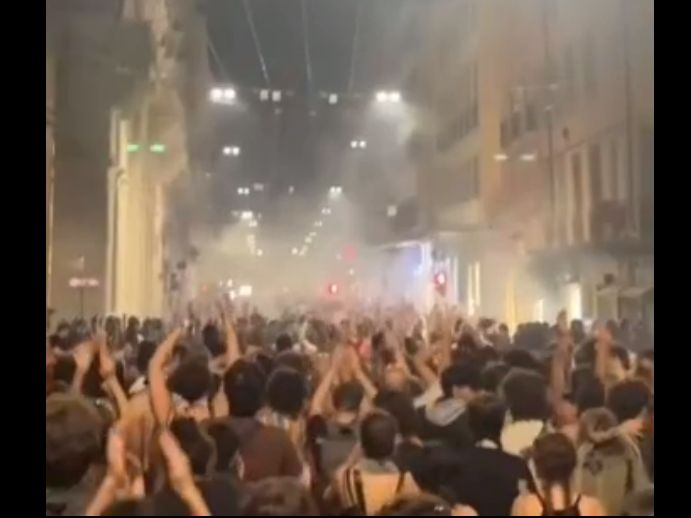
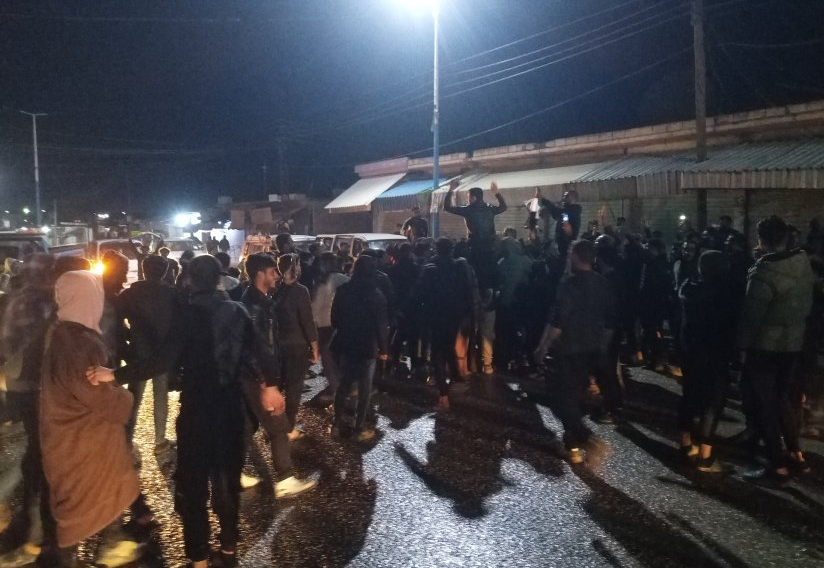
The Democratic Autonomous Administration of North and East Syria (DAANES) issued a statement describing it as a historic step toward peace and stability for all Syrians. The news sparked spontaneous celebrations across different cities in Syria. The United Nations and the United States welcomed the deal, which is reported to have been pushed by the latter, and may have been influenced by Trump’s pressure to withdraw US troops. Their presence in Rojava has been pivotal in supporting SDF against ISIS and in deterring Turkey’s proxy militias from invading Kobani. As part of the concessions made, the Syrian regime has pledged the return of hundreds of thousands of displaced Kurds—a move that, if implemented, could mean an end to Turkish occupation in the northern and western parts of Rojava.
The agreement has been positively presented and received by Kurdish leadership in several statements. However, the concessions demanded from the SDF and DAANES are significant. The deal’s eight points are broadly worded, with vague provisions and unresolved details expected to be negotiated during a transition period in which the Kurdish administration will be treated as an equal counterpart. There are concerns, however, that the Syrian state’s centralised power structure may ultimately dictate terms, with power plays likely to limit Rojava’s autonomy and compromise its gains in social transformation.
Most notably, the agreement lacks explicit guarantees for women’s rights—a major issue in a country where suppression, violence, and kidnappings have been widespread. This omission comes despite Rojava’s historic achievements in gender equality and women’s protection. Additionally, because both the SDF and DAANES have so far been excluded from Syria’s new constitutional drafting process, there are growing doubts about whether the Islamist-led state could guarantee gender equality and minority rights. The women’s self-organising structure Kongra Star may face increased repression, while the Women’s Protection Units (YPJ) may once again have to take up arms to defend their gains.
Legitimacy for al-Sharaa
The deal significantly strengthens al-Sharaa’s rule. It legitimises his regime, absorbs a powerful military force into his control, and strengthens his position amid growing instability. Pressure to close the deal has been mounting since March 6, when violence erupted between his regime and the Alawite minority in Syria’s coastal provinces, to which the Assad family belongs. This led to the cold blooded execution of nearly 1,000 civilians by government-backed militias. The massacre was met with protests in cities in Rojava as well as Damascus, with the United States and Russia calling for an emergency meeting at the UN.
As part of the ceasefire, SDF is committed to supporting “the Syrian state’s fight against any threat by the remnants of the Assad regime, as well as threats to security and unity”. This falls short of the SDF’s initial demand to be integrated into the Syrian army as an independent military bloc. A major unresolved issue is the status of tens of thousands of ISIS fighters and their families currently held in Al-Hol camp, guarded by the SDF with American support. Given that Syria’s new government shares ideological roots with jihadist factions, there is concern that elements of ISIS could be absorbed into state military structures. The SDF has faced escalating militia attacks on the camps, which have already resulted in the escape of hundreds of ISIS members.
The agreement follows the path set by Abdullah Öcalan’s calling for PKK disarmament and dissolution in 27 February—a move welcomed by the Turkish regime. The PKK agreed to disarm but demanded Öcalan’s release to oversee the process. Erdogan’s government had linked Öcalan’s potential release to a $14 billion regional development plan for Kurdish areas while simultaneously pressuring for the dissolution of all autonomous Kurdish forces and PKK-linked groups in Syria and Iraq, including the People’s Protection Units (YPG) and Women’s Protection Units (YPJ)—both of which form the backbone of the SDF.
Rojava’s communal democracy, decentralisation, and gender equality have reached a crossroads. As the region faces absorption into a centralised Syrian state, its survival will depend on diplomatic resilience and the capacity of its grassroots structures to resist and adapt.
Top photo: Celebrations in Syria. Hawar News