Will Andy Burnham, who built his political career on justice and accountability after Hillsborough, deny the same to victims of state abuse?
~ Ben Leamy ~
On 16 July, less than 48 hours after the much celebrated ‘Hillsborough Law’ cleared the Commons, the Home Office made the shock announcement of a new public consultation into the future of the Undercover Policing Inquiry. Citing concerns about costs and delays, the government is seeking to shut down a statutory public inquiry that has exposed decades of secret political policing, just as the Public Office (Accountability) Bill might be about to give it real teeth.
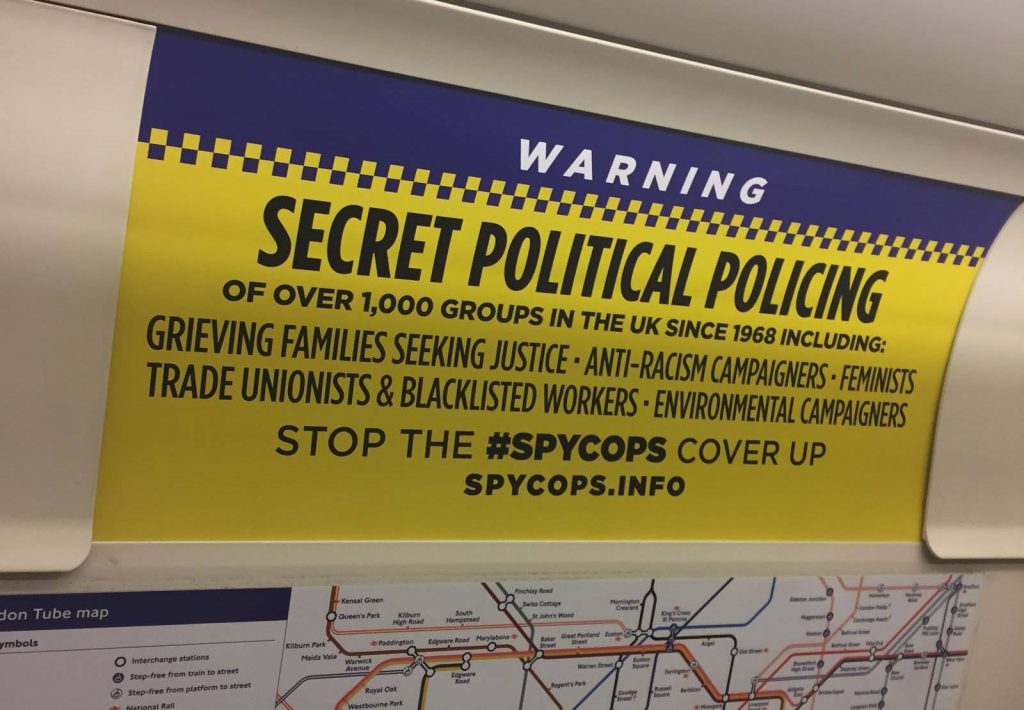
The Inquiry has long been a thorn in the side of the Metropolitan police. Hobbled by secret state applications for anonymity and redactions (which are the root cause of the many years of delays and massive costs), its investigations have nevertheless exposed systemic corruption, racism, sexual misconduct, criminal behaviour, manipulation of the courts, and decades of institutionally anti-democratic secret policing of political groups. Undercover officers were used to mount “destructive operations” to disrupt political groups from within, with targeted harassment of key organisers, and seizure of printed material to prevent a message hitting the streets.
An interim report in 2023 found that the vast majority of infiltrated groups posed no threat, and concluded that, had it been exposed at the time, the spying “would have been rapidly brought to an end”.
Now, the retirement of the current chair, John Mitting, is being treated as an opportunity to put a stop to the flood of revelations before the Inquiry gets to matters that threaten to be even more damaging for policing today.
The National Public Order Intelligence Unit (NPOIU) succeeded the SDS and operated from 1998 to 2011, under the Regulation of Investigatory Powers Act 2000 (RIPA)—the same framework that still governs undercover policing, and is supposed to protect us today. The Investigatory Powers Tribunal already found some NPOIU authorisations under RIPA to be “fatally flawed”, and judged the operations to be unlawful and “not necessary in a democratic society.” Examining why that framework failed, and investigating the full scale of misconduct and abuse by officers such as Mark Kennedy, is one of the Inquiry’s most important outstanding tasks.
Unlike the SDS, the NPOIU operated at a national level, and investigating its failings will require searching questions to be asked of forces all over the country, and of officers who are yet to retire. The timing of this consultation, coinciding with the progress of the Hillsborough Law, is therefore no coincidence. The Bill could become law as early as autumn 2026, making honesty and accountability a statutory duty. Any officer caught lying to the inquiry (as so many have done) would be committing a criminal offence.
The Home Office consultation is set to run during the summer holidays and report in September, before the Bill has passed. It claims to seek the most effective means of the Inquiry achieving its aims. However, the multiple-choice questionnaire omits the option of continuing with the full statutory inquiry we currently have. Respondents are asked to rate the relative importance of remaining areas of investigation, framing these as competing priorities, and allowing the government to manufacture a justification for reducing the Inquiry’s scope.
It hides what would be lost if these investigations are shut down: the targeted groups, the officers involved, the alleged wrongdoing, potential miscarriages of justice, and the women deceived into intimate relationships with undercover officers who are still awaiting disclosure or the opportunity to give evidence. Without this information, the public cannot assess the significance of what the government hopes to abandon.
This is not the first time the Home Office has attempted to undermine the Inquiry. In 2023, a Freedom of Information request revealed that then Home Secretary Suella Braverman had written to the Chair proposing he reduce his investigations, adopt a “sampling” approach to evidence, excluding operations beyond those already exposed in the SDS and NPOIU. The Chair pushed back, but the Inquiry has been under pressure and cutting corners ever since.
Non-state core participants have repeatedly requested meetings with the Home Office Sponsor Department to discuss how the Inquiry’s remaining objectives could best be achieved, but were told such meetings would be “inappropriate” and undermine the independence of the Inquiry. Launching this consultation now, while actively avoiding engagement with those most directly affected, proves that it is a sham with no genuine intention to listen.
Section 14 of the Inquiries Act 2005 allows inquiries to be ended prematurely by the government, but it is a power intended only for when an inquiry is no longer possible or necessary. It has never been used before. If the Home Office succeeds, it will set a dangerous precedent, threatening any future public inquiry that becomes politically embarrassing.
The consultation closes on 20 August 2026, and the Campaign Opposing Police Surveillance and Police Spies Out Of Lives are encouraging readers not to respond through the government website, but to support their struggle instead.