The UK far-right surge builds on deep-rooted resentment and social fragmentation
~ Blade Runner ~
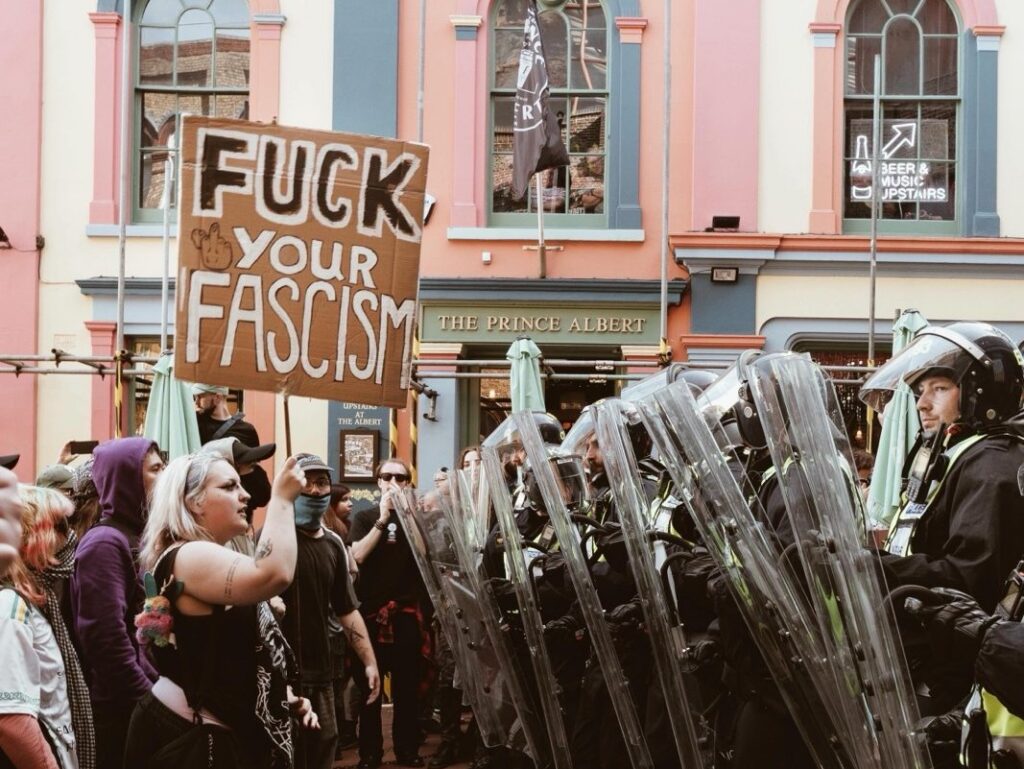
Antifascists on Saturday (13 June) mobilised against far-right demonstrations in Belfast, Brighton, Edinburgh, Glasgow, Newcastle, Liverpool and Sheffield. Following the racist pogroms that shook Northern Ireland the previous week, counter-demonstrators turned out in significant numbers across the country. Scuffles and arrests were reported in several locations.
In Brighton, an attempted “march for mass deportations” was boxed in beneath the train station’s railway bridge, while another group of far-right activists found itself trapped inside a pub. Among those attending were UKIP’s Nick Tenconi and Raise the Colours co-founder Ryan Bridge, who got a bloody lip as soon as he arrived in Brighton. Merseyside fascist Ryan Ferguson appeared in Liverpool and was similarly confronted. Harry Hilden and Britain First leader Paul Golding were also reported at a mobilisation in Maidstone.
The demonstrations followed the Belfast pogroms and Southampton riots, which together have marked a renewed far-right surge this summer in the UK. Anti-immigrant sentiment is being amplified through social networks and much of the mainstream media and political establishment, redirecting anger away from the structures of power towards vulnerable groups. Far from developing in isolation, the anti-immigration movement associated with Tommy Robinson has received vocal support from Elon Musk and has attracted unprecedented numbers over the past year. Reform UK performed strongly in May’s local elections and continues to poll well nationally.
In Belfast, the attacks were largely carried out by loyalist and unionist Protestants, echoing a history of sectarian and racist violence in the city. Despite the formal end of the conflict following the Good Friday Agreement in 1998, working class communities remain deeply divided. Northern Ireland has repeatedly witnessed organised violence against Catholics, Roma communities and migrants from eastern Europe.
At the same time, online cultures centred on the manosphere and hyper-masculine identities increasingly merge with the far right. Northern Ireland still has some of the highest rates of femicide and domestic abuse in western Europe. The overlap between misogyny, aggressive forms of masculinity and far-right politics is taking place against the background of a global normalisation of militarism.
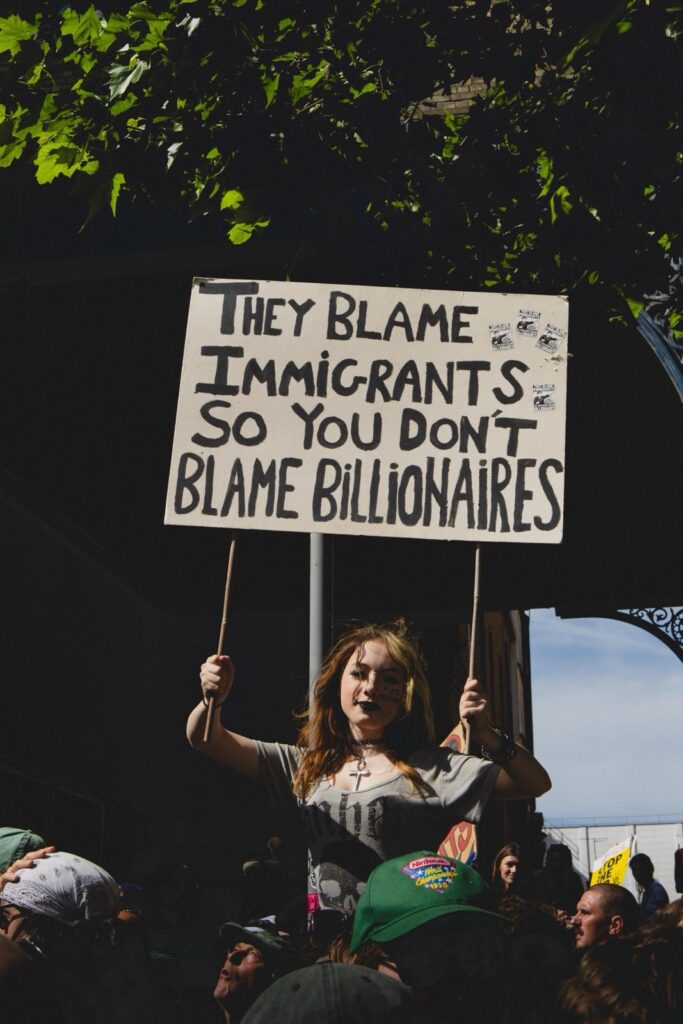
Around the country, decades of neoliberal restructuring have left entire communities economically marginalised. Younger generations face worsening housing insecurity, precarious employment and declining prospects, but meaningful expressions of social anger are increasingly criminalised, managed or absorbed. This leaves culture-war grievances and symbolic rebellions to fill the vacuum.
The contemporary far right emerges within these conditions as a form of counter-insurrection. Its narratives draw from fantasies of civilisational decline, the Great Replacement conspiracy and the white supremacy myth. These stories provide simple explanations for crises whose real causes lie within complex systems of economic and political power.
The political function is (once again) to identify an existential enemy: the migrant, the Muslim, the trans person, the racialised outsider. Minorities become scapegoats for systemic failures rooted in the organisation of society itself. In doing so, it divides those with shared interests while protecting the conditions that produce precarity and suffering in the first place. At the same time, strongman figures are elevated to near-mythical status as supposedly decisive individuals willing to say and do what others will not.
The challenge facing anti-authoritarian working class movements is not simply organisational. Too often we find ourselves running after events while the other side adapts and expands its influence through social media. Moral condemnation does not cut it either, as it only fuels further cycles of bigotry. Liberal reforms or ideological zombies are doomed to fail too—today’s societies know first hand the hopelessness of changing the system from within.
The victims of barbarity need our continued support. At the same time, our criticism of an order that has failed to provide the prosperity it promised must remain sharp and clear. We must consciously transform our shared experience of exploitation into collective power and find ways of building new social relationships and forms of collective life.
Images from Brighton: Natasa Leoni