Interview with a resident of the historic Athens squat about its history, autonomous structures, the current threat of eviction, and the campaign to resist it
~ Gabriel Fonten ~
Briefly, can you describe the Prosfygika squat, its autonomous structures, and give a little of its history to readers who are being introduced to it for the first time?
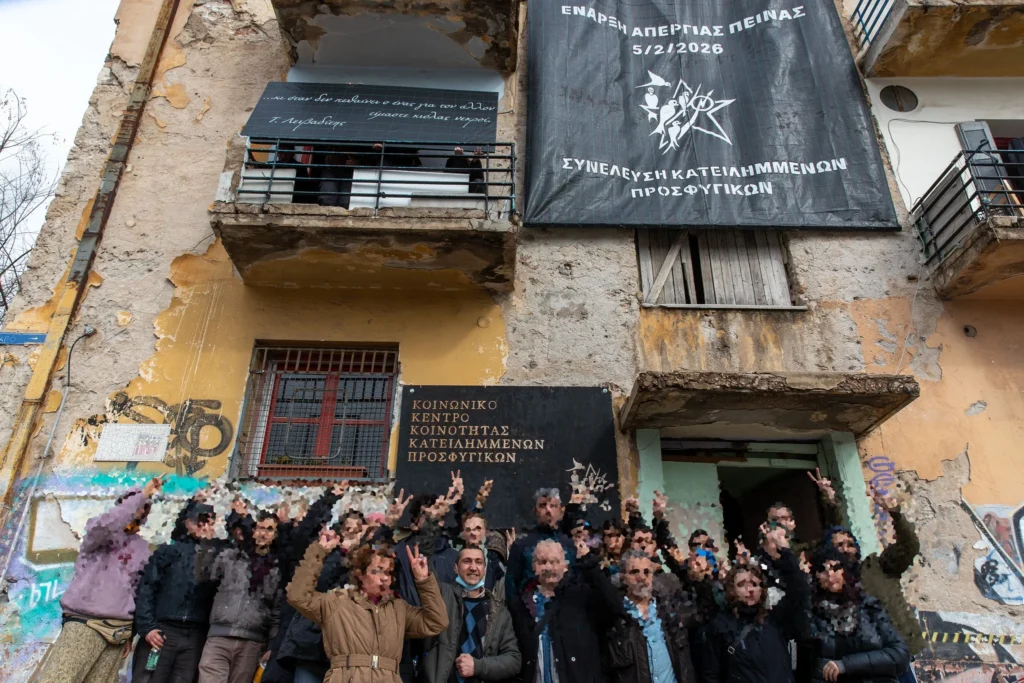
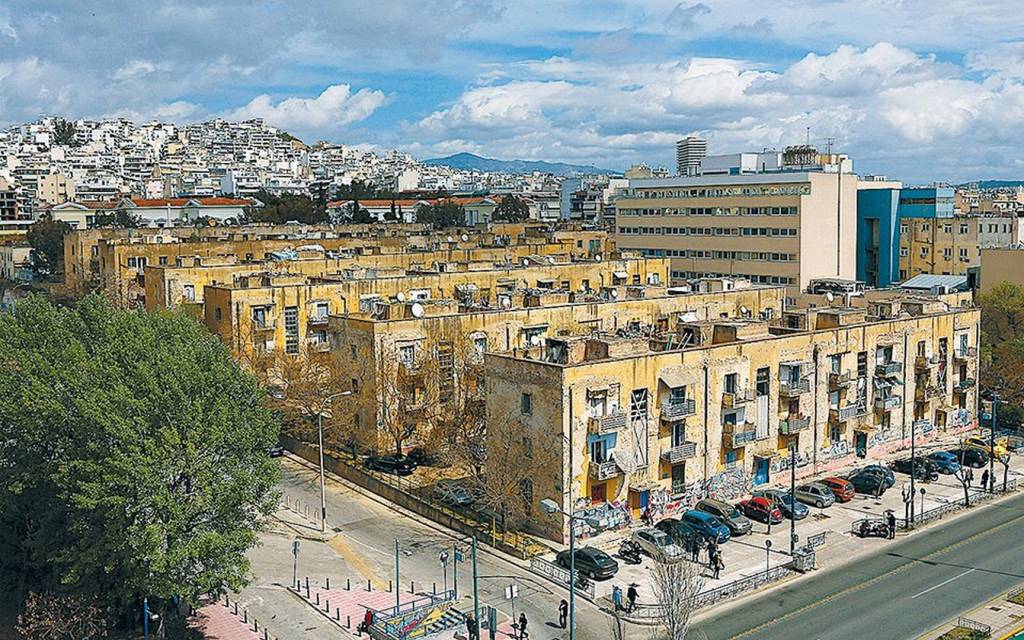
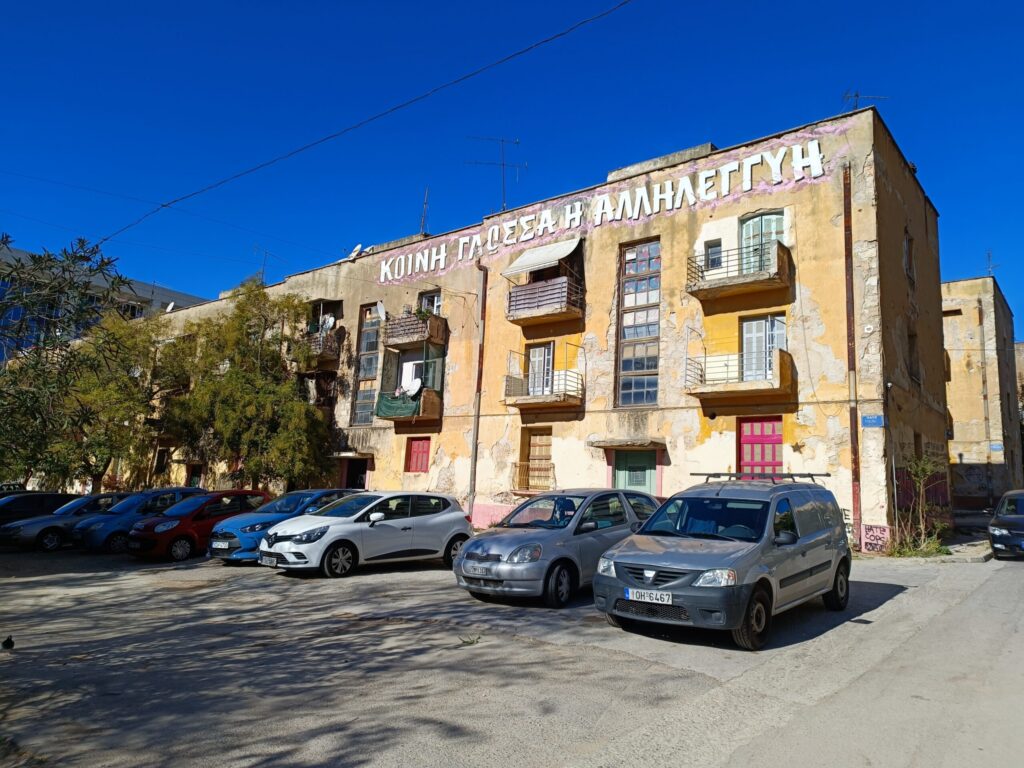
Prosfygika is a neighbourhood of 3.5 acres with 8 Bauhaus-style blocks of buildings with 228 apartments housing at the moment approximately 400 people in the centre of Athens. They were built in the 1930s to house refugees who had come from Asia Minor. In 1944, they played a significant role in the guerrilla battles against the Greek bourgeoisie, which was supported by British imperialism. The marks from bullets and shells are still visible on the buildings. In the late 1990s, there was a plan to demolish them to build a shopping mall. Residents were terrorised by forced expropriations, and the overwhelming majority sold their properties to a public entity for one-third of their actual value.
Although 51 of the homes remained in the hands of the people who refused to sell them at the time, the neighbourhood began to become depopulated. However, some of the former owners stayed and became squatters in their own homes. In the early 2000s, residents, organisations, and associations waged a legal battle to prevent the demolition of these historic buildings. As a result, Prosfygika was recognised by the Supreme Court (state council 2003, 2009) as a cultural heritage monument due to its architectural style (Bauhaus) and as a monument of modern history due to the marks left by the battles of December 1944.
During this period, houses in Prosfygika began to get squatted by people from very different political and social backgrounds. Under these circumstances, various human and drug traffickers began squatting the houses. The police simply passed through the area to protect the trade and the crystal meth production labs. Some of the squatters decided to take the situation into their own hands, formed a community, and began expelling the dealers who were renting the squatted houses to refugees.
At the same time, they organised themselves into an assembly, decided that the squatted houses in which they lived would be managed by the assembly, and began to build the community, freeing the land from the mafias that were exploiting the place, building structures to meet basic needs, and actively participating in the radical movement. It is important to note that 2010 was a period during which Greek society was constantly engaged in mass demonstrations, popular assemblies in public squares, and solidarity structures—models that had also emerged during the 2008 uprising.
The Community of Squatted Prosfygika is part of and a continuation of this movement. Since 2010, the Community has been a horizontal, self-organised grassroots social and political struggle. It is based on the principles of democracy, equality, autonomy, and solidarity, through self-organisation, horizontalism, collective decision-making, circularity, commitment, and participation. It embraces the tools of the broader revolutionary movement. Its key characteristics include the communal ownership of resources, structures, and infrastructure.
Prosfygika is a community of over 400 people—Greeks, refugees, and migrants—including 50 children and people from vulnerable social groups. At the moment the community constitutes a counter proposal of social organising, counting 22 self-organised structures for education, health, women’s self organisation, food, self defence, technical works, housing for the people getting treatment at the nearby anti-cancer hospital and the ones accompanying them, for youth, and for many other needs, that are being solved with a revolutionary perspective.
How did you come to know Prosfygika, and what have been your experiences with the community there?
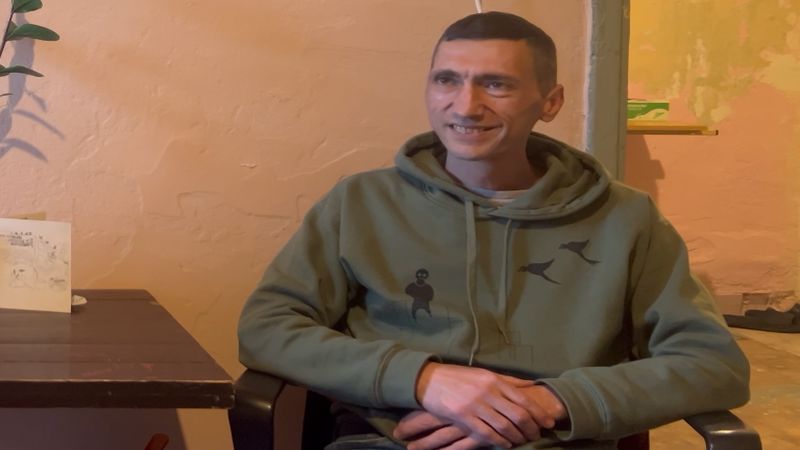
I met Prosfygika when I moved to Athens, for studies. The neighbourhood is a part of the Greek movement, participating actively to local and international struggles. So I firstly met members of the Community through an open assembly and then came to meet the neighbourhood, started participating here ain solidarity and at some point took the decision to live and organise here. Participating, organising and living here teaches you another kind of being with the people around you, organising life, taking responsibility and building a revolutionary personality.
First of all through collective life you learn to not get lost into individual problems and individualistic mindset, instead here there is collective responsibility to cope with any situation. We live in a world where we are surrounded by a culture of the dead end and where we have lost faith in a collective purpose. But this community rejects that and has the culture of persistence and finding solutions out of all the difficulties, showing by its existence and everyday life that the people can organise and carve out other paths, with the aim to gain the collective freedom. Even the attacks by the state are beneficial in the end for the community, because we choose not to give up but to resist, and to find a way forward.
Community also teaches patience and persistence on the goal with small, everyday steps. This is something that many movements are lacking as they mobilising only in the emergency and in explosive ways. This patience is also with each other, because if you make a decision to live collectively then you engage to work with each other and turn the differentiation between you into power instead of reason for division. Also here is the place where justice from the people from below is being built, and where we can see real transformation happening.
What has changed recently? How is this recent attempt to destroy Prosfygika linked to a general crackdown on autonomous organising in Athens?
In June 2025, the Region of Attica, together with the Ministry of Culture and the Public Employment Service (DYPA), made a programmatic agreement for the redevelopment of Prosfygika of Alexandras Av., which entails the eviction of a community of over 400 people and the dismantling of 22 self-organised structures. After seven full months, in mid-January, the first reports came to light, announcing the signing of this programmatic contract with the call for contractor to be completed within the first quarter of 2026. This also included the explicit and clear announcement of the suppression and eviction operation under the responsibility of the Ministry of Protection of the Citizen.
Since then, a big campaign has started from the Community of Prosfygika, with the hunger strike of Aristotelis Chantzis for the defence of the Community and the establishment of the collective demands. There is a general situation of regime shift that the current government is trying to apply, following the “law and order” dogma and directly attacking to the social base of the radical and progressive movements in brutal also ways. This means that there are a lot of state murders, housing issues, arbitrariness.
They attack the self organised spaces because they constitute a political enemy, illustrating at the present time that an alternative way of living and organising life is possible. Also there are a lot of court cases being opened, criminalising people in political struggle, and even progressive people, for example a teacher speaking about Palestine to her students. They are afraid of social resistance existing and they are acting on that fear.
Tell us about Aristotelis Chantzis and the “hunger strike until death” he has taken on in defence of the community. Why has this course of action been chosen?
The decision was collective, and the comrade volunteered to fulfil it. As he stated in his own words:
“As the Community of Squatted Prosfygika, we have decided to defend our social proposal, the people, the structures, and the historical memory of the Prosfygika to the end. It is our clear choice and our responsibility to give even our lives for the continuation of life. Because we know that if Prosfygika are evacuated, a large portion of us will find ourselves on the street. The elderly and the sick will die on the streets, and children will lose their homes and schools, with incalculable consequences for their physical and mental health and the course of their lives.
Based on this collective decision to defend ourselves, I have voluntarily decided to go on a hunger strike to the death, with the utmost respect for life. So far, the Greek state, the government, and all relevant authorities have conspicuously ignored the issue and are pushing me – and many of the residents along with me – toward death through their criminal negligence in failing to stand according to the height of their political responsibilities.”
The hunger strike to death actually is defending life, because also in real terms the lives of many people are in danger if the plans of the Greek state proceed. The demands of the hunger strike reflect the collective demands of the community, and are: 1. Immediate cancellation of the contract by the region of Attica; .2. all residents of Prosfygika to remain in their homes, in the place and area where they live and have established social, cultural and family ties; 2. Concrete guarantees to be given for the restoration of Prosfygika by its selected non-profit civil law company with its own self-financing; 3. No public funds for the “redevelopment” of Prosfygika.
At the time of this interview Aristotelis’ hunger strike will have lasted over 65 days, putting his life at immense risk. Has his bravery led to a break through in public consciousness over the state’s attempt to destroy Prosfygika? And what has been the reaction, both from the community and the state?
The community takes strength from the hunger strike, always there is a lot of pressure but still this struggle gives strength to everybody. We strongly believe that we will win! Soon, on 1st of May, a second comrade will also join the hunger strike in the same way with Aristotelis Chantzis.
The reaction of the state is to try to hide what is happening here, to hide the hunger strike. Of course they count our movements and they get upset, but still they try to cover up what is happening, for example by blocking it from the mass media. On 20/04/2026 the community intervened for the second time at the City Council, emphasising that they have to immediately demand the revoking of the contract by the Regional Administration of Attica, taking into consideration the prolonged days of the hunger strike. Nevertheless, the proposal of the mayor Haris Dukas, which was approved despite pressure from some parts of the council, was negative, full of vague language that essentially condemns the hunger striker to death. The vagueness of this decision is based on a logic of maintaining the political status quo and avoiding political accountability, leaving the door open for the Regional Authority to proceed with its plan to gentrify and clear out the Prosfigika neighbourhood, without mentioning anywhere the hunger strike or the immediate threat to the life of hunger striker Aristotelis Chantzis, who is approaching 80 days on hunger strike. Upon hearing this decision, the solidarity movement intervened inside City Hall and the meeting room where the council was taking place, expressing their outrage and solidarity with the community.
The Municipality of Athens, the Region of Attica, the Ministry of Culture, the employment service (D.Y.P.A.), the government of Mitsotakis, and the media— through the boycott and censorship they impose, through their deadly policies—have chosen to bear the cost of the first hunger striker to die in Greece.
Around the world, we have seen actions in solidarity with Prosfygika, alongside mass marches in Greece. How can our readers continue to engage with and support your struggle?
We are at a stage that we need to escalate the struggle. This means an upgrade in our actions in order to build pressure. Everybody should mobilise accordingly, from their position. We believe that international pressure can stop the Greek state, and also we know that the loss of the Community as a liberated ground of struggle will be a loss for the whole radical movement locally and globally.
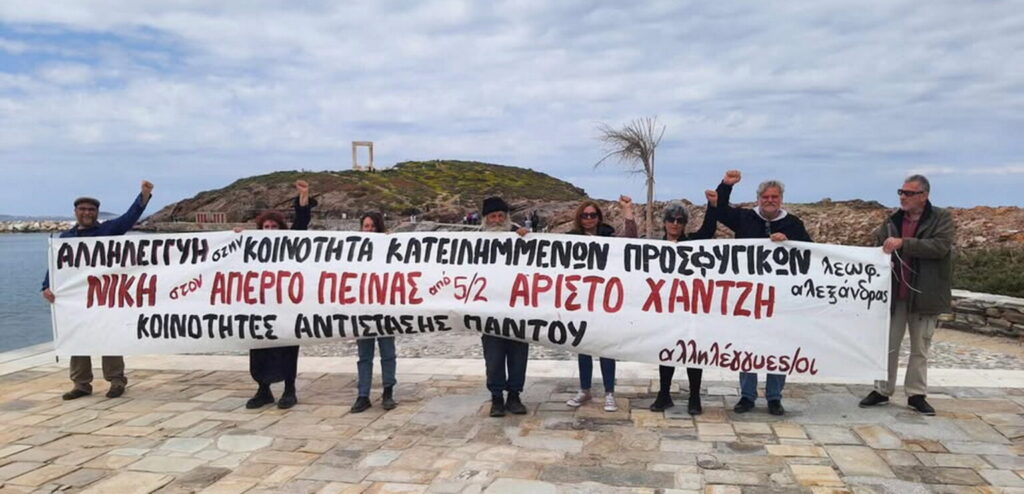
Important dates are the 1st of May when we propose for people to have banners at the demonstrations connecting the meaning of the struggle that is happening here. Also on the 16 May we will have a big demonstration in Athens and it will be a global day of action. We call everybody to reinforce the community of squatted Prosfygika with your physical presence, support the neighbourhood’s self-defence plan, and assist with technical work and infrastructure.
So we want everybody to organise and join protests around Europe. Get in touch with the Internationalist Save Prosfygika campaign to receive updates and organise solidarity actions from abroad that can be coordinated with the overall campaign and thus be more effective. Apply pressure on the relevant authorities in your place of residence, such as the Greek embassy, the consulate, the company when it undertakes the project, or any other institution that may arise during the escalation of this struggle, whether initiated by us or by the state.