A series of (uncomfortable) conversations with anarchists across Europe, Ukraine, Belarus and Russia about the solidarity of resistance against occupation
~ Josie Ó Súileabháin ~
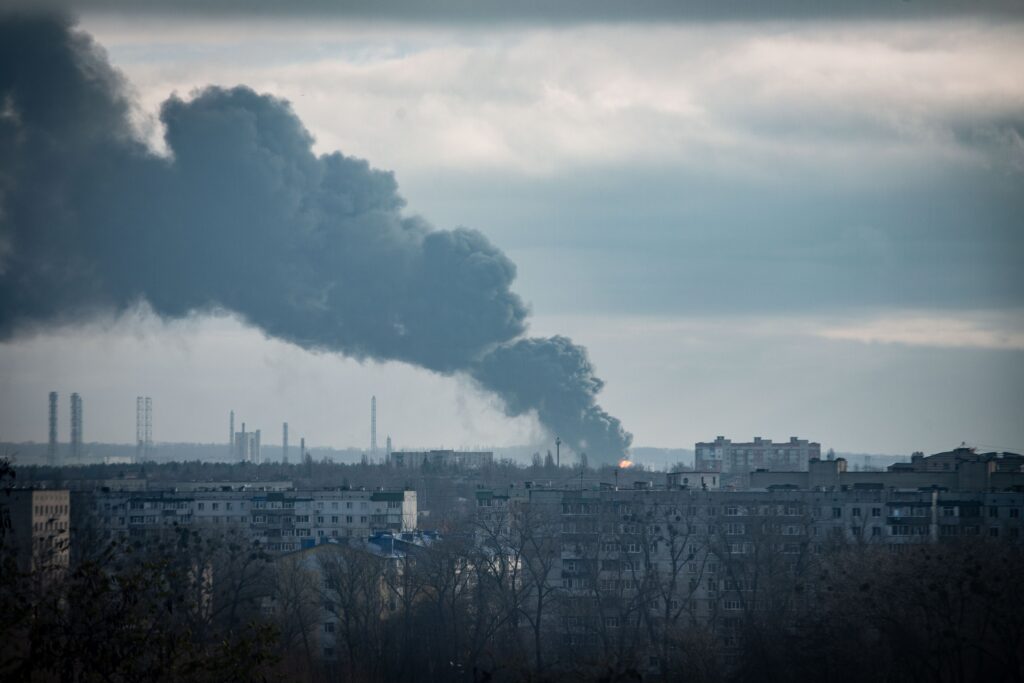
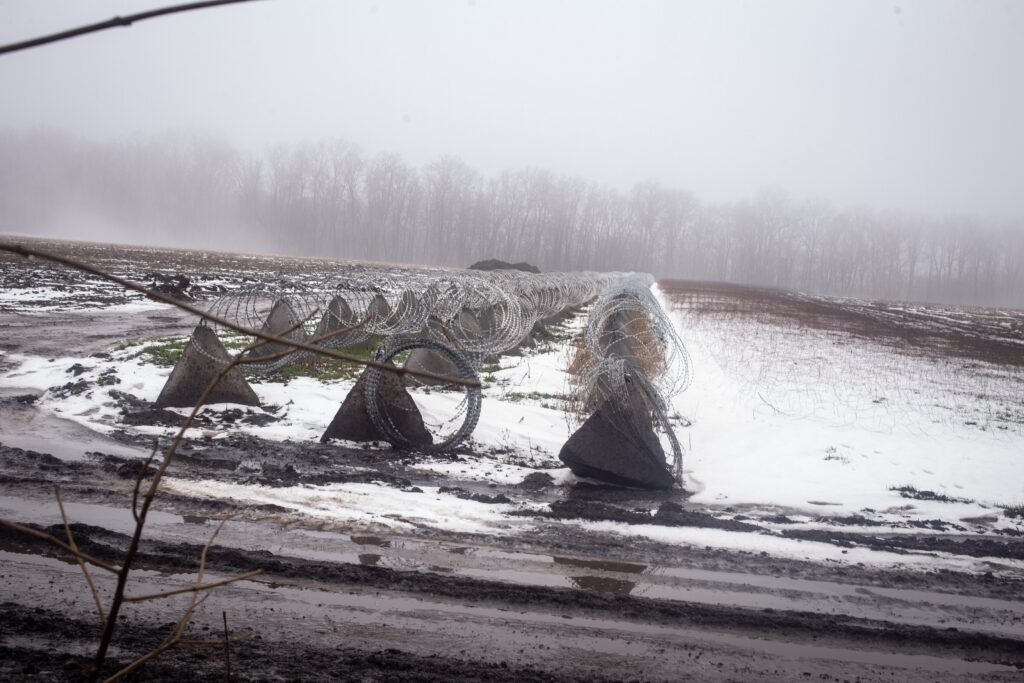
Through a landscape of collapsed bridges, newly dug trenches and military checkpoints, a group of activists from Dresden, Germany arrived in Sumy, Ukraine. They unloaded donations for refugees escaping the east on the frontlines of the largest European war since 1945. They were careful to listen to the experience of others.
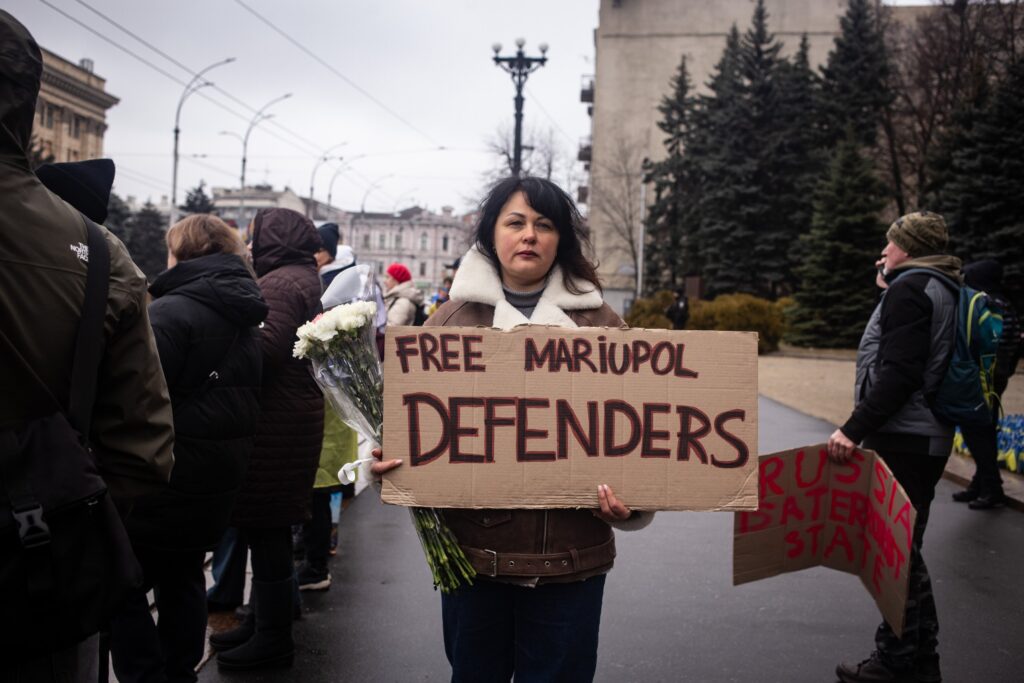
Svetlana speaks to members of the group about how she escaped Mariupol after the beginning of Russia’s full-scale invasion. She was trapped in the city for a month. She saw how areas for refugees were later bombed by those that designated them. She saw dead bodies on the line between Ukraine and Russkiy Mir – the Russian World.
“Yes,” Svetlana tells the activists. “That’s the Russian World; only blood, death and corpses.”
It has been more than twelve years since territories in the east of Ukraine were seized under the lies of democracy and independence, and more than four years since the destruction of entire cities and the erasure of Ukrainian identity under the guise of “denazification”. These clear imperialistic and fascist strategies and goals still leave those in the anarchist movement divided when it comes to Ukraine.
Why? This is one of the uncomfortable questions Belarusian exile and anarchist Lera Khotsina puts forward to anarchists across Europe, as well as Ukraine, Belarus and Russia. The collection of essays and interviews in the book challenge the breakdown of solidarity in the ideological clashes between “those who defend freedom and those who are intoxicated by dogmas,” as the late anarchist Davyd Chychkan wrote in 2023.
Anarchists on the War in Ukraine is the translated publication of a series of Russian-speaking podcasts between 2022 and 2026. From Latvia, Poland, Germany, France, Greece, Czech Republic and Finland, we hear from anarchists about a divide in European solidarity between two forms of anti-militarism – one that demands non-violent resistance and the other that practices resistance to state-sanctioned violence.
“What I’ve noticed is that we’re talking about a country of 30 million people,” says Lera in conversation with Tomáš, an anarchist from Czech Republic, “a country that’s facing the largest conflict on European territory since the end of the Second World War. And yet there is an absolute lack of curiosity about how people are organising themselves…or what the anarchists who stayed behind are doing. An overwhelming part of the movement decided to join the resistance.”
“Mostly people show solidarity,” Mira from Solidarity Collectives in Ukraine tells Lera. “I think any normal person understands that war is terrible. Yes, there are those who try to criticize precisely from an anti-authoritarian position. They come and speak in slogans from posters.”
One chapter in Anarchist on the War in Ukraine breaks from the podcast conversation format and documents these criticisms and antimilitarist disruptions at the event “Anarchy 2023” in Saint-Imier, Switzerland. Under the guise of a question, one anarchist betrayed the power-play within the language of non-violent anti-militarism in the following statement to a panel discussion with anarchists from Ukraine.
“Your position is very important and we want to hear it… that’s not in question… we want to demilitarise anarchism… for us, it’s important to think about how we cannot become part of militarisation,” the anti-militarist declared.
Mira from Solidarity Collectives responds. “It’s actually the second time this year the same question from the same person. Interesting.”
“Last time… we didn’t find common ground on how to approach this in another manner. But, I have a proposal for people who really feel that we on stage are all about militarism… you can h
“I don’t like… the army,” says Ilya, an anarchist and combat medic in Izium, Ukraine.
“During my youth when I ignored conscription, I ran away and just avoided,” he says. “There is a contradiction but in every moment of life we are doing a real, exact choice… there was the option to escape, the option to stay in Kyiv and somehow live under occupation, and the other option is to join the resistance.”
“Ukrainian anarchists had to become temporary situational allies of the Ukrainian state… a paradox?” asks Anatoly Dubovik, an anarchist from Ukraine. “Yes. The same as Makhno’s alliance with the Bolsheviks… FAI-CNT alliance with the Spanish state against Franco. Or the alliance of… anarchists with governments against Hitler.”
“In my opinion,” says Tomáš, “It’s better to focus more on providing support rather than trying to convince people… when reality doesn’t match their framework, they simply reinterpret it or twist it to make it fit. Breaking down that struggle is a huge task – to prevent people from falling back into dogma.”
Once we see connection of solidarity and practice of mutual aid as something that unites anarchists as an international movement beyond power structures like ‘west’ and ‘NATO’ – once we listen to each other as equals who are fighting a common enemy, not to “stand aside” or “dominate” as Stuart Christie wrote but instead “seek to contribute practically whatever they can” – we can truly fight in solidarity with each other.
For those interested in this form of resistance, this book is indispensable. For those who do not “take a step back and realise the reality that exists,” as Sasha, a Belarusian anarchist living in exile in Germany reminds us, they will be forced to close their eyes even as the air raid siren starts to sing.
“Anarchism has only one dogma,” Tomáš says to Lera. “The absence of dogma.”
Images: Fran Richart