25 years since I was almost killed at the Diaz School raid, I am returning to the city as the Mayor’s guest of honour
~ Mark Covell ~
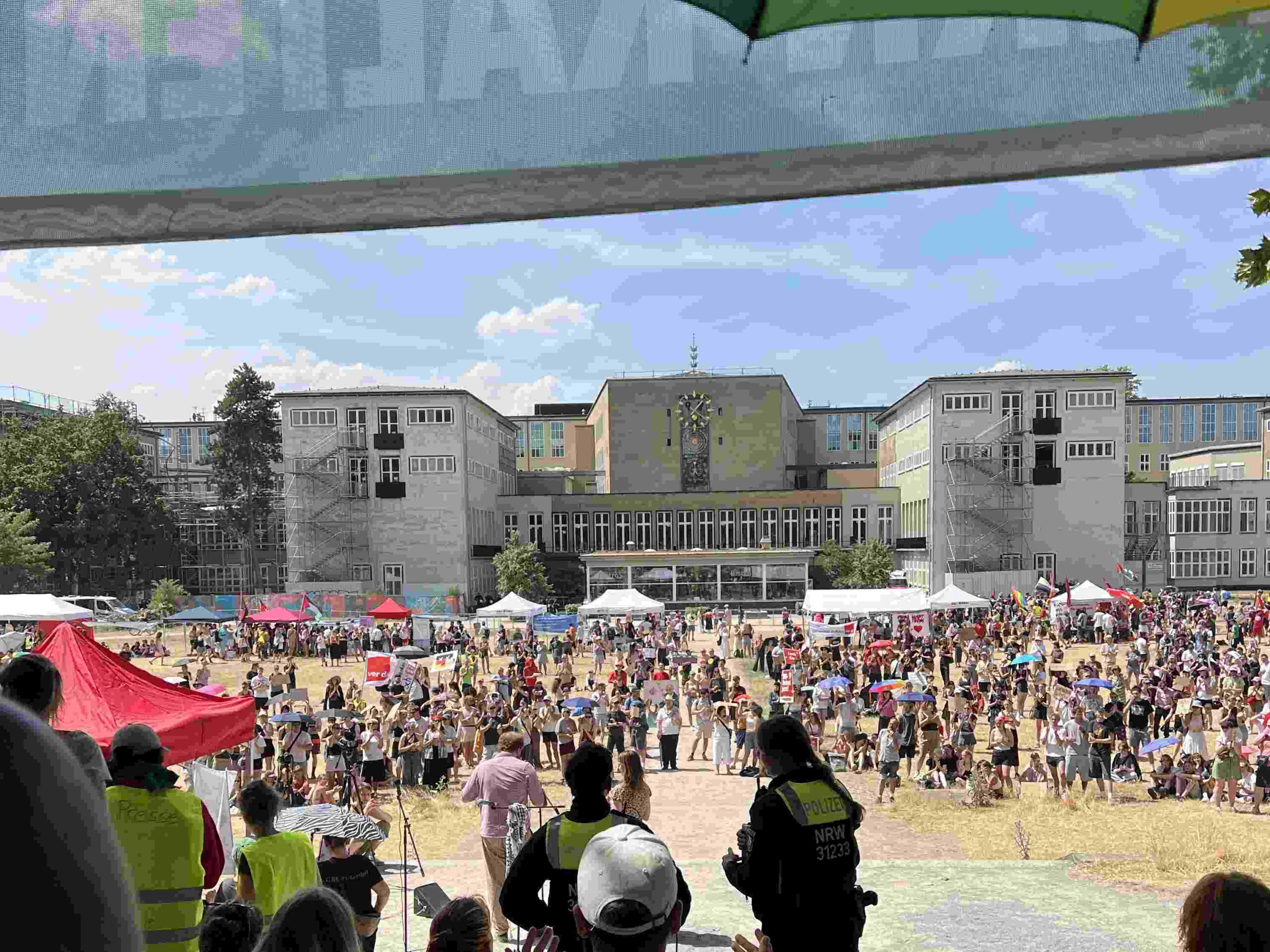
Starting this weekend, the city of Genoa marks the 25th anniversary of the 2001 G8 protests. It is estimated that at least 20,000 Italians will attend a series of events, demos and conferences commemorating the momentous protests, the killing of Carlo Giuliani, the raid on the Diaz School, and the torture at Bolzaneto police barracks.
As part of the program, the European No Kings movement and the Global Sumud Flotilla will both be holding their conference in Genoa. An antifa demo today is expected to draw thousands. On 20 July, everyone will gather in Piazza Alimonda to remember the death of Carlo, and the movie “Diaz: Don’t clean up this blood” will played to an invited audience at the Palazzo Ducale. On the evening of the 21st, there will be a candlelit demo at the Diaz school.
So what happened in Genoa and why is it important?
On 30 November 1999, in Seattle, the ministerial meeting of the World Trade Organisation was successfully shut down by over 60,000 protesters, preventing the start of a new round of trade talks to promote destructive neoliberalism. Indymedia was born on the streets of Seattle and, a few months later, I became an Indymedia UK journalist.
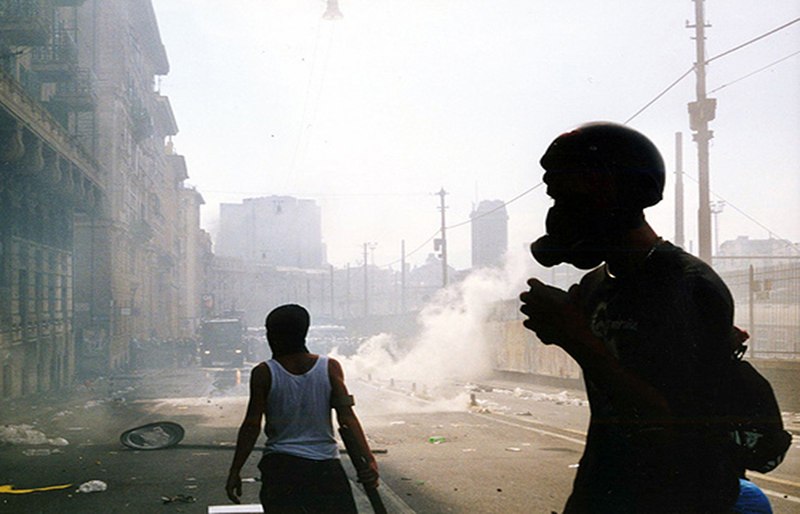
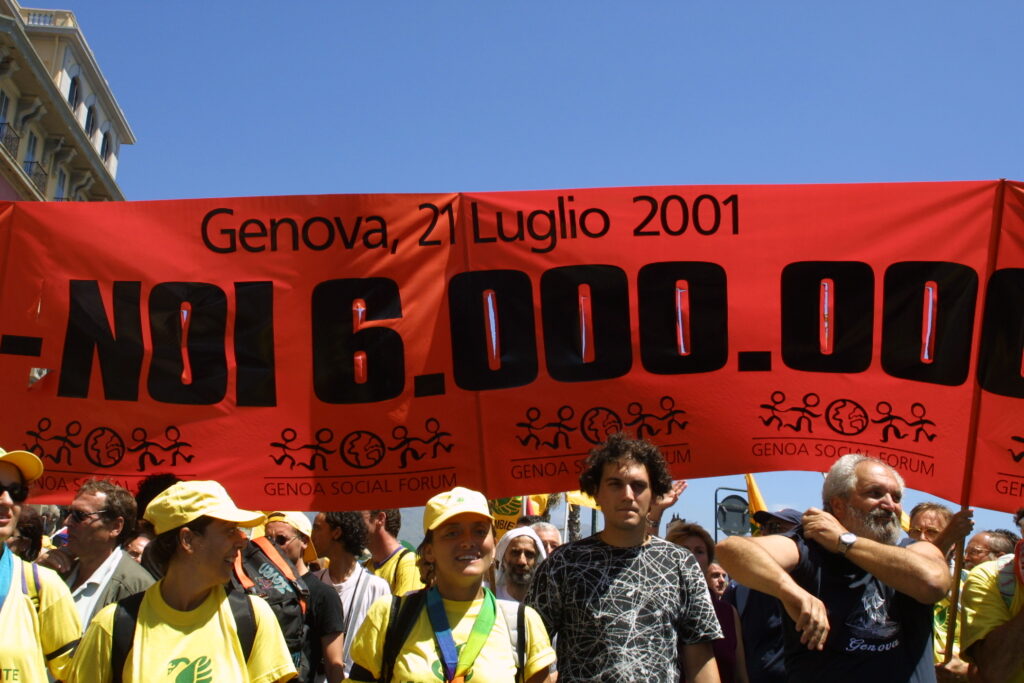
Roll forward to July 2001 and after mass protests in Prague, London, Gothenburg and Davos, over 250,000 demonstrators gathered in the Italian port city of Genoa where the G8 was being held at the Palazzo Ducale. Bush, Blair and Putin were all there. I was also there, part of the global Indymedia effort.
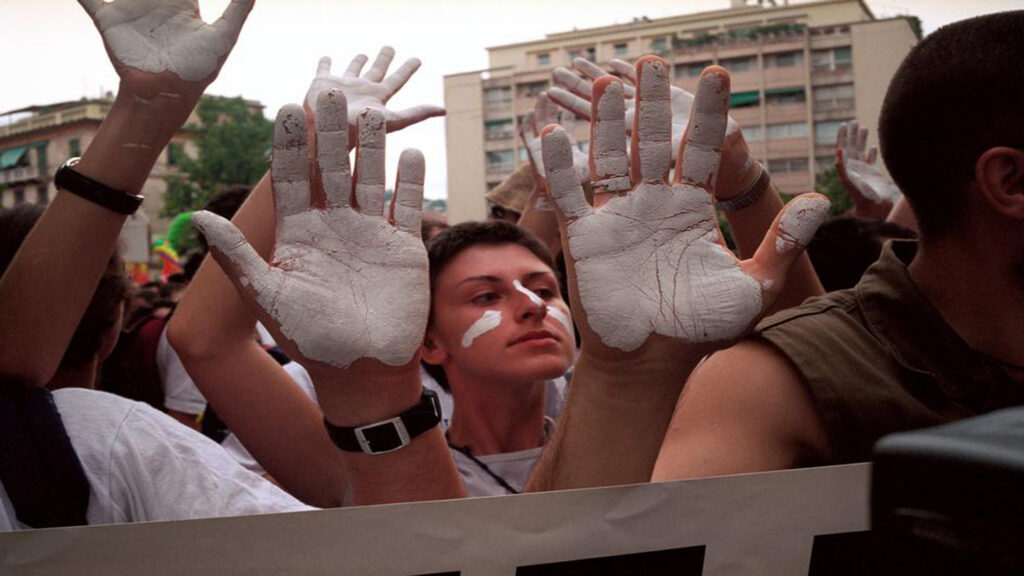
By that time, the direct action movement against neoliberalism was being overshadowed by a larger and less radical coalition of NGOs like Drop the Debt. The Genoa Social Forum was am umbrella network for over 900 of these organisations in attendance. Of course, more militant groups like Ya Basta’s “White Overalls” and anarchist affinity groups were also in attendance.
On the G8 side, 22,000 army and police were deployed for the three day summit. The inner city was sealed off and designated a “Red Zone”, with a declared shoot-to-kill policy. 400,000 Genovese had to move out of the city as the ring of steel closed around the city centre in those hot Days.
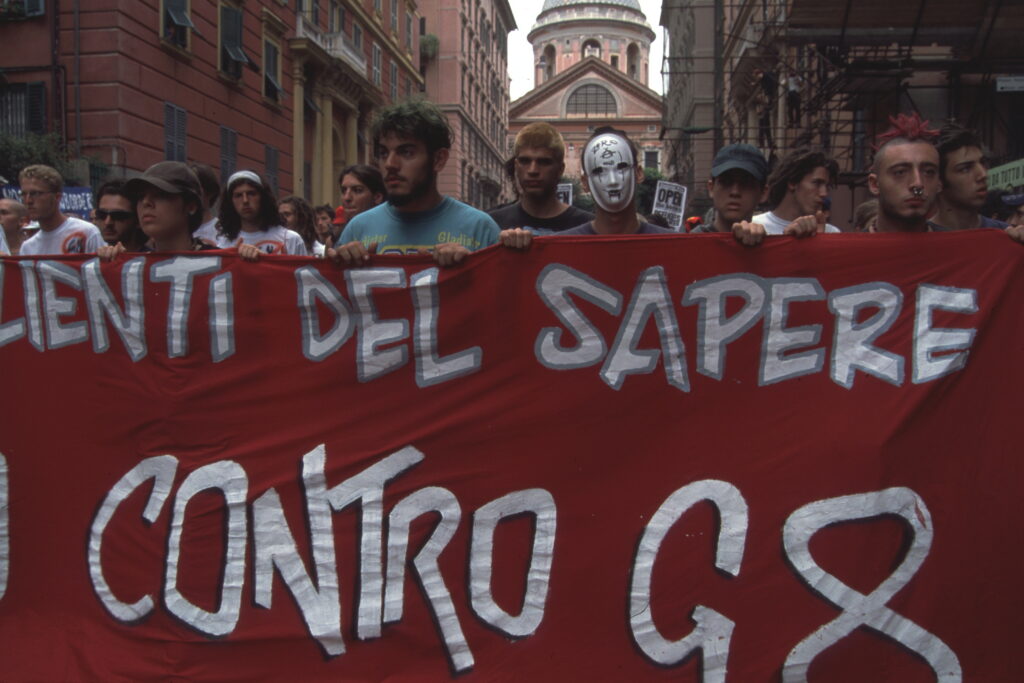
The Thursday immigrant demo passed off peacefully, but as everyone geared up for Friday, a strategy of tension was in the air. As the Italians would later say, the “weekend war” had started. Had the movement of movements been led into a trap? Or would the protesters succeed in shutting down the G8 summit? To cut a long story short, it was the former.
Amnesty International would describe the Genoa G8 as the ‘biggest suspension of democratic rights in a Western country since World War Two’. On Friday 20 July, police terrorism in the streets was unprecedented. They attacked and tear-gassed all the different groups taking part in the protest. Police threw tear gas from helicopters into the assembly point of the pacifist march, charged the White Overalls and Network for Global Rights before they even started their actions, and deliberately pushed part of the black block into the pacifist assembly point to create conflicts.
At Piazza Alimonda, police shot dead 23-year old Carlo Giuliani, then drove backwards over his corpse. Carlo has never received justice in one of Italy’s most controversial murder cases.
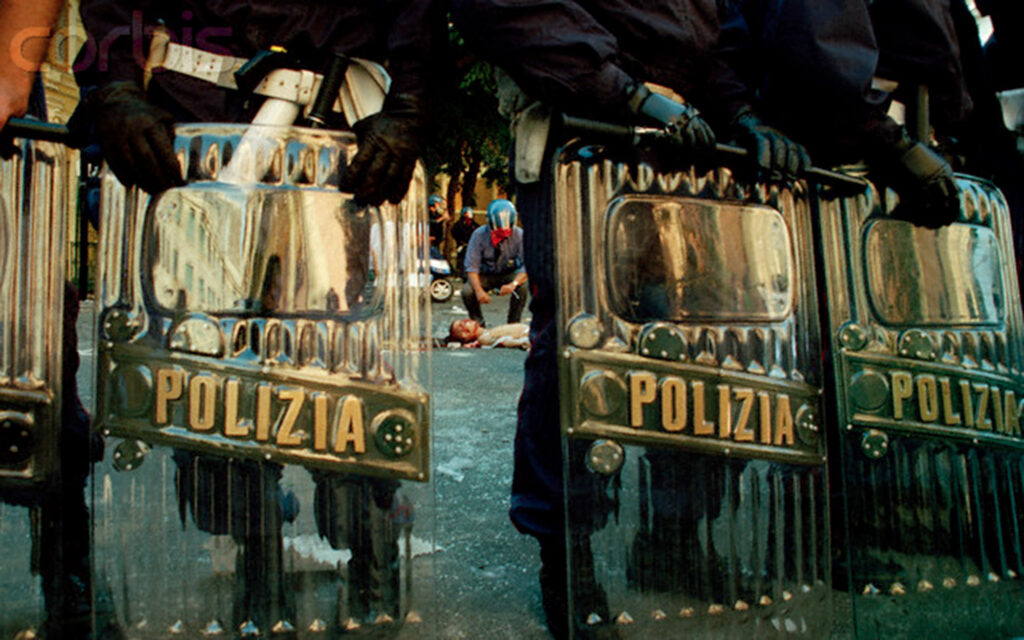
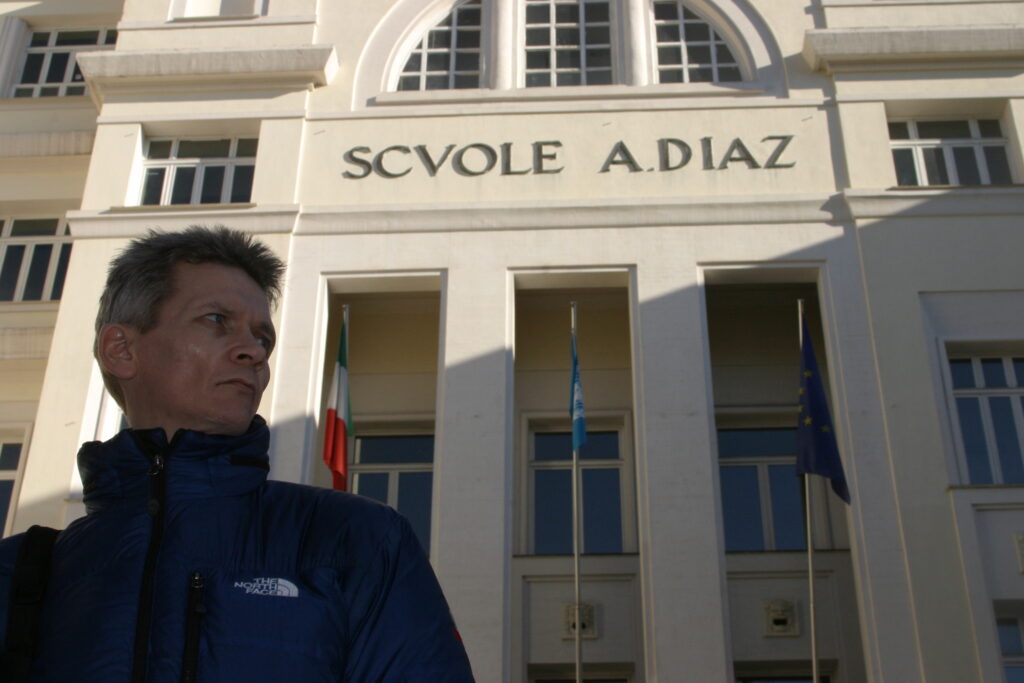
The next day, police attacked part of the mass march for absolutely no reason, and the streets were again filled with tear gas. Then, on Saturday night, the police broke into Diaz School, one of the accommodation places where activists were sleeping at that moment. They beat everyone up to the extent that most victims had to be carried in stretchers out of the school.
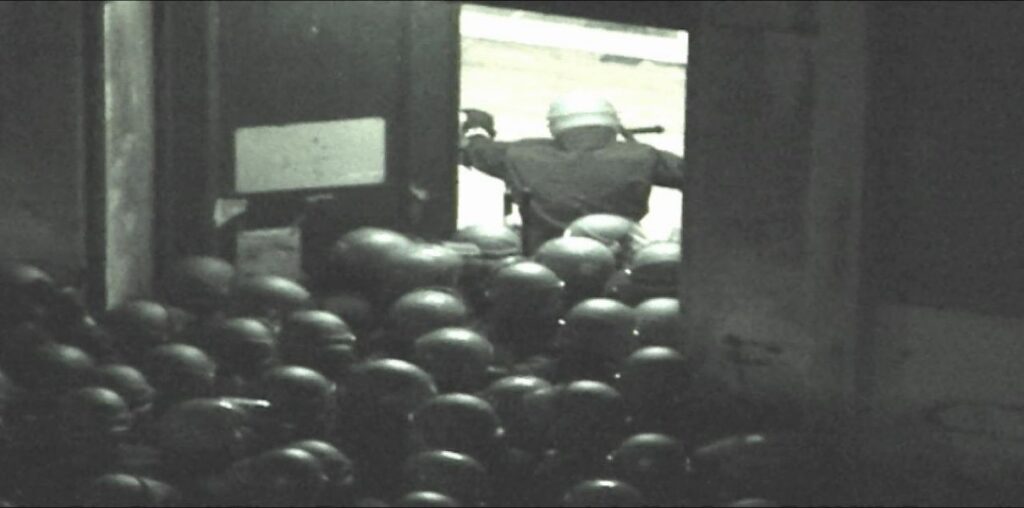
According to the testimony of one person who could escape before being arrested, people were lying on the floor saying ‘no violence’ when the police broke into the first floor where he was, and they battered people so badly that one of the officers had to intervene to stop the massacre.
Genoa prosecutors and police defendants would go on to describe the raid on Diaz as a ‘Mexican Butchers Shop’. Another site of horror was the Bolzaneto police barracks, ‘Where every law was suspended and the victims entered a very dark place’ where they faced torture for the next 72 hours.
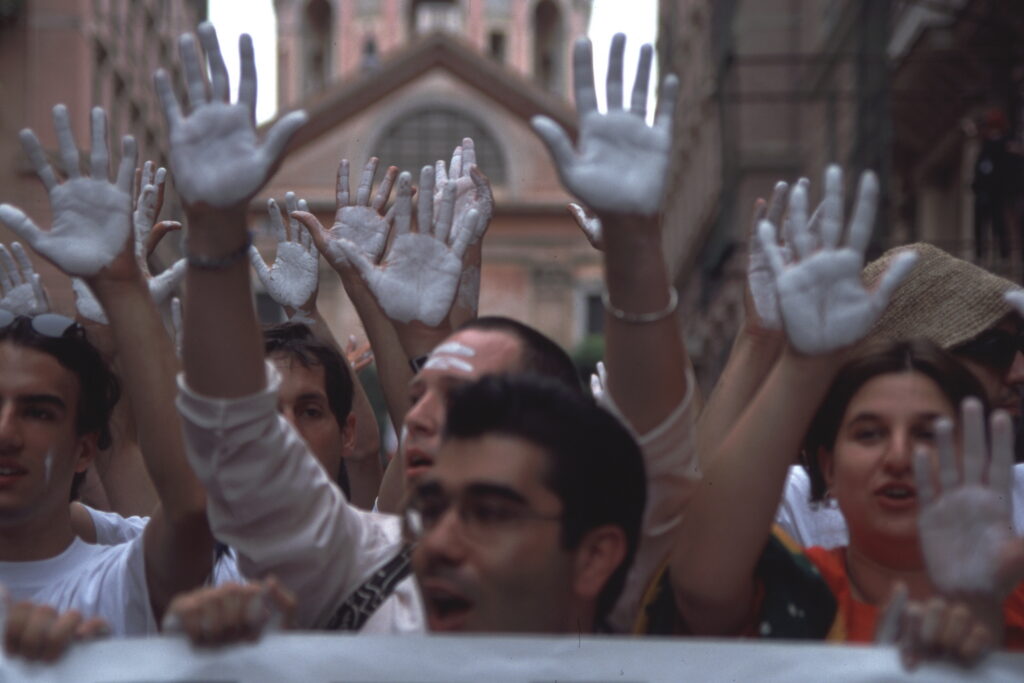
Over the next 11 years, comprehensive investigations led to two police trials where 25 high ranking police commanders and men were convicted for torture and human rights abuse, planting military weapons, destroying evidence, obstruction of Justice, false arrest and false statement. In the Bolzaneto Trial, 40 police and 2 doctors were convicted of torture and other crimes, with judges stating that Genoa was the “blackest day in the history of the police force”. 25 protesters were also tried, and 11 convicted, in a corrupt, political trial.
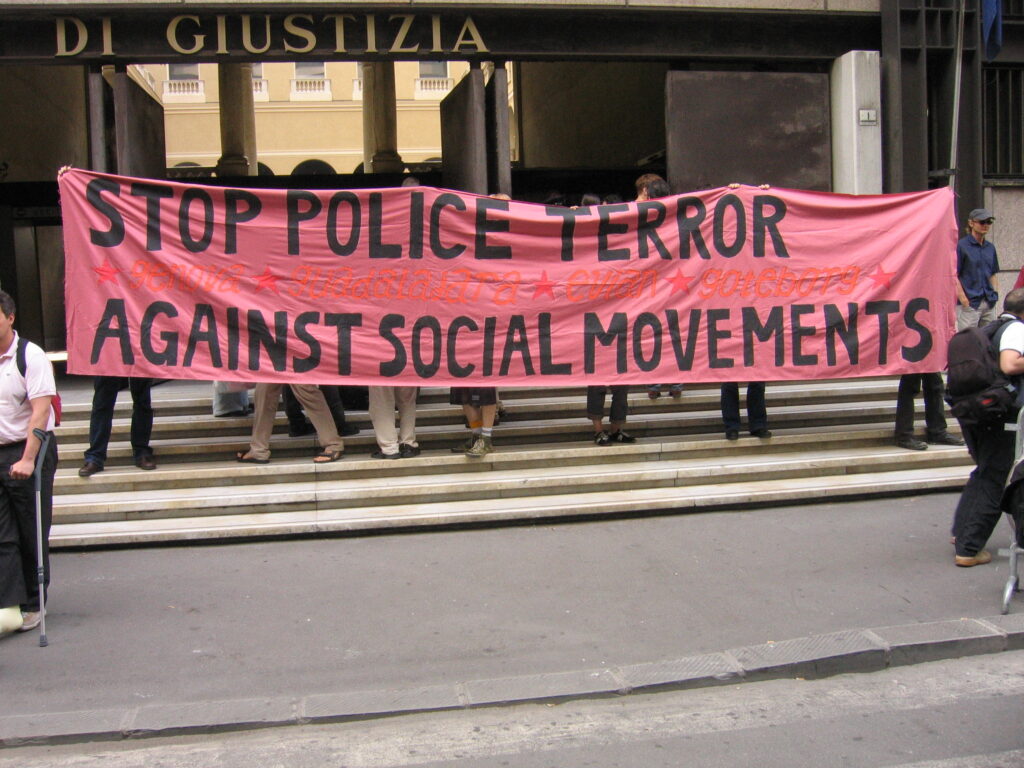
In Italy, it is often said that there was a “before Genoa” and an “after Genoa”, when the country was no longer ruled by the old class of politician but by the likes of Berlusconi and the far right parties such as Lega Nord and Allianz Nationale.
In the coming days, events will focus not only on the past but on the need to study the message of the Genoa G8 in context of today’s refugee crisis, caused by the collapse of American corporate globalisation, 25 years of global war, and the advent of climate chaos.