While the workers resisted fascism, they were also embarking on a social revolution, with magnificent achievements of self-management
~ Alfredo González ~
Everyone knows that in 1936, now 90 years ago, a civil war broke out in Spain; but what is often overlooked is that, while the working class fought against the coup plotters, they were also embarking on a social revolution, perhaps the most radical in history, with magnificent achievements of self-management.
The coup d’état carried out by a significant portion of the army, with the support of landowners, the bourgeoisie, and the clergy, was actually an attempt at a pre-emptive counter-revolution.
In a country of twenty-one million inhabitants, the number of illiterates was high. More than half the population worked in agriculture. The rural world still existed according to archaic social structures: while 50,000 landowners (including the Catholic Church) owned half of the cultivated land, two million peasants shared ten percent of that land.
Industry, concentrated primarily in Catalonia and the Basque Country, employed two million workers. The main sectors of this sector were controlled by foreign capital (American, German, British, Belgian, and French).
The Church had 80,000 members, including priests, friars, and nuns. It controlled education and important sectors of economic and social life.
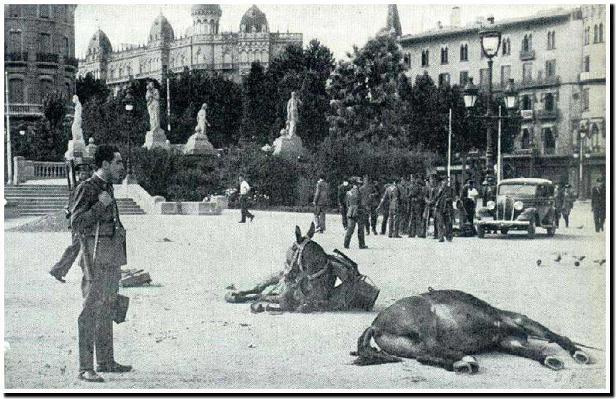
The Army was a pillar of Spanish society. It had 15,000 officers, who lived off the national budget, as well as 64,000 police officers and the Civil Guard, responsible for maintaining social order.
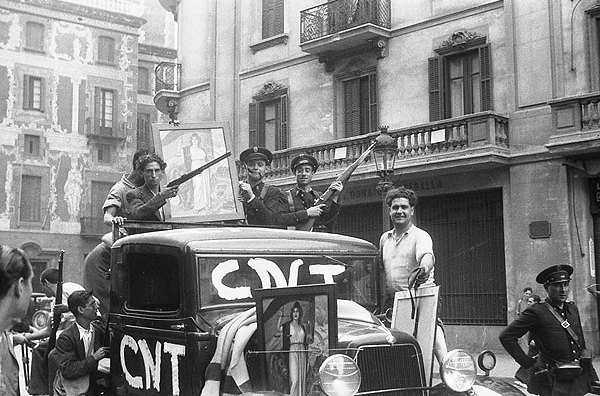
To combat this social system, the most conscious workers united in various organisations: the Partido Socialista Obrero Español (PSOE), with its central union, the Unión General de Trabajadores (UGT), which had 1,400,000 members; the Partido Comunista de España (PCE), with approximately 13,000 members; the Trotskyist-leaning Workers’ Party for Marxist Unification (POUM); and the libertarian movement, consisting of the Iberian Anarchist Federation (FAI), the Libertarian Youth, Free Women, and the central trade union, the National Labor Confederation (CNT), with approximately 1,500,000 members.
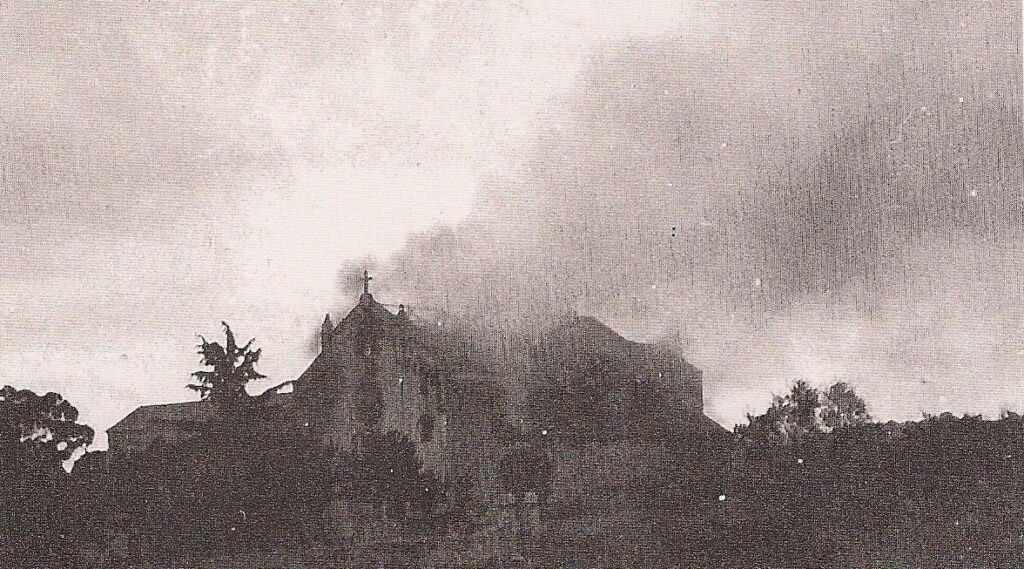
In 1931, King Alfonso XIII was deposed without bloodshed and the Republic was proclaimed, welcomed with enthusiasm. But the new regime did not satisfy the people’s aspirations. There was no redistribution of land, and the repression of the working class was as bloody as under the monarchy. For example, in 1934, a workers’ rebellion in Asturias (from the CNT and the UGT) was repressed with fire and blood, resulting in a horrific death toll: 3,000 dead, 7,000 wounded, and tens of thousands imprisoned.
In February 1936, general elections were held, won by a coalition of left-wing parties, the Popular Front. The new government granted an amnesty, but politicians continued with their usual manoeuvres. In May of that year, the CNT held a congress in which, among other things, the foundations were laid for social reorganisation in preparation for the revolution that was looming on the horizon.
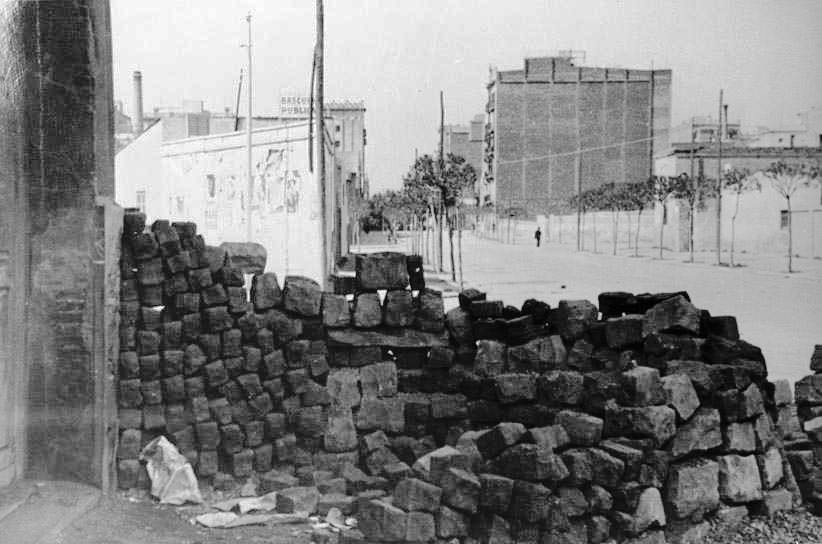
In July of that year, a series of army generals, the Falange (Spanish fascism), the Catholic right, and fundamentalists attempted a coup d’état, which failed in much of Spain thanks to the intervention of the people, who launched a revolutionary general strike. In Catalonia, where anarchism reigned supreme among the working class, the coup was also foiled, but the republican legal structure was maintained, although a Committee of Anti-Fascist Militias was created to lead the regional government. Similar situations arose in other areas.
Militia groups were quickly organised to fight the fascists and try to liberate the populations who had fallen under their yoke. Within the libertarian camp, a series of columns emerged that, without falling into militarism, would fight on the battlefields. These CNT-FAI militias fought, above all, to overthrow the old world of aristocrats, capitalists, soldiers, and priests, and to open the doors to social revolution, to anarchist communism.
Industrial Collectivisation
A new life was being born behind the scenes. The social revolution underway in Spain put into practice the great principle of the First International: “The emancipation of workers must be the work of the workers themselves.” Libertarian principles prevailed; decisions came from the grassroots. It was the unions that, within the companies, appropriated the means of production and decide on their new use.
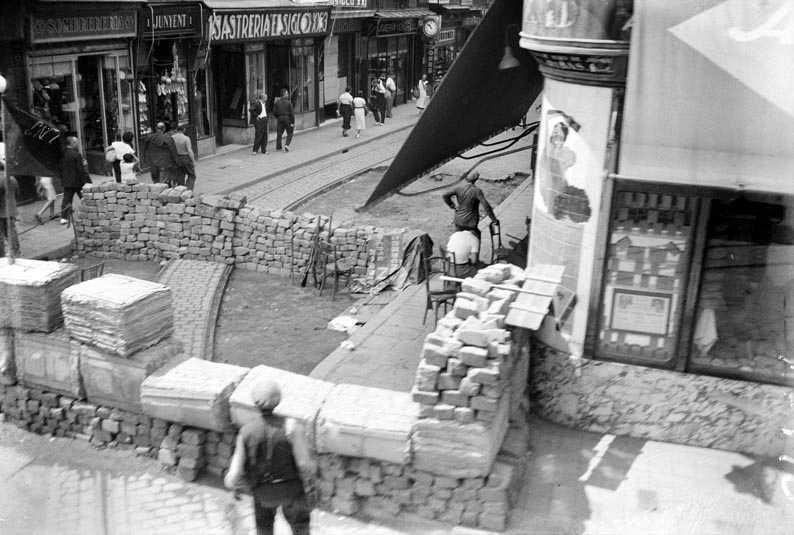
Production had to continue. The workers’ assemblies decided on the new organisation of the factory. The owners, most of the engineers and technicians, generally close to the fascists, fled. Works councils were elected among the production workers, committed to improving collective life: reduced working hours, increased wages, healthcare, pension security, all without neglecting improved working conditions and hygiene. They even worried about the future, creating research laboratories.
The variety of situations brought with it different experiences. In some sectors where the CNT was particularly strong, workers managed an entire branch of industry, from raw materials to the sale of the finished product; this was therefore a form of socialisation. Sometimes, workers managed just one company in the sector: in this case, it was called collectivisation.
The conditions imposed by the civil war hindered the development of collectivised industry due to the lack of raw materials, capital, and technicians. However, this industry, in the hands of workers, kept the country afloat. Based on libertarian ideas, workers were able to produce without bosses or military discipline; they took control of their own destiny by voting on important decisions in general assemblies and worked, not to enrich a boss, but for the good of all.
In cities like Barcelona, transportation was managed by workers: trams, buses, the subway, taxis, and railways. Even workshops and warehouses were administered by workers. Wages were raised, attempting to standardise them, and a 40-hour work week was introduced.
Due to the war, supplies to the major cities were difficult. Large food companies were seized and, in most cases, transformed into low-cost restaurants.
In the food industry, companies were collectivised, emphasising product quality and moving away from capitalist profit. All these improvements cost the socialised industries a lot of money, money that was possible thanks to the commitment and will of the workers.
It was also decided to support the militias and other communities affected by the lack of raw materials.
Agrarian collectivisation
In the countryside, life could not stop in July 1936; the harvest was looming, and the former landowners’ lands had to be cared for. Abandoned lands were confiscated, and farmers voluntarily contributed to the collective work by providing their machinery and livestock, and work was organised collectively. Living conditions for everyone improved immediately. Production increased thanks to the conquest of large estates or hunting reserves and a more rational use of the countryside. Collective management of profits made it possible to purchase machinery and build essential projects such as hospitals, schools, irrigation canals, and so on. Hundreds of thousands of men and women took their destinies into their own hands.
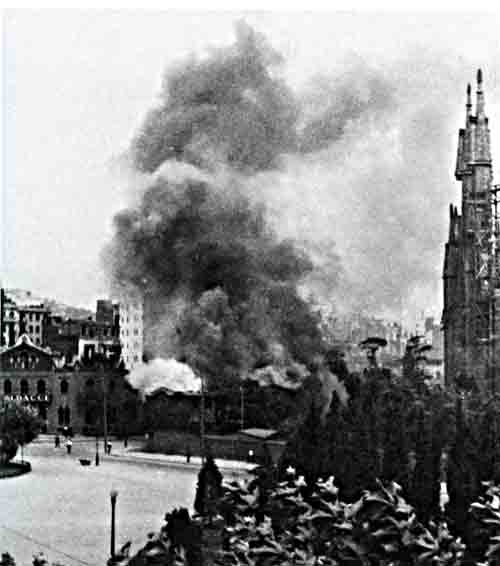
350 collectives were created in Catalonia, 500 in the Levant, 450 in Aragon (where 75% of the land was collectivised), and 240 in New Castile. Others were also created in Andalusia and Extremadura. Each had its own characteristics, as decisions were made in the collectivists’ general assemblies.
Regarding exports outside the collectivist system, it was immediately clear that federations were needed, with a compensation fund to ensure a balance between rich and poor communities. The distribution of food products was also organised so that they went directly from producer to distributor, without speculation by intermediaries.
Healthcare
In 1936, the health situation in Spain was catastrophic. In particular, infant mortality was very high, and the consequences of the war would exacerbate the problems. There was no national health system, but there were many mutual health insurance companies created by the unions. Efforts were made to unify all of this, although it was a complex undertaking.
In a year of revolution, numerous new hospitals were built. The fees for medical visits and surgeries were controlled by the Health Union. Sometimes, convents and other religious buildings were used to set up hospitals. The goal was to ensure healthcare for all segments of the population, particularly the working class, which had been neglected. The Louise Michel Institute for Childcare and Maternity was established in Barcelona, providing both medical and psychological care for children from 2 months to 4 years old. The same centre organised courses for pregnant women and established a childcare school.
Education
Anarchism believed that achieving a high level of education was essential for the emancipation of the working class. In Spain, primary education was mostly provided by religious orders, while university access was reserved exclusively for the privileged classes. Since the beginning of the 20th century, numerous rationalist schools had been established, following the model of Francisco Ferrer’s Modern School, which provided workers’ children (and others) with a scientific, encyclopaedic, and gender-coeducational education, free from dogmatism.
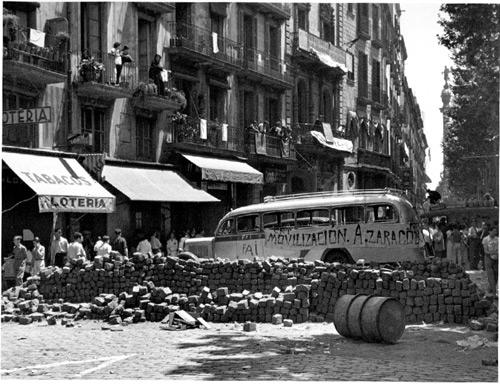
These schools were founded by unions or libertarian neighbourhood colleges. With the outbreak of the Revolution, they multiplied and, in some cases, merged with public schools in an attempt to extend education to all children and youth. Secondary education centres were also established, and in at least one case, a boarding school for agricultural vocational training.
War and counter-revolution
The Spanish Civil War was actually a struggle of the Spanish people against European fascism. From the July 1936 pronouncement, the coup plotters were supported by Nazi Germany and Fascist Italy. But also—and this is not often said—by the American companies Ford (which supplied trucks) and Shell (which supplied fuel). In addition to the “non-intervention” decreed by France and the United Kingdom, which actually favoured the coup-plotting army.
Only the Soviet Union aided the Republic, but in a completely opportunistic manner and fuelling the counter-revolution. The Communist Party selectively channelled Soviet aid, in addition to seizing key positions in the Republican military hierarchy. The corollary of all this led to the events of May 1937, in which anarchists were attacked in Barcelona by communist militias with the consent of the Republican government. Communist-controlled military units dismantled agricultural collectives in Aragon.
For reasons of anti-fascist unity, the libertarian movement had in many cases renounced its principles, such as accepting the militarisation of the militias or participation in the administrative and power bodies of the state (let’s not forget the CNT ministers). This renunciation of principles was one of the “keys” to the defeat of the Republican camp.
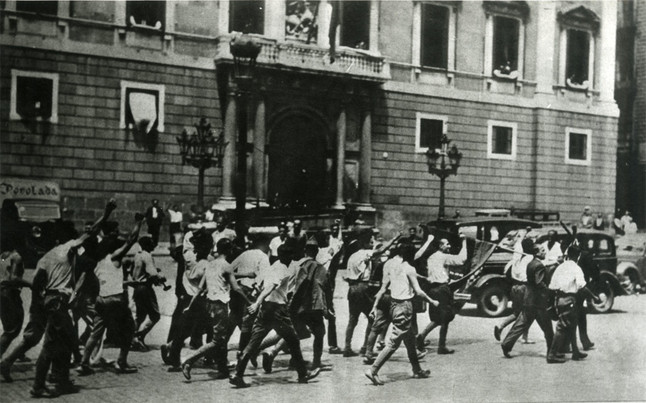
The military defeat led to the rise of fascism, under Generalissimo Francisco Franco, and a brutal repression that resulted in hundreds of thousands of exiles, imprisonments, and executions.
The fascist regime lasted until the dictator’s death in 1975. A “transition” to democracy followed, agreed upon between the heirs of Franco’s regime and the opposition parties, a pact in which the Catholic Church played a decisive role. No accountability would be held for Franco’s crimes and repression.
Ninety years after the Revolution, what remains? Well, very little. Its memory is systematically erased, as are its achievements; the war is spoken of only as a conflict between fascists and anti-fascists, and is even trivialised. The unions are bought by the state and at the service of the employers. But the social situation remains dire for the working class, with low wages, high unemployment, and neo-fascists roaming around as they please. But everything can still change…
Machine translation from Umanità Nova 106.18; Photos collected by Ad van der Neut