90 years since the death of the great Russian-American anarchist
~ Frank Jacob ~
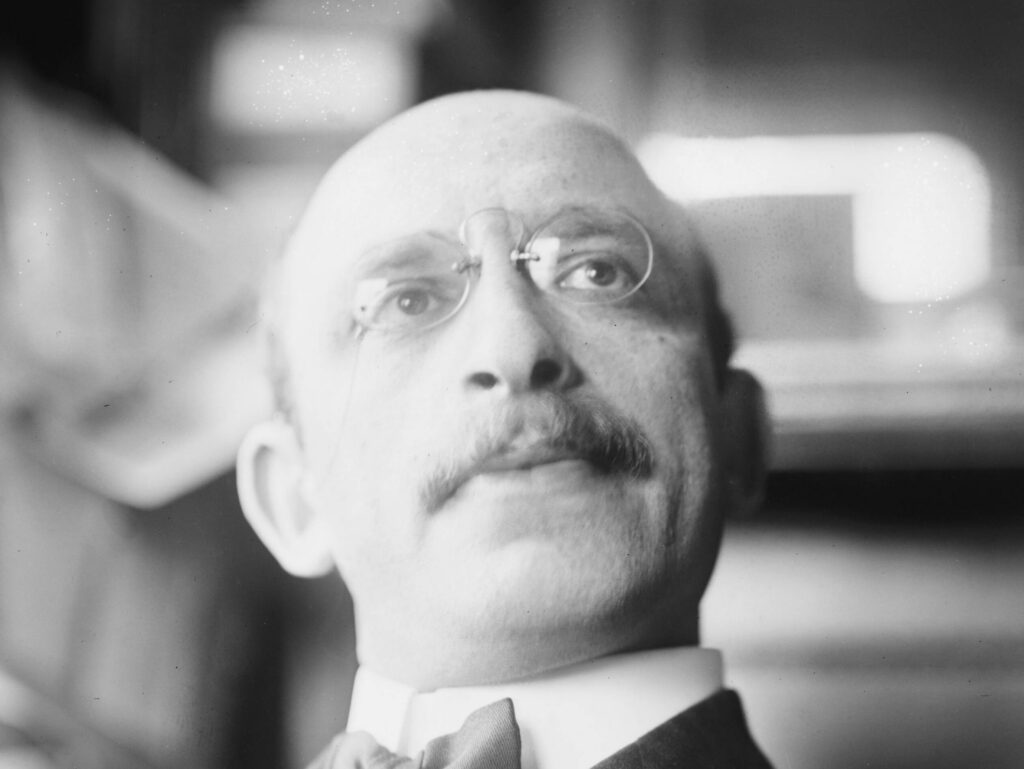
On 28 June, 1936, Alexander Berkman ended his life. Suffering from prostate cancer and financial hardship, he could no longer endure. Two weeks before the Spanish Civil War began, one of the most prominent anarchists of the previous five decades died. Emma Goldman, his former lover and lifelong friend, was in agony at the loss of her dear comrade, and the world had lost a great mind—one who refused inequality and repression, a man who fought relentlessly for freedom and revolution, despite his deep disappointment in the aftermath of 1917’s Red October.
Berkman was born in to a Jewish family in Vilnius (then part of Tsarist Russia) on 21 November 1870. Like many young Jews of his generation, he soon found himself in conflict with tradition and family rules. At school he drew attention for his “misfit” behaviour and got into trouble, while becoming interested in Russian nihilism and inspired by Nikolay Chernyshevsky’s novel What Is to Be Done? (1863).
With few prospects at home, he began to dream of the United States, imagining a freer, more liberal environment. Upon arrival, however, he—like many other immigrants—found that labour exploitation was a given. Berkman radicalised further, especially after the Haymarket tragedy, and was increasingly inspired by Sergei Nechaev’s demands for the true revolutionary as set out in his Catechism of a Revolutionary (1869). Everything else seemed secondary to the young man; he had dedicated his life to a greater cause and became an anarchist. His personal relationships, including with the young Emma Goldman, suffered for it: Berkman seemed unwilling to enjoy life so long as the revolution had not yet achieved true equality.
In the United States of the late 19th century, however, equality often seemed an empty phrase, and the exploitation and violence used against striking workers infuriated the young anarchist. Berkman accepted that change in such conditions might require direct action. When the Homestead Steel Strike of 1892 turned violent, he decided to assassinate Andrew Carnegie’s chief operating officer, Henry Clay Frick. Three shots and two stabbing attempts failed to kill Frick, and—to Berkman’s own surprise—he was not killed in the act. He quickly became known nationwide and beyond as an anarchist assassin and was sentenced to 22 years in prison, 14 of which he spent in a cell in Pennsylvania, where he was “buried alive” (Goldman), before his release in 1906.
After “the horrors and darkness of [his] Pennsylvania nightmare” (Berkman), he returned to public life and again became active in the anarchist movement. Reunited with Goldman, he worked on Mother Earth and took on other roles, notably as editor of The Blast, published in San Francisco in 1916 and 1917, seeking to awaken the revolutionary consciousness of the American working class. During the First World War, he and Goldman organised the No Conscription League and openly challenged the U.S. government’s role in the war. In a speech at Forward Hall on June 14, 1917, Berkman argued that if American workers “knew their real interests they would know they are really being used to advance and multiply the profits of the bosses.” Both anarchists were soon surveilled, arrested during the Palmer Raids, and charged—effectively—for treason because they had publicly criticised conscription. After another prison term, they were expelled from the United States along with nearly 250 other radicals in 1919, shipped out without being told their destination.
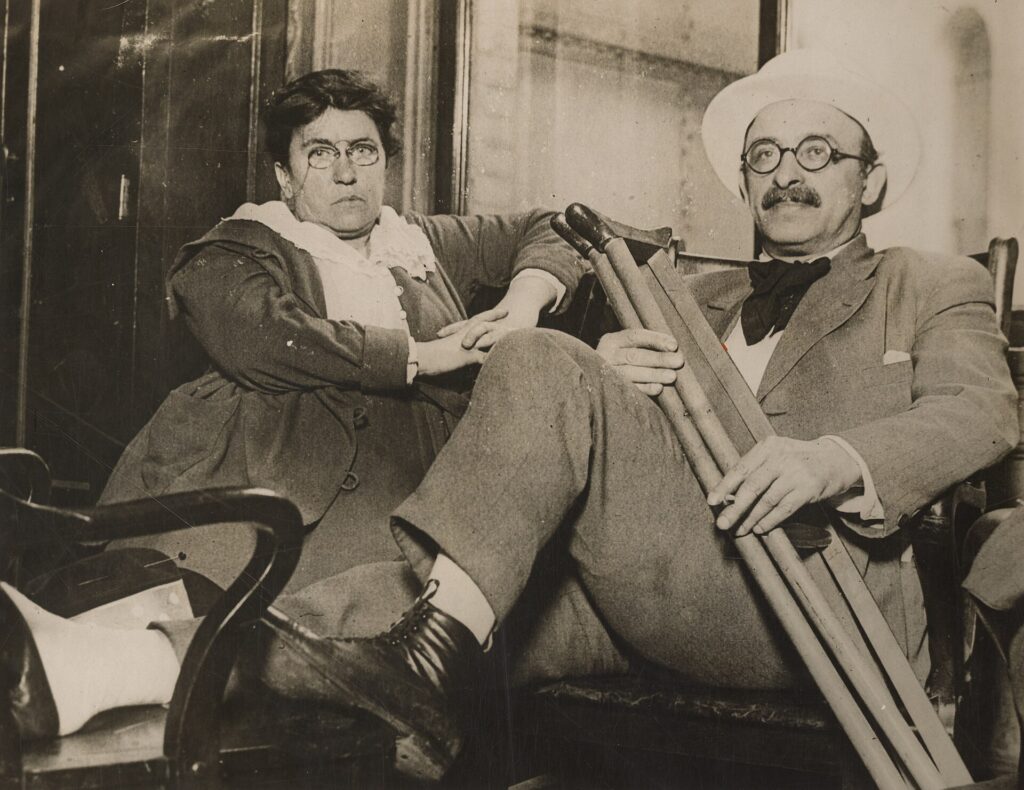
From the U.S. transport ship Buford, Berkman wrote to Eleanor Fitzgerald about the days on this “mystery ship.” The uncertainty of not knowing where they were being taken weighed heavily on those aboard. When they learned they were bound for Soviet Russia—the land where a socialist revolution had swept away the capitalist elite—cheers broke out, and hope returned. In Russia, they believed, they could help shape the post-revolutionary world and spread the word to ignite a global revolution. Once again, however, Berkman’s hopes were disappointed. Realities in Soviet Russia were far from what he had imagined. He was willing, at first, to accept some Bolshevik centralisation so long as it seemed to safeguard the revolution and defend it against foreign intervention. Unlike Goldman, he realised too late that the revolution had already been corrupted, and its democratic elements crushed. It took the events at Kronstadt in March 1921 for Berkman to break with Lenin and the Russian Revolution. Soon after, he and Goldman left Russia, spending the following years in exile: in Sweden, Germany, and France.
Berkman’s works on the Russian Revolution and Bolshevik rule received only limited attention, though his sharp analyses of post-revolutionary corruption retain theoretical value to this day. His writings on anarchism are without doubt engaging and informative—not only for scholars or revolutionary activists, but for anyone interested in anarchism as an alternative philosophy or way of life. Yet his intellectual work since the early 1920s barely sustained him. He worked as an editor and translator but could hardly make a living, relying continually on friends and their support. By the time he ended his life, he had lost much of his intellectual influence in the United States, where—much as elsewhere after the First World War—the anarchist movement had declined in strength and numbers. In the U.S., Berkman was, and too often still is, remembered only as the anarchist assassin. His reflections on life and its anarchist possibilities, however, offer far richer ground for discussion and debate than such a narrow view allows. It is therefore fruitful to look beyond the stereotype and rediscover the ideas and visions of Alexander Berkman—thoughts that still hold the power to change the world, even today.