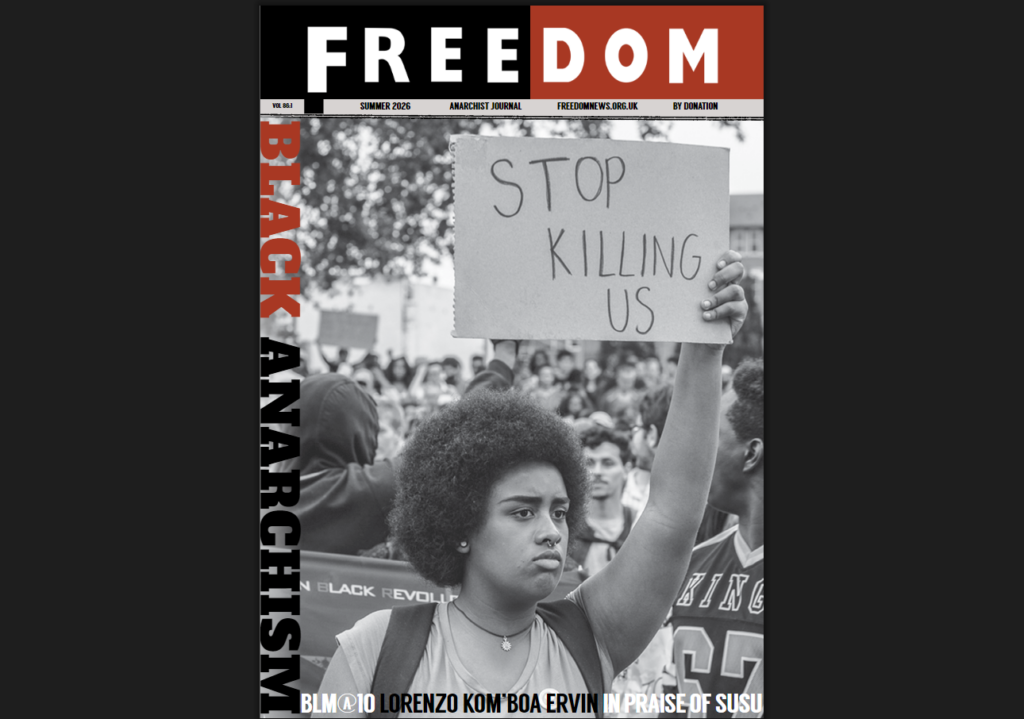
The Black anarchist experience in the fight against oppression and domination of all stripes is at the centre of our new print edition
~ Daniel Adediran ~
I am sat here, in north-eastern Brazil, in a State called Bahia, in a city known as Salvador, writing this editorial for the second time. In several weeks of trying times, (including the apparent disappearance of the first go-round of this editorial) I have my coffee, a glass of water, a cigarette and my word document open once again. It is a fitting example of what the content of this journal is going to entail.
In Brazil, particularly in this region, there is a figure known as the “Malandro”, which roughly translates in English to a “hustler”. A figure, who after endless disappointment, trial and testing periods, gets himself up, dusts himself off and with his own skills, makes a world that he can navigate in, despite the harshness and frank indifference by the world around him. This has been my experience for the last few weeks and I have to say, it has made me come to appreciate the term. In the west, the hustler has negative connotations, but in a country with the second largest Black population and the largest African diaspora in the world, it is a term that carries significant resonance. Black people across the world have been the subjects of unending human indignity, cruelty and injustice. Yet, they do what I have done after every disappointment in the last few weeks. They get up, dust themselves off and use their skills to make the world navigable for them.
It is telling then, that in cultures of African descent, the “Malandro”, the “hustler”, the “trickster” is revered. In Nigeria, there is Ajapa the Tortoise, not the strongest or the swiftest of animals, but one who has had to use his smarts to defeat the Lion and the Leopard and sometimes, even outwit the deities. There is Eshu, an Orisha that is associated with cunning and trickery, for better or for worse, of the humans who deify him. And this culture has carried over into the West, as the unwilling transportations of Africans did. Br’er Rabbit is Bugs Bunny. The undisputed king of the hip-hop archetypes, outliving the Mobster, the Gangster, the Pimp, and the Wise Brother, is the Hustler. There is something in the African and Diasporic cultural consciousness that acknowledges that physical strength or force of arms is not the final arbiter of a man’s worth. And while the “Malandro” is not the richest, or the most powerful in any of these cultural outputs, while he does not always succeed and often does things that are seen as morally reprehensible or questionable, there is a level of respect and honour that is due to him. So much so that the archetype is incarnated into primordial forces or spread across indestructible cultural outputs.
The image of the hustler is an image that, for me, resonates with the anarchist experience. Frankly unpopular, the anarchist is a threat to his enemies, those who, since the age of the agricultural revolution, have by force of arms, decided the direction humankind was to go in. He is deprived of the tools needed to fight, to liberate himself and work with others to do the same. The odds are stacked. Yet to give up this fight would make the world unnavigable, would crush his spirit and eventually the spirit of liberty and communion that he believes lies in everyone. So he fights. He has his bag of tricks, mutual aid, direct action, means and ends. He has his philosophy, the liberty and autonomy of the individual, the necessity of other free human beings to associate and disassociate with, the inherent corruption of all illegitimate authority, and with these he fights.
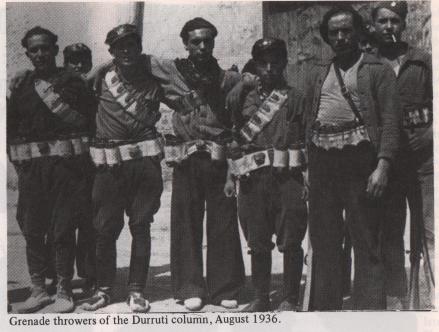
This is a fitting example of why all Black people (notice the capital ‘B’), those racialised as Black (people of African descent) and those politicised as Black (third world peoples suffering under domination) have come to anarchism, slowly, fitfully, in whatever language or guise it may come under, and at its attempted destruction everywhere across the globe. It is fitting that this European interpretation of a philosophy of autonomy and community has transmuted itself around the globe, into the hearts of prisoners in the Radical New Left in the United States, to the sufferers of colonialism and fascist Imperialism in China and Korea, to the burgeoning movements of dictatorship overthrow in North Sudan. Market capitalists and State capitalists thought the movement had been snuffed out in the 20th century with the End of the Makhnovshchina and collapse of Republican Spain. But hope is like a weed, and weeds have a tenacious way of spreading exactly where you don’t want them.
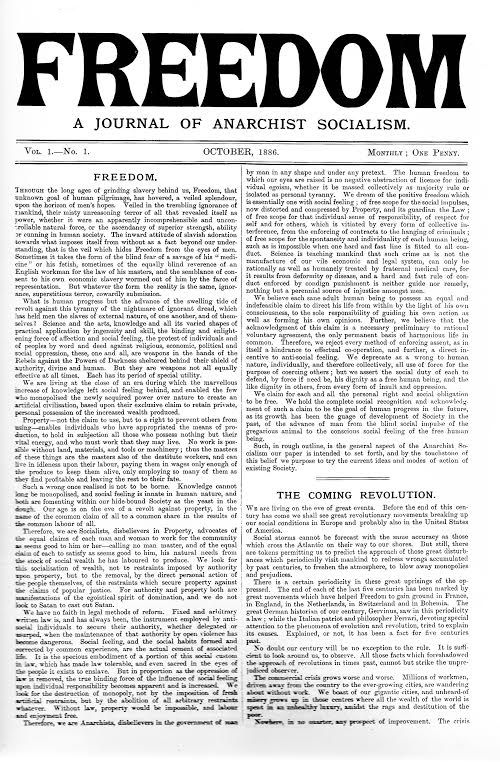
In this, special, May Day edition of Freedom, you will be hearing from the first (and original) types of Black people. They have stories, articles and information about the Black anarchist experience, the synthesis of the “Malandro” figure in the fight against oppression and domination of all stripes. We hope you’ll learn, enjoy and most importantly, be inspired to action.