Authoritarian regimes have regularly used the World Cup for sportswashing
~ Aris Chatzistefanou ~
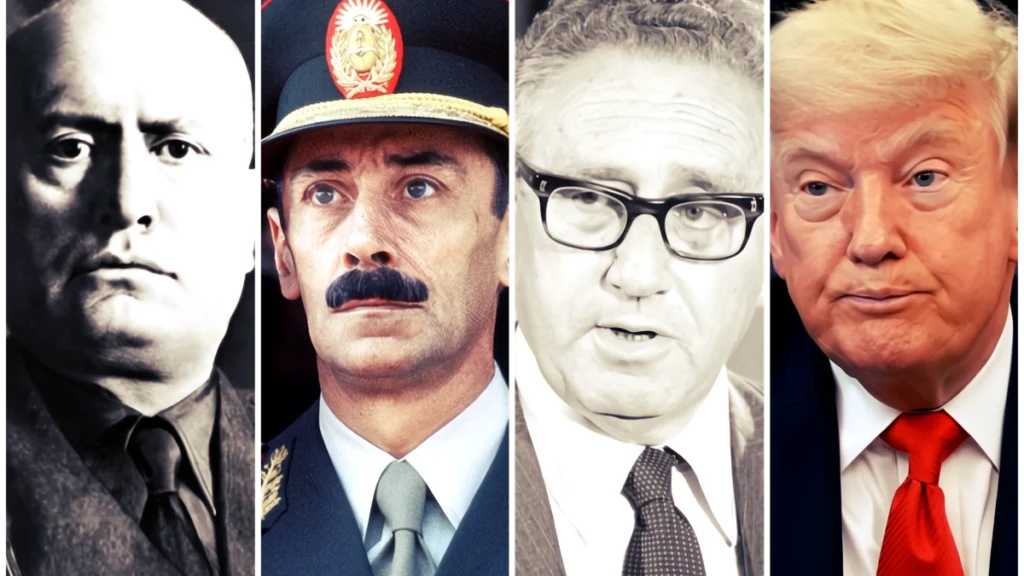
It was only the second FIFA World Cup when FIFA bowed to a fascist regime: in 1934, Benito Mussolini saw the tournament as an opportunity to proclaim the superiority of his regime on the international stage, linking it to the athletic ideals of the Roman Empire. Leaving nothing to chance, he personally selected the referees for Italy’s matches and even hosted lavish banquets for them the day before the games. The blatant bias shown by several referees in Italy’s favour was so obvious that some had their refereeing licences revoked upon returning to their home countries.
In 1978, when it was Argentine dictator Jorge Videla’s turn to host football’s greatest tournament, the manipulation of matches was less obvious but far darker and, quite literally, murderous. In the decisive second-round match against Peru, Argentina needed to win by at least four goals against a team that was then at the height of its footballing powers. As Peruvian senator Genaro Ledesma later alleged, Videla agreed to arrange the disappearance of political opponents of Peru’s dictatorship–most likely using his regime’s notorious practice of throwing people alive from aircraft into the Atlantic Ocean–in exchange for Peru deliberately losing the match.
To ensure there could be no doubt that the message reached every Peruvian player, Videla visited their dressing room shortly before kick-off accompanied by a distinguished guest: the architect of American diplomacy, Henry Kissinger, who later claimed he did not remember the incident. Having the dictator of the opposing country appear in your dressing room moments before the match begins is intimidating enough. Having him accompanied by the U.S. National Security Adviser whose government supported coups, paramilitary death squads and torture through Operation Condor gave entirely new meaning to the phrase “high-stakes match.” In the end, Peru “managed” to lose 6–0 to Argentina.
Sportswashing
Regardless of the methods employed, World Cups hosted by authoritarian regimes have consistently followed the basic logic of sportswashing: the host nation showcases its grandeur and achievements while, with the assistance of an ever-willing FIFA, sweeping human rights abuses under the carpet. Russia in 2018 and Qatar in 2022 followed the same model, albeit with varying degrees of success, largely depending on how they were covered by Western media.
But does Donald Trump belong in the same category of authoritarian–or potentially dictatorial–leaders as Mussolini and Videla, using sport to launder his image? The answer is less straightforward than it might seem.
In his book Red Card, academic and author Jules Boykoff portrays the American president’s political affinity with FIFA president Gianni Infantino as part of a broader turn towards fascism. Yet Trump presents a peculiar case: throughout this tournament he has consistently highlighted precisely those characteristics that have made him unpopular internationally. The exclusion of referees and players from Africa, the lengthy interrogations of players from the Middle East and Asia, the repeated harassment of Iran’s national team, and the refusal of entry to supporters who had purchased tickets and accommodation months in advance do not suggest a leader seeking to improve his image through a major sporting event. Even Videla temporarily suspended the arrests and executions of political opponents during the tournament, while Hitler allowed Black and Jewish athletes from abroad to compete at the 1936 Olympics. Indeed, it was the United States team that ultimately removed two of its own Jewish sprinters so as not to offend Nazi Germany.
Perhaps the most significant difference is that all the previous authoritarian regimes that collaborated with FIFA were at the height of their power. By contrast, Trump is geopolitically weakened (by Iran, among others), politically diminished (with some of the lowest approval ratings in modern American history), and economically incapable (with inflation rising and the artificial intelligence bubble poised to burst). The World Cup arrives at a moment when the American empire is in decline–a period in which it no longer seeks international approval but instead believes it can impose its will on the rest of the world through either disguised or overt force.
Machine translation from Info-War; Image: CUNY Academic Commons CC BY-NC-SA 4.0