Nearly all the tools for a police state are now in place, just waiting for the far right to take over
~ Rob Ray ~
Many people have heard of the “ratchet effect,” which is often a quick reference point for anarchists looking to explain our relative disinterest in party politics.
In short, it’s the idea that in any given election there are two nominal proposals offered, “left” and “right,” but the nature of capitalism and ruling class priorities continually pushes towards more extreme rightism regardless of which one is “in power.”
If the “left” party is in control it is lobbied, bullied and bribed to continue whatever the status quo might be. If the “right” party takes charge it acts as the ideological shock troop of whichever wing of the ruling class happens to be dominant.
Thus you see, for example, Thatcher taking extreme measures to defeat the organised working class in the 1980s and ‘90s, imposing a deeply ideological program of privatisation as part of the great neoliberal shift. This took place even though her economic arguments never made any long term sense (and have manifestly been shown as nonsense, as anyone who has taken a train, rented or swam in a river recently can tell you).
But she is then followed by Tony Blair, a man Thatcher described as her “greatest triumph,” who not only doesn’t roll back these measures, he extends them. It’s him we can blame for gutting Royal Mail, for example. After Blair comes Cameron, who imposes a radical and deeply damaging program of austerity, Johnson, who oversees a traumatic break from the EU, leading to, today, Starmer. Whose “leftism” extends to replacing a few minor workers’ rights but also involves putting Wes “private healthcare” Streeting and Shabana “die human rights DIE” Mahmood in key positions.
Starmer’s own knee-jerk authoritarian streak, while occasionally complained about by the far right, is also a continuation of the trend. It’s hard to look at the extension of government snooping into every aspect of our lives and its extraordinary attacks against (left-wing) protest without seeing both tracks already laid by Patel and Braverman, and sleepers being put down for a future government.
Which brings us neatly to Netpol’s new report, How Repression Became Routine.
It doesn’t make for pretty reading, though little of it should be shocking to regular readers of Freedom. Its executive comment notes:
“Repression has become routine in British protest policing: new and overlapping laws, combined with a growing tendency to treat protest as a security issue, have normalised surveillance, heavy-handed policing, and punishment, with harm concentrated on marginalised groups. Protest is increasingly policed as a matter of threat management rather than democratic expression.”
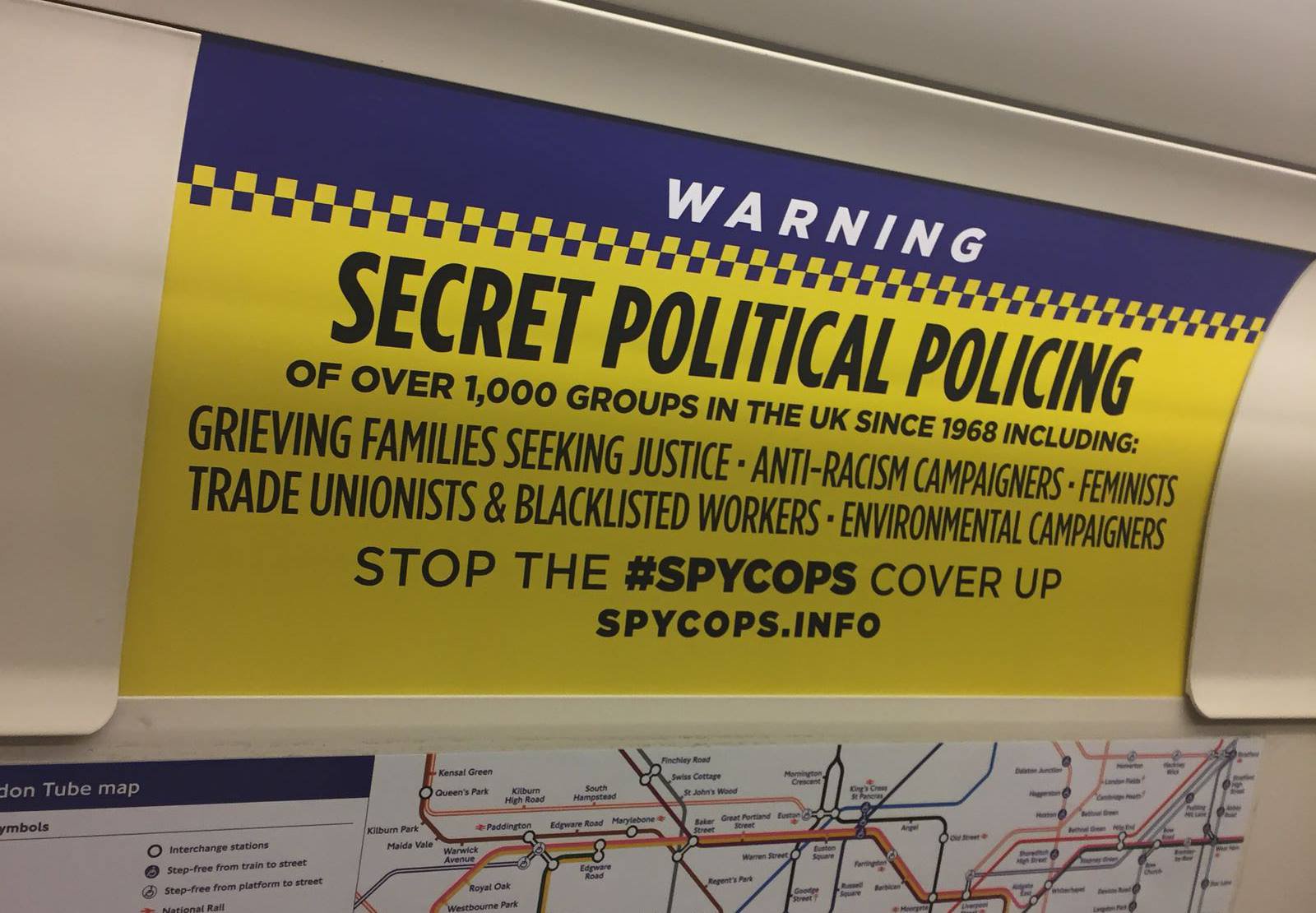
Regular unlawful use of powers, heavy use of surveillance and targeted harassment, extraordinary use of anti-terror legislation. The right to protest itself has been attacked, most recently through the reprehensible decision this week to ban the annual Nakba Day rally (while letting Tommy Robinson’s mob do their thing instead).
As I’ve noted before, the far-right’s constant whining that it’s the main target for these restrictions on freedom of expression doesn’t stand up to a moment’s serious scrutiny. But as Netpol’s report highlights, that doesn’t mean the ratchet effect isn’t taking place, or that the wildest dreams of panopticon-obsessed senior civil servants aren’t coming true.
The fact is nearly all the tools are now in place so that when the next, more radical step towards autocratic rightism is taken – most likely by Reform but plausibly by a Tory or Labour PM – little will need to be added.
The use of terror designations, favoured by the likes of Erdogan and Putin to justify rounding up political prisoners, has already been extended into the realms of farce by “centrist” Yvette Cooper. Facial recognition and online monitoring have already been legally enabled and put into practice. Police have already been given a blank cheque to treat dissent as a security threat. These are measures the adults in the room have embraced even in the relative absence of serious unruly political behaviour.
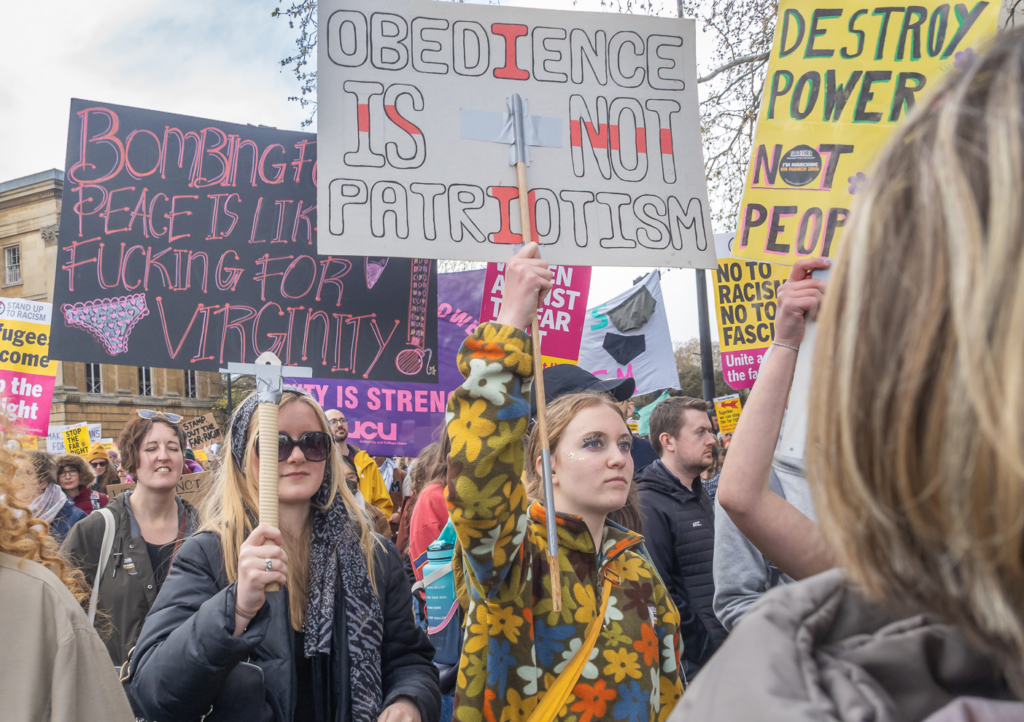
It was encouraging to see the vast crowd in London on Saturday making its voice heard against the far right. But such mass, tidy A-B marches do not, by themselves, pressure governments, and this one, Labour, is well on the way to banning anything that truly does. We cannot simply demonstrate now and again in the vague hope that the public will lose interest in Reform’s snake oil, because they are ultimately a symptom, not the core problem. The core problem is a public that is simultaneously deeply cynical about party politics, while passively acquiescing to the repression of extra-parliamentary politics – the only place where true change can be generated.
The argument which must be taken to the public is that yes, the centrists are incapable. And so is Reform. And that even the nice and fluffy Greens, should they take power, would ultimately be locked into forms of status quo-ism.
We must start by challenging and deconstructing the apparatus of repression. It’s not about defending Labour, or even stopping Reform UK. It’s about clogging the ratchet.
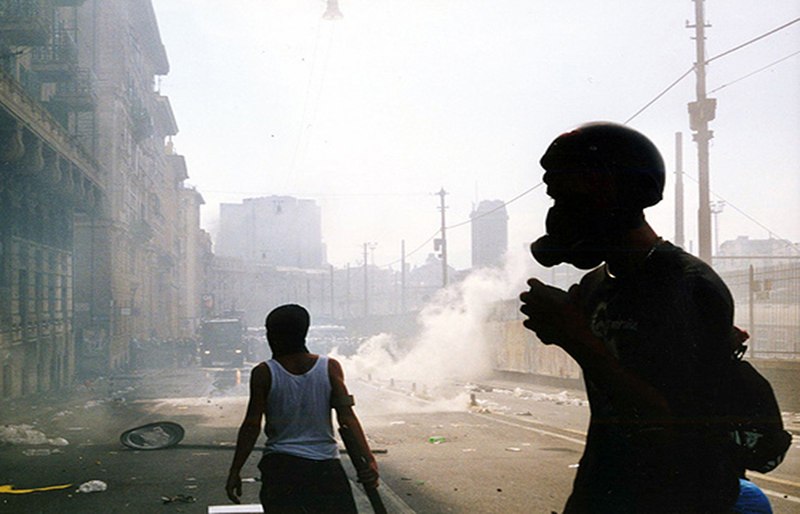
Photo: Peter Marshall