Massive database has been available to all police officers on their work phones since 2022
~ Contre Attaque ~
The Ministry of the Interior swore that there is no facial recognition in France, but in a meticulously researched investigation, the investigative media outlet Disclose reveals the existence of dystopian police methods. At the crossroads of a multitude of surveillance technologies, including facial recognition, the police monitor and repress with total impunity.
The municipal elections, with massive voter turnout, have in recent weeks been the scene of a farcical escalation of security measures. From lethal weapons for municipal police officers to algorithmic video surveillance, and including “smart” streetlights, candidates from all sides have rushed headlong into an avalanche of proposals that are increasingly ineffective and dangerous for our freedoms. Above this political void, Disclose this week reveals Orwellian police practices that have persisted for years in complete secrecy and that should command our attention.
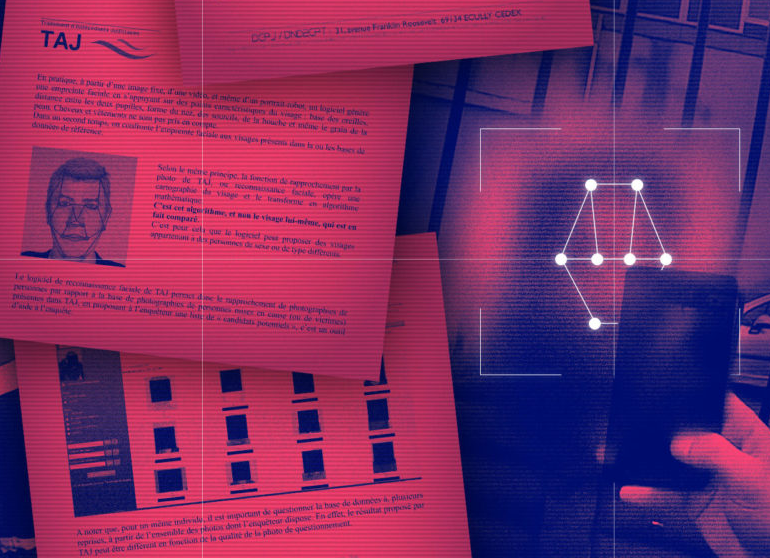
Since 2022, the national police have been authorised to use “photographic matching,” a feature available on the tablets and smartphones issued to all officers, both police and gendarmerie. This measure was implemented at the instigation of Céline Berthon, then head of the Central Directorate of Public Security and now head of the DGSI – the French counter-espionage service. In practice, this device, presented as a simple digital tool, not only allows for the automated reading of identity cards and license plates, but also provides access to a facial recognition system.
A technology that, as Disclose’s investigation demonstrates, is directly connected to the TAJ, the French criminal records database. This other police tool, accessed 1 million times in 2024, contains approximately 17 million records on individuals implicated in investigations, as well as 48 million victims. In other words, virtually the entire adult population. It includes the individual’s first name, last name, address, and date of birth, but also highly sensitive personal information such as political or religious affiliation.
A simple photograph taken during a check, with or without the person’s consent, therefore grants “real-time” access to this colossal amount of computer data, entirely outside of any legal framework. In its investigation, Disclose indicates that the misuse of facial recognition is widespread and pervasive throughout the police force. Yet, the law is perfectly clear: a circular from the Ministry of the Interior explicitly prohibits the use of facial recognition during “identity checks.” Even more seriously, only “individually designated and specially authorised” agents are supposed to have access to these devices, and only within the context of a criminal investigation, an offence, or a misdemeanour. In practice, it is very common to see police officers taking photos of protesters with smartphones.
Total Impunity
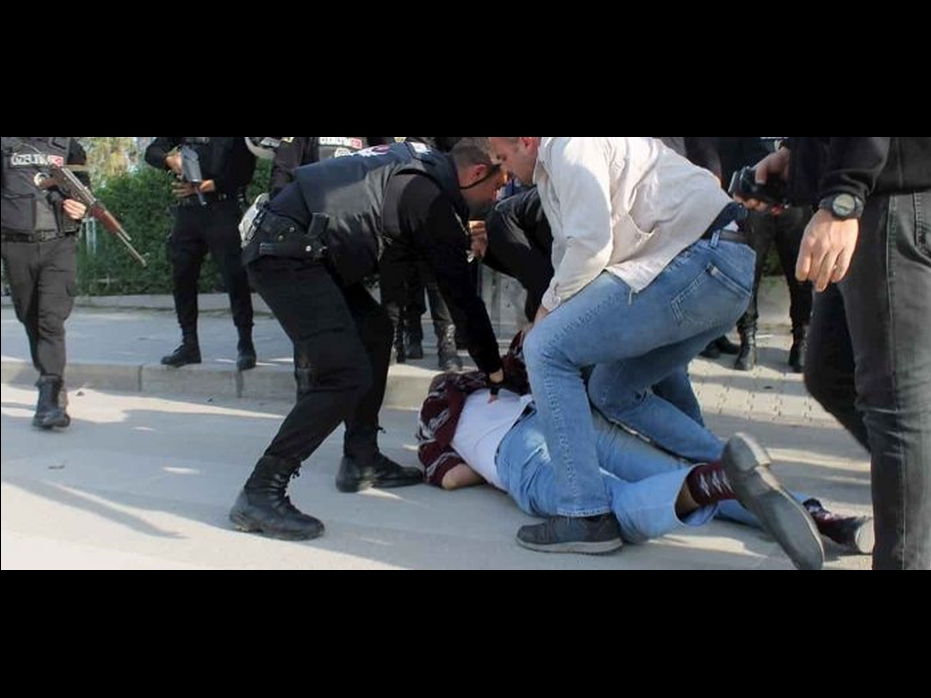
The investigative website lists the many uses of this mass surveillance tool: identity checks, protests, or even squat evictions—anything is fair game for whipping out the device. Several victims recount the dystopian practices of the officers. In addition to photos taken without the knowledge of those being checked, or even by force, the feeling of impunity is so pervasive that some officers calmly admit, in front of cameras, to using it outside the framework precisely defined by law.
Even more outrageous, a report by the IGPN (General Inspectorate of the National Police) indicates that these illegal practices have been known and reported since 2023. The inspection service, rotten to the core, states explicitly that the TAJ (Automated Criminal Records System) is “very frequently used in public during identity checks” and mentions an increase in “unjustified consultations.” While the illegal use of the TAJ (Automated Criminal Records System) is punishable by five years in prison and a €300,000 fine, police officers are almost never prosecuted and regularly use it for their own personal gain.
Unfortunately, as recent history has shown, when the police illegally use new methods of control and repression, not only are they unpunished, but the law adapts to the police. In short, the government retroactively “regularises” certain opaque or prohibited police practices, as has been the case with the use of firearms or surveillance equipment. It is therefore likely, following the revelations about facial recognition, that a law will be passed to validate and officially sanction the widespread use of this tool, currently used clandestinely, rather than prohibiting it.
The convergence of technology, repression, and capitalism is crossing thresholds daily that were unthinkable just a few years ago, and Disclose sheds light on one of them. Day after day, the museum of horrors grows, foreshadowing the morbid “innovations” of tomorrow. But this technofascist headlong rush has those responsible, and they have names. From the Socialist Party to the far right, the culprits are politicians of all stripes who parade daily on television sets, obsessed with security issues.
Machine translation. Image: Disclose