SolFed investigates 21 groups pushing “fake feminism and liberal civility” across sectors
~ Scott Harris ~
Solidarity Federation has published a report on a network of transphobic associations active in workplaces under the banner SEEN (Sex, Equality, and Equity Network). Based on publicly-available information, the report reveals how these groups hide transphobia “behind a mask of fake feminism and liberal civility”.
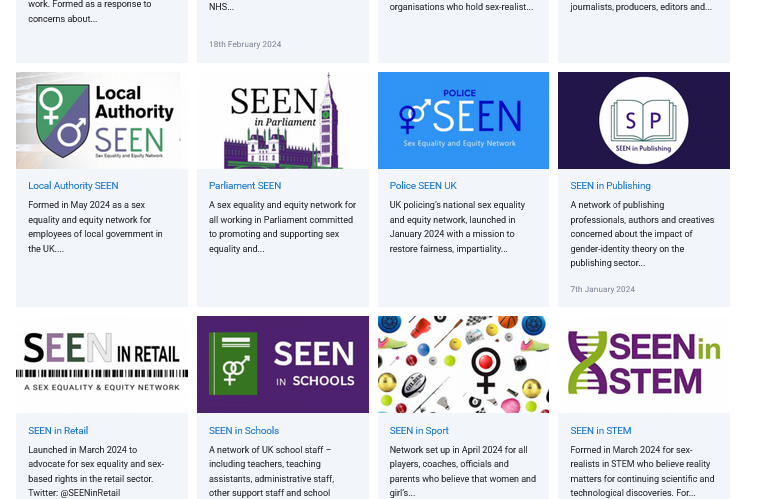
The network involves 21 organisations that have emerged since 2020 and are still active today. They inhabit various sectors such as healthcare, social work, HR, journalism, and public authorities. SEEN emerged as an association of civil servants, and while that organisation is no longer active, the transphobic associations use its style and branding. Plugging into current public and policy discourse around “sex based rights concerns”, SEEN associations aim to not be overtly transphobic but to present themselves as “genuinely concerned with feminism”, furthered by their strong representation in journalism.
Activities of the groups include “various forms of lobbying, professional networking, propaganda, and developing resources such as form letters and legal advice. Campaigning over controlling access to toilets seems to be a common activity among many of these associations, along with defending people who have come under pressure for transphobic attitudes and actions”.
All the sectors SEEN organisations target are places where “professionals have a lot of day to day power over trans people”, meaning they can cause harm without the support of a broader mass movement behind them. Any counter-propaganda would “have to be very careful and take pains to point out the actual implications behind all their polite wording” and expose their links to more overtly transphobic organisations.
SolFed note there are several open questions remaining, since “the on-the-ground composition and activity of each of these networks” remains unclear. “Are these astroturfed organisations with no real presence in any workplace? Do they represent a membership scattered across each industry? Do they represent a membership concentrated in specific workplaces within each industry? These are important questions that can not be answered without a more specific, in-depth, and hands-on investigation into each of the individual networks”, says the report.
SolFed conclude their report by emphasising the importance of organising in the workplace, not only for labour concerns but to confront transphobia and all discrimination.