The untold stories of political exiles from Nazi Germany who joined the resistance to Franco
~ Helge Döhring ~
Summer 1936 in Germany: Month after month, year after year, the oppressive swelter of impending hopelessness gripped the comrades. For over three years, fascism had been stifling life in the country. Almost all anarcho-syndicalist functionaries had suffered house searches, confiscations, arrests, imprisonment in concentration camps, and torture. Some did not survive. Secretly, relatives and comrades organised aid for the prisoners and their families, printed and distributed illegal newspapers, and created routes of escape. By the end of the year, the Nazi state had dismantled almost all anarcho-syndicalist resistance networks.
But suddenly, exactly what many had given up on happening, happened. Fascism was beatable! And not through elections, governments, or military liberation from the outside. What anarcho-syndicalists all over the world had longed for for decades was a reality: social revolution in Spain, and perhaps soon throughout the world!
To mark the 90th anniversary of the Spanish Revolution, I unearthed many German-language eyewitness accounts and compiled them in the book Great, Beautiful, Unforgettable Days (AV Publishing, in German). These original “Voices from the Spanish Revolution” form a compelling and instructive history of German anarcho-syndicalists as part of the struggles there for a free society based on liberty, equality, and mutual aid.
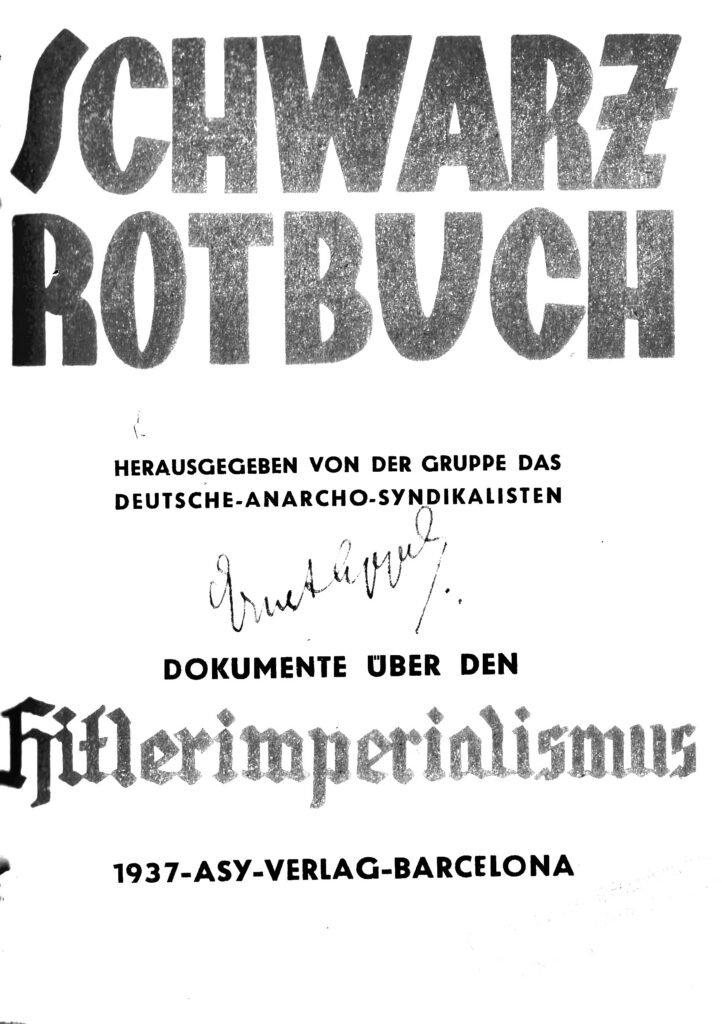
Some of the Germans were able to officially organise themselves as the German Anarcho-Syndicalists (DAS) and were mandated by the CNT. Equipped with motor vehicles and armed with machine guns, they even carried out raids and arrests against Nazi foreign organisations. Among them were Fred Schröder (1904-1984) from Kassel, and Helmut Kirschey (1913-2003) from Wuppertal who exclaimed: “That’s how we should have done it in Germany!”. Based on the confiscated materials, DAS published the Black and Red Book: Documents on Hitler–Imperialism in 1937.
Others fought on the front lines in the anarcho-syndicalist militias against Franco’s troops. Among them was Paul “Pablo” Czakon (1897-1952), code-name “Máximo Más,” commander of the Sacco y Vanzetti artillery unit of the Columna Tierra y Libertad (Land and Freedom Column), along with his wife Veronika “Vera.” He had already lost most of his teeth before 1933 in Germany during the militant fight against the Nazis in Silesia. Czakon fled in January 1933 because he had established an explosives cache in 1932, in anticipation of the impending dictatorship, and was therefore wanted by the police.
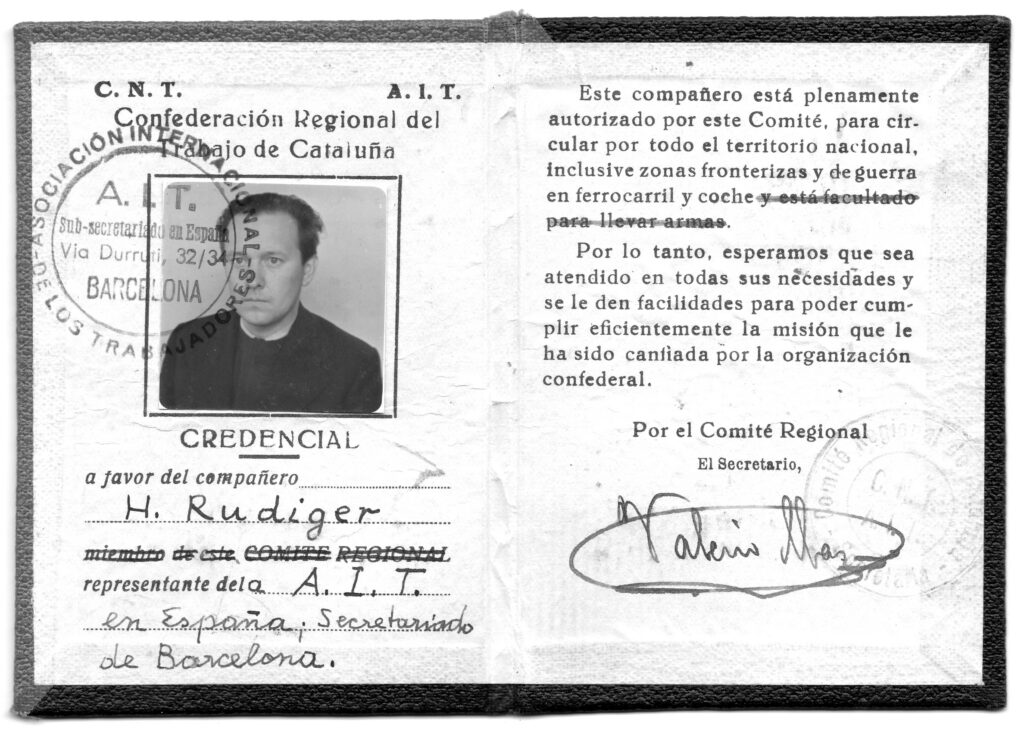
Those fluent in foreign languages for correspondence abroad in Barcelona were essential personnel for the revolution were. Among them was Helmut Rüdiger, by then secretary of the International Workers’ Association (IWA), who happily reported to Rudolf Rocker that he had experienced “great, beautiful, unforgettable days” with the beginning of the revolution. Augustin Souchy (1892-1984), former secretary of the IAA, also worked in the foreign office. Although the two men disliked each other, their shared enthusiasm brought them together. Etta Federn became a member of Mujeres Libres and established a Ferrer school as a teacher in Blanes, near Barcelona. A linguistic prodigy, she learned the local language herself in just a few weeks in 1932.
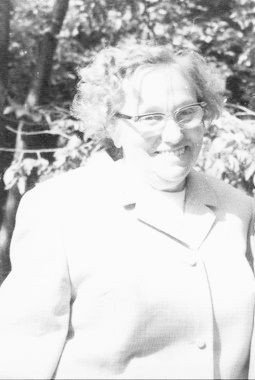
Martha Wüstemann (1908-1992), from Leipzig, came to Barcelona from Düsseldorf in 1933 and, at the beginning of the revolution, ran an international anarcho-syndicalist bookstore at Rambla de Catalunya 72. The expropriated building, a villa, had previously belonged to German fascists.
The socialist writer Carl Einstein (1885-1940) also went to the front. He arrived in Barcelona ready for battle, intending to join the Communists, but mistakenly appeared at Helmut Rüdiger’s foreign office. Thereafter he fought in Durruti’s column and left behind an impressive account of his experiences. Heinrich Friedetzky (1910-1998), on the other hand, only arrived in Spain from Silesia in 1937. Because the communists largely controlled entry into the country by that time, he did not fight with the anarchist militias as he had hoped, but was instead transferred to the communist International Brigades. Willi Paul (1897-1979), from Kassel, reported in detail on the fighting at the front alongside his anarcho-syndicalist militia comrades.
With the gradual takeover of power by the authoritarian communists from the spring of 1937 onward, German anarcho-syndicalists were also imprisoned by their secret police as the front line drew ever closer. Only a few of the anarcho-syndicalists from Germany who reported on the events fell into the hands of the fascists, such as Heinrich Friedetzky, who initially managed to pass himself off as a Czech citizen to avoid extradition to Germany. It was only when Germany occupied Czechoslovakia a few months later that Friedetzky was exposed and deported to Germany, as his address in Czechoslovakia was incorrect. Augustin Souchy, wounded, crossed the French border in a truck shortly before Franco’s troops entered Barcelona; the border was closed just a few hours later. It is recorded that the commander, Paul Czakon, brought his comrades from his militia unit safely to France. His health compromised by the fighting and his internment in French concentration camps, he died in Germany in 1952, completely impoverished.
Every escape from Spain was turbulent, and hopes were bleak, for in France either renewed illegality or the dreaded internment in a labour camp awaited. And in 1940, German troops invaded. Martha Wüstemann, who cared for a minor daughter during her years in exile, sent her to school in France. She herself fought in the Resistance and lived illegally in hiding. Twice, at great personal risk, she had to undergo hospital treatment, secretly smuggled past German guard posts, operated on clandestinely, and was finally released back into her hiding place. After 1945, she lived in South Africa and died in Germany in 1992. Etta Federn also cared for two sons in exile, with whom she fought in the Resistance. She died in Paris. Helmut Rüdiger, Fred Schröder, Helmut Kirschey, and Fritz Benner (1906–1966) emigrated permanently to Sweden.