How Trump’s war on dissent borrows from America’s darkest playbook
~ Joel Sucher ~
History doesn’t repeat itself, but it rhymes – and right now, the rhyme scheme is terrifyingly familiar.
In the winter of 1919-1920, Attorney General A. Mitchell Palmer, a man with presidential ambitions and a penchant for political theatre disguised as law enforcement dispatched federal agents across the country. Raids targeting anarchists, labour organisers, and immigrant radicals. Thousands were arrested, hundreds deported, civil liberties were shredded, and the constitutional right to dissent was effectively criminalised under the banner of national security.
Palmer called it fighting Bolshevism. A century later, the architecture is different but the blueprint is the same.
In Minneapolis, federal prosecutors handed down a blockbuster indictment of 15 activists involved in efforts to resist Operation Metro Surge, part of the Trump administration’s immigration crackdown that flooded 2,700 federal agents into the Twin Cities to target Somali communities. The 94-page indictment reads less like a criminal complaint than a political dossier. Among the evidence cited for the alleged criminal conspiracy are the most basic protest strategies, including self-defence, non-violent tactics, and First Amendment-protected activity.
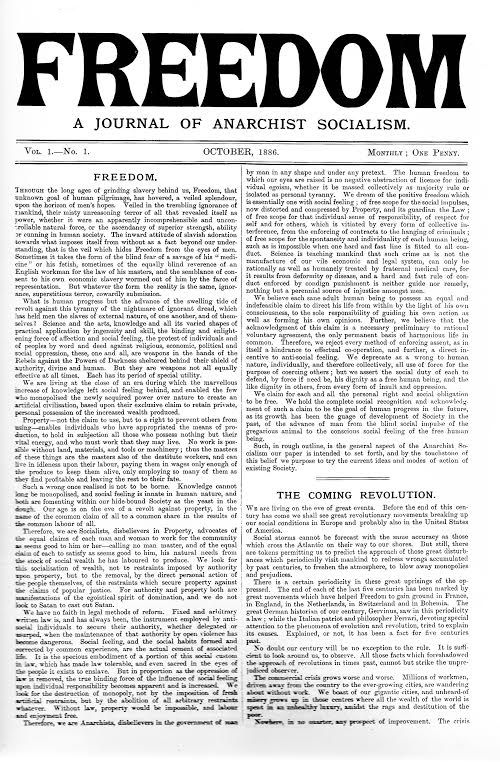
The Palmer Raids parallel is not rhetorical flourish — it is embedded in the indictment itself. At every opportunity, the Minnesota indictment underscores the anarchist affiliations of the defendants, citing out-of-state Anarchist Speaking Tour engagements and articles written for the anarchist website CrimethInc.
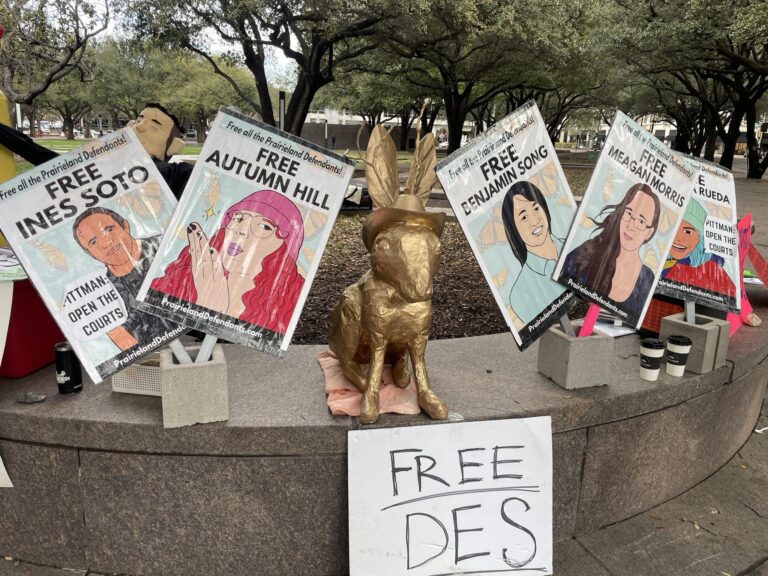
On June 23, 2026, the Justice Department announced that members of what prosecutors described as a North Texas Antifa cell had been sentenced to a combined 450 years in prison for their roles in a July 4, 2025 incident outside the Prairieland ICE Detention Center in Alvarado, Texas. The most severe sentence — 100 years — went to Benjamin Hanil Song, a former U.S. Marine Corps reservist convicted of the attempted murder of a local police officer who was shot during the confrontation. No one disputes that a shooting occurred. But the government’s dragnet swept up far more than the shooter.
Daniel Sanchez Estrada, for instance, was convicted not of attempted murder or material support for terrorism — but of obstructing an investigation by moving a box full of antifascist zines after the protest. His defence attorney pleaded for proportionality. The judge was unmoved. The Justice Department, in its press release, hailed the convictions as “the first sentencing of defendants affiliated with Antifa following President Donald J. Trump’s executive order designating the group as a Domestic Terrorist Organization in September 2025.”
Interestingly, an FBI spokesperson awhile back became utterly befuddled when trying to respond to a Congressman’s question: simply, what is Antifa?
Federal prosecutors have been racing to fill in the blanks since Trump’s September 2025 executive order declared “antifa” a “domestic terrorist organisation.”
The Minnesota and Prarieland indictments are the most dramatic of a wave of federal cases stretching across the country.
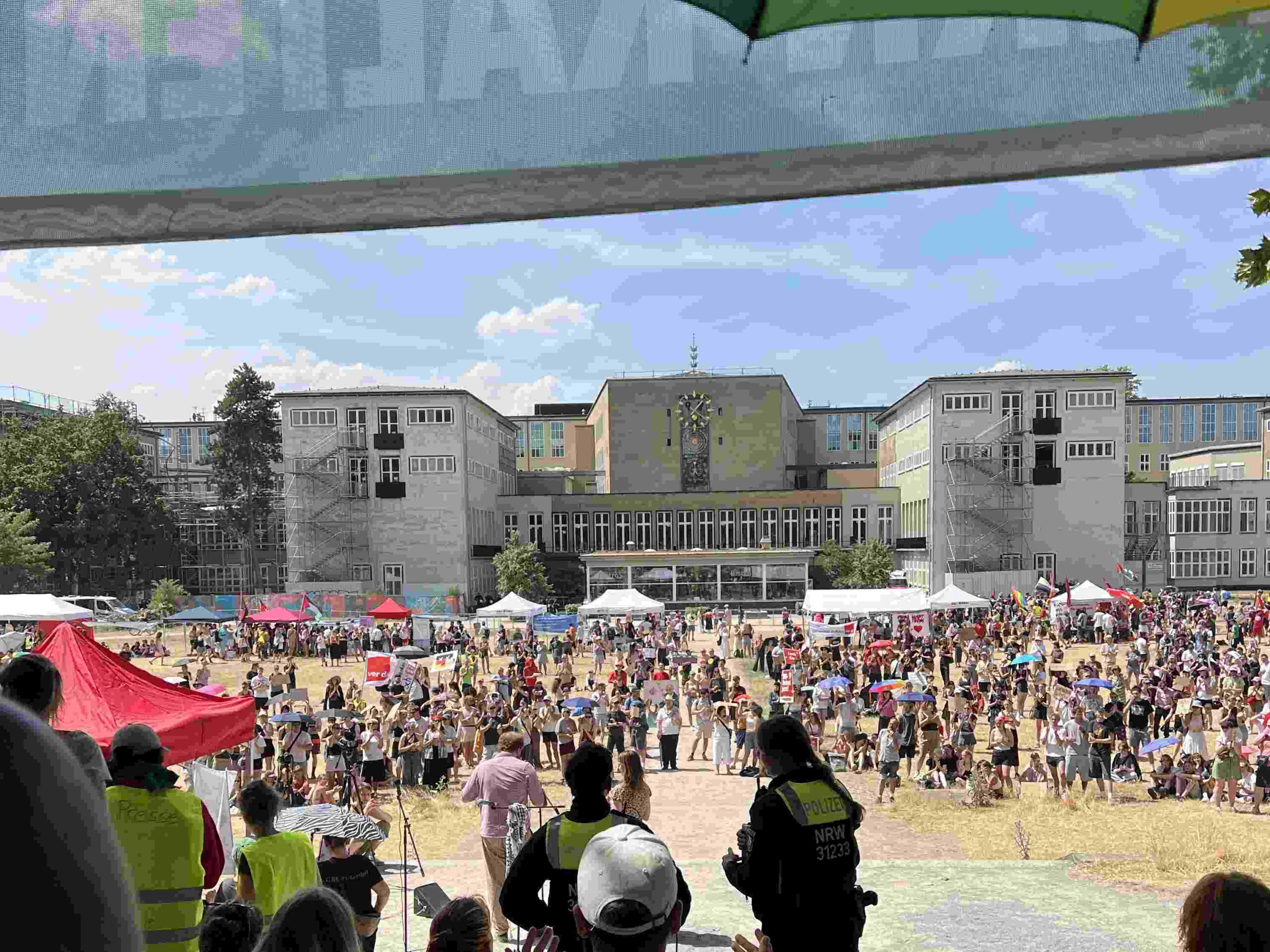
In New Jersey, protesters outside the Delaney Hall detention centre in Newark — a facility that has become a flashpoint in the administration’s immigration crackdown — have faced arrests and federal charges. Acting Attorney General Todd Blanche declared: “We will not tolerate the vicious attacks on ICE officers we’ve seen in New Jersey. These riots are clearly not ‘peaceful protests.'” The language of riot and terror, deployed with the precision of a press office, is designed to pre-empt rather than describe.
All of this smacks of Justice Department desperation with many cases simply evaporating for lack of evidence. In Chicago, where six people were indicted for allegedly surrounding a federal vehicle during a peaceful protest outside Chicago’s Broadview ICE facility, resulted in dismissals.
Far and away my favourite: In Washington, D.C., a jury acquitted a man prosecutors had charged with felony assault — for throwing a sandwich at a federal agent. Shades of Abbie Hoffman.
But acquittals don’t undo the terror of a 3 AM arrest, a federal indictment, a 94-page dossier citing Signal messages, or the prospect of spending years in federal prison for attending a demonstration. Now, any sane and sensible person clearly sees a pattern, to wit: throw the book at any one protesting the regime and if all of this eventually gets thrown out of court, you’ve still caused the indicted psychic pain, stress, and the added costs of legal defence.
Mitchell Palmer, were he alive today, would recognise the playbook perfectly. The enemy has been renamed — from Bolsheviks and anarchists to antifa and “anti-ICE agitators” — but the mechanism is identical: identify a demonised out-group, strip it of legitimacy, weaponise the Justice Department, and use the spectacle of prosecution to intimidate everyone watching.
None of this surprises me considering I’ve experienced this sort of repression before. Late 60’s and early 70’s marked a period when, together with co-producer, Steven Fischler, we explored the rabbit hole of State sponsored surveillance, a.k.a. Red Squads.
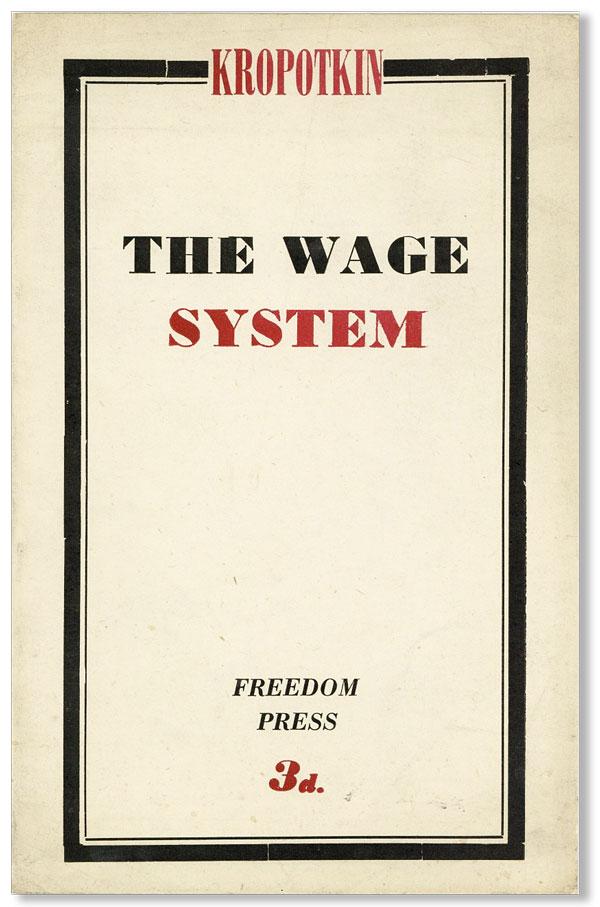
The eighties consumed quite a bit of free time wandering the back-roads of the United States (and Mexico) in search of any evidence of Anarchism – explicit or not and along the way we did discuss the Palmer Raids and Emma Goldman’s deportation.
The lesson of American history is that these repressions do not simply burn out — they institutionalise, unless the public resists.