Trial seen as part of increased bilateral cooperation between the UK and
~ Tom Anderson ~
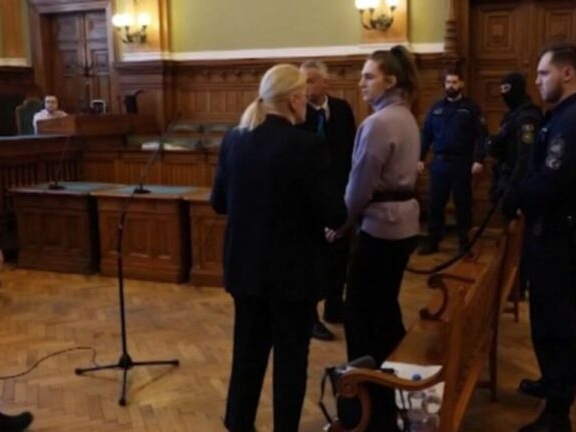
The trial of six members of London’s Kurdish community, charged with membership of the proscribed Kurdistan Workers’ Party (PKK), is ongoing at the Central Criminal Court (Old Bailey) in London. They have all pleaded not guilty to the charges of being members of the banned organisation and some face additional allegations relating to arranging and addressing meetings in support of the PKK.
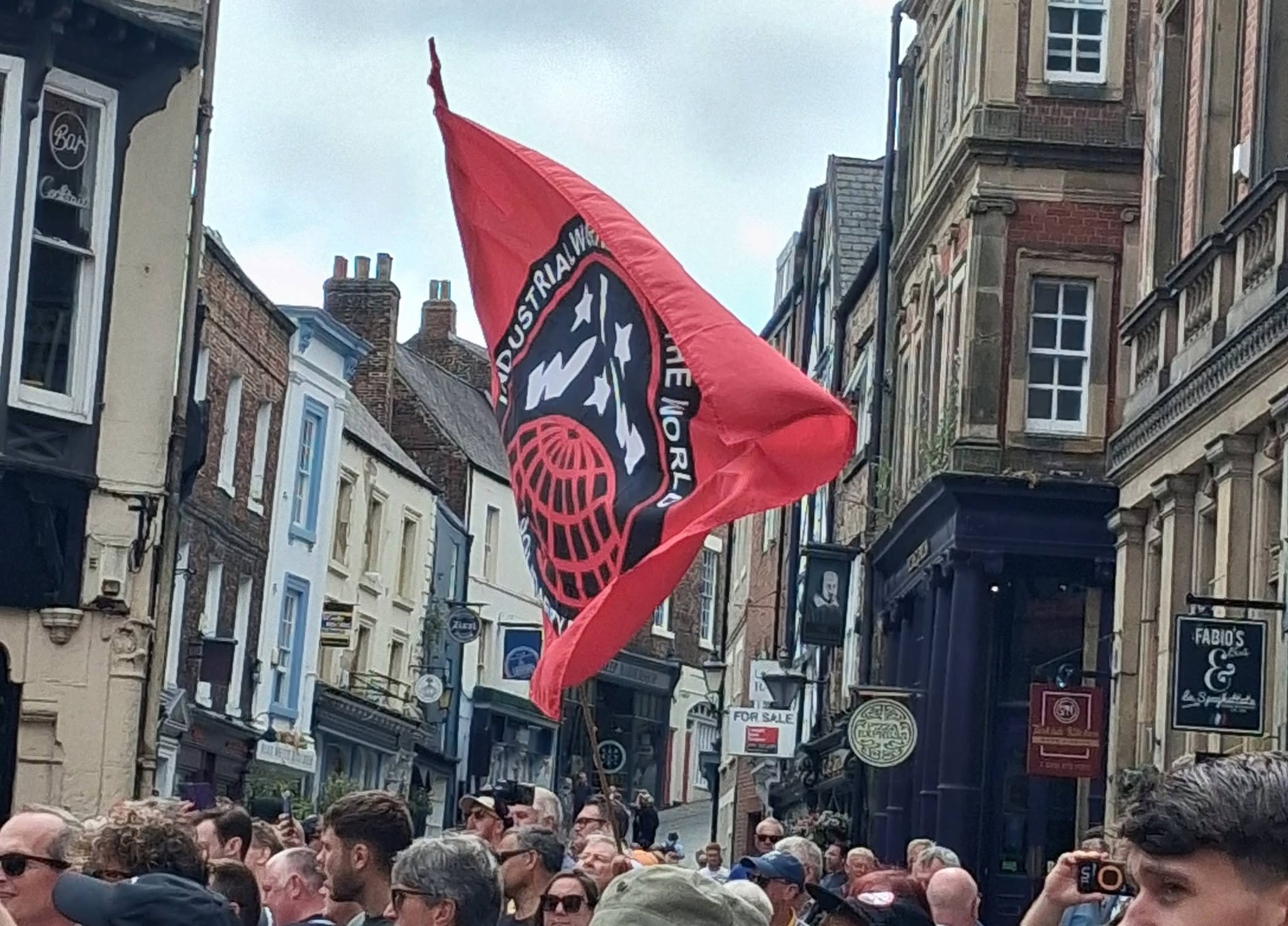
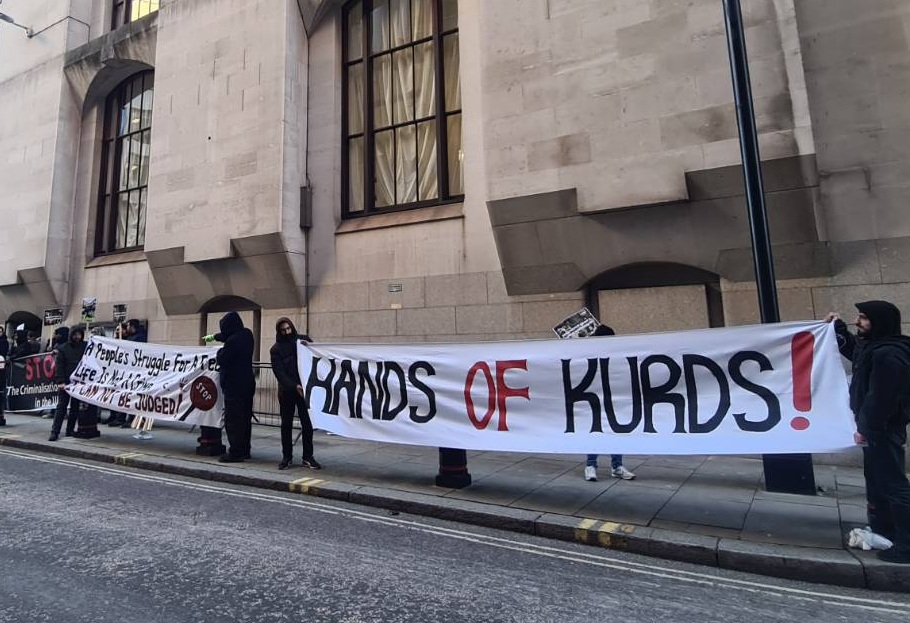
On the day hearings started (5 January), the London Kurdish Community and their supporters demonstrated with banners outside the Old Bailey. The trial is due to take up to three months and the defendants are Ercan Akbal (56), Ali Boyraz (63), Agit Karatas (24), Berfin Kurban (31), Turkan Ozcan (60) and Mazlum (also known as Mucahit) Sayak (28). The home raids and arrests coincided with a simultaneous police raid on the Kurdish Community Centre (KCC) in Haringey, sparking protests and hunger strikes.
A number of high profile arrests of Kurdish people had preceded this, as well as raids on Kurdish Community Centres and media organisations across Europe during 2024. This heightened repression of Kurdish movements in Europe came at a time when was stepping up its air and ground assaults on the PKK in Iraqi Kurdistan and drone attacks on North and East Syria.
The arrests also took place just two days before the 29 November assault on Aleppo by Hayat Tahrir Al-Sham (HTS). hoped to use this assault and subsequent takeover of power from Bashar Al-Assad to strengthen their influence in Syria and further the role of its Syrian National Army (SNA) proxies in efforts to destroy the Rojava revolution.
PKK has been a banned organisation in the UK since 2001, when the Blair government added it to the list of proscribed organisations following pressure from the Turkish state. The arrests came in the wake of a meeting in London between Turkish Foreign Minister Hakan Fidan and British Foreign Secretary David Lammy, when they announced new UK/ bilateral cooperation and trade ties.
The PKK was founded in the 1970s as a Marxist-Leninist anti-colonial party aiming to end the Turkish state’s violence, discrimination, denial of identity and forced assimilation policies aimed at Kurdish people. In 1999, the movement embarked on a path toward its new paradigm based on three concepts: Women’s freedom, an ecological society and democratic confederalism, a form of stateless direct democracy. These ideas have inspired the movement ever since, and built a foundation for the Rojava revolution in North and East Syria, which began in 2012, and the struggle for democratic autonomy within ’s borders.
Why now?
The PKK and its imprisoned leader Abdullah Öcalan have been trying to make peace with the Turkish state over the last year and the Party officially disbanded itself and ceremonially destroyed some of its weapons in 2025. The movement has never carried out any sort of armed operation on UK soil, and the Kurdish-aligned Syrian Democratic Forces received tactical support from the UK armed forces during their fight against the Islamic State (ISIS). In 2020, the Belgian Supreme Court ruled that EU anti-terrorism legislation cannot be applied to PKK.
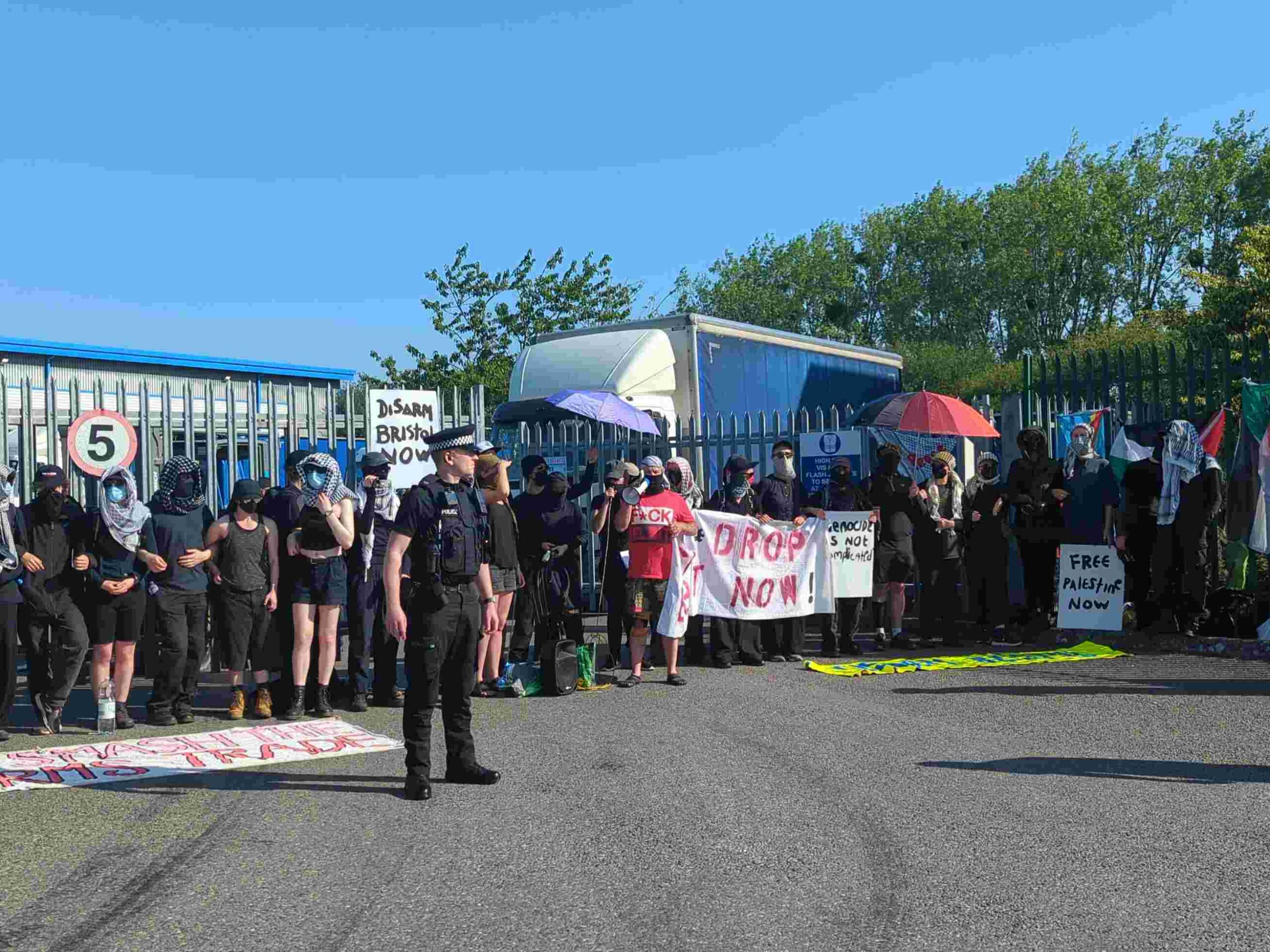
The fact that the Crown Prosecution Service puts resources into criminalising members of the UK’s Kurdish community can be explained, just like in the case of last year’s proscription Palestine Action, in geopolitical terms. The complicity of the British police with the Israeli embassy over Palestine action is well documented, and details are still emerging. , for its part, is a NATO member and a key UK and EU ally, despite Erdoğan’s efforts to strip away the vestiges of liberal democracy within Turkey and to centre authoritarian power around himself as President.
The Turkish state wants to crush the Kurdish freedom movement, both within its borders and across the border in North and East Syria, whereas Keir Starmer appears to be keen to enact repressive policies at home to further what he sees as UK foreign policy interests.
At the same time, Starmer’s Labour government has presided over a shift in the way dissent is being dealt with in the UK. For decades euphemisms like ‘domestic extremism’ or ‘aggravated activism’ have been used to criminalise radicals while differentiating them from those they dub terrorists. However, since the proscription of Palestine Action last year the state has seemed ready to straight-up call people terrorists. Obviously, the PKK has been on the proscribed list for a quarter of a century already, but there haven’t been many actual prosecutions related to it. The state’s readiness to use terrorism legislation to counter dissent is likely to have fed into the CPS decision to prosecute.
The Kurdish People’s Assembly of the UK in a public statement is calling for “sustained solidarity” as “a refusal of isolation and criminalisation, and an affirmation that political identity, association, and community organisation are not crimes.”