Imagine what it feels like to sentence war resisters as terrorists
~ Tabitha Troughton ~
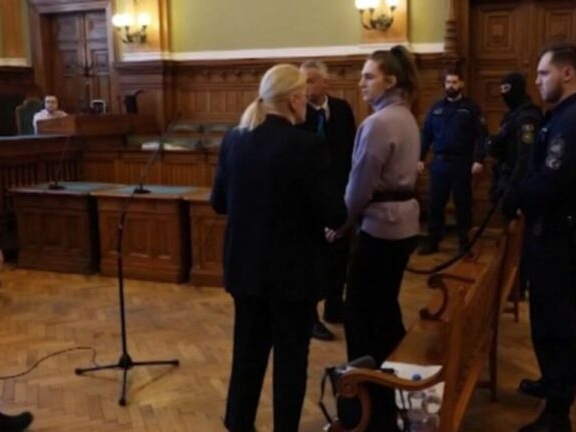
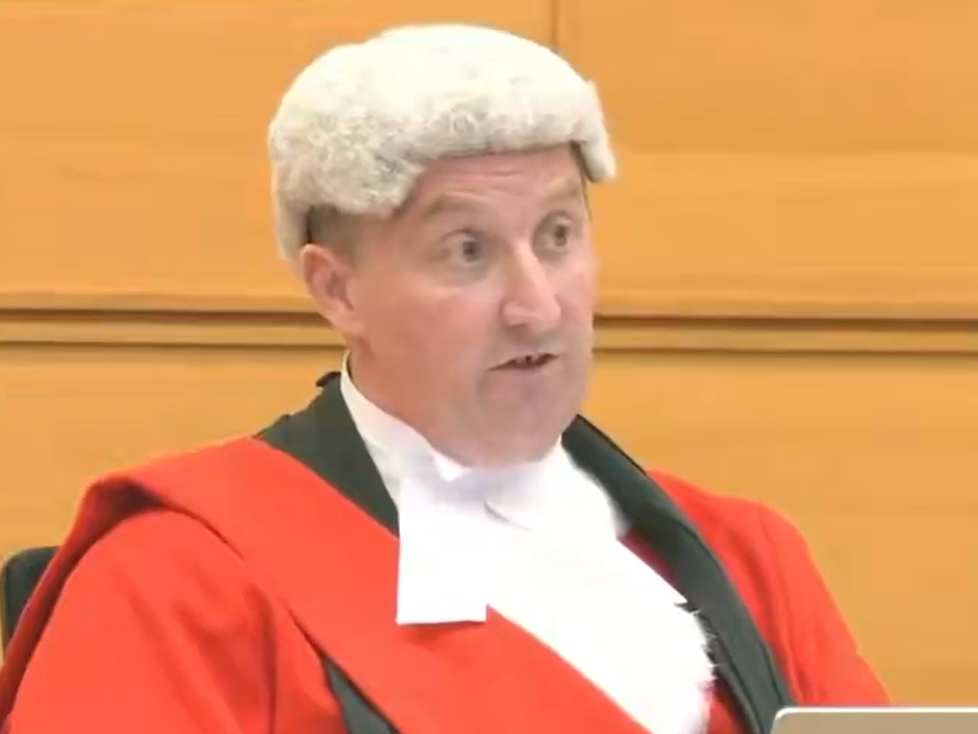
My smallish eyes blink, and my central incisors catch the light, as I sentence four young anti-genocide activists to a total of over 25 years in prison. My longish nose occasionally twitches. I look, it must be said, inescapably like a gerbil. This is not necessarily a bad thing. “Hot rodent boyfriends” were much admired in 2024, so the magazines tell me. I do not, admittedly, have much in common with them.
Let me say, however, that the rather attractive appearance of these Filton activists had no effect whatsoever on the life-altering sentences I handed out. That I, a portly, lip-licking, state-sponsored apparatchik, who is forced, in public, to wear a nasty white blouse, was extraordinarily determined to ruin their lives, to the point of keeping them unnecessarily in desperate prison conditions before sentencing, has nothing to do with my own looks, or my private life. Many people like gerbils. Some people keep them as pets. I rest my case.
I have, it is true, faced opprobrium and challenge. Thousands of people, including lawyers, law professors, retired police officers and magistrates, accused me of “a loss of objectivity and a personal animosity towards the defendants and the Palestinian cause, incompatible with the role of a judge”. Others have since compared me to the Nazi judges who, having obeyed every government diktat, found their eventual home at Nuremberg.
“Poor Mr Justice Jeremy Johnson”, I later say to my reflection, in the bathroom mirror back home. It shrieks, and tries to scuttle off behind the frame, but I am having none of it. “I was not all bad”, I tell it, as it sidles reluctantly back. “I was pretty brutal about Thames Water in 2022. I eventually allowed Assange to appeal against extradition. And in the case of Dr Beatrice Ekweremadu, found guilty at the Old Bailey for organ trafficking, I was clearly moved. I rhapsodised about her “good character”. I sympathetically, even lyrically, pointed out that she was “motivated by the desperate plight of (her) daughter and maternal love”.
Of course, some people will find it strange that three years later I was attempting to ensure that the motivations of the Filton defendants were not even mentioned in court. Those people have no idea. To them, I would say three words: “The Israeli government”.
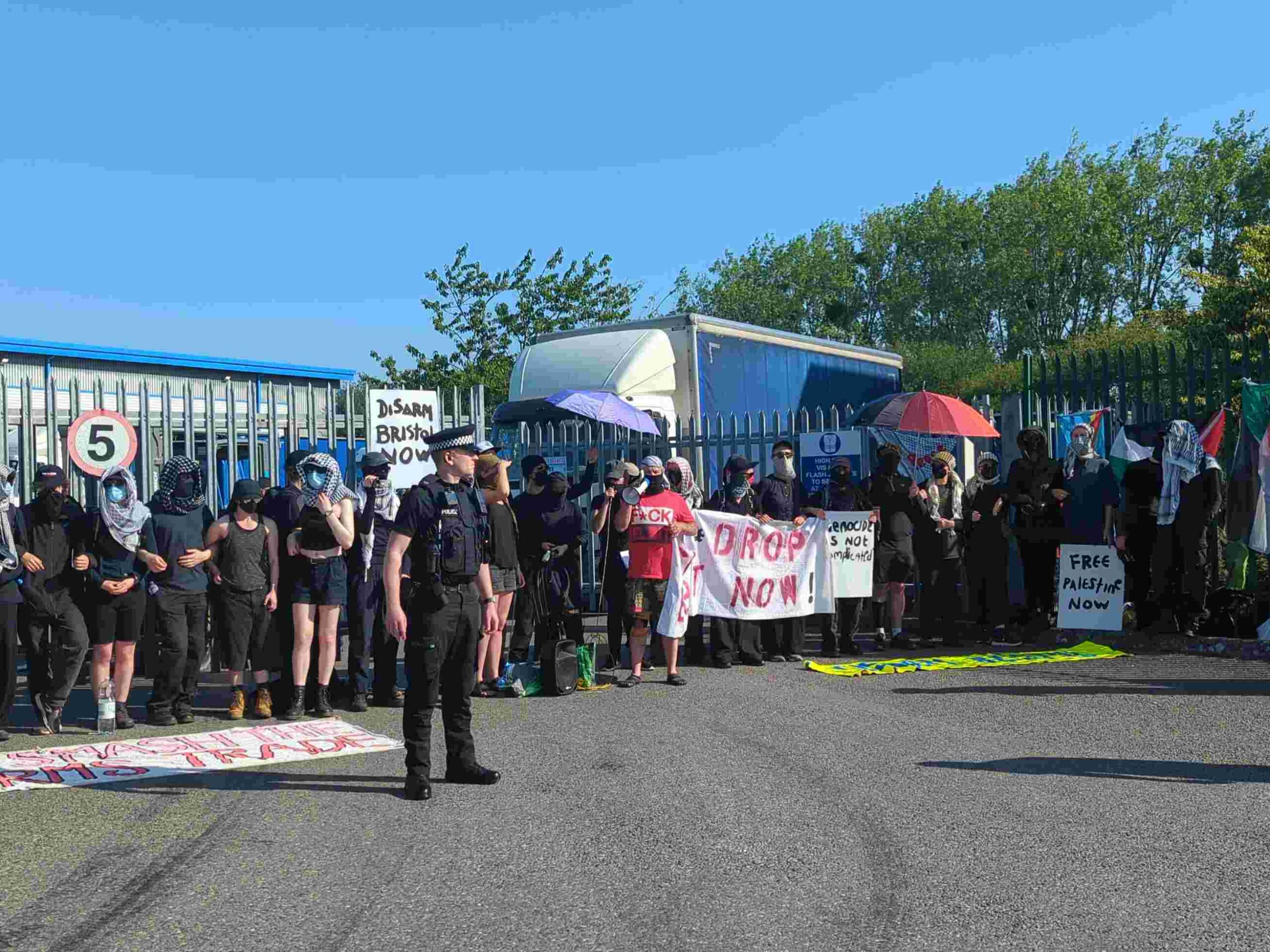
Admittedly, I banned the defence from mentioning the genocide in Gaza, or that the activists were therefore attempting to destroy the drones of Elbit Systems, Israel’s largest arms firm. But this trial has an Israeli connection. And if people understood that, for the last decade, the Israeli government has waged a secret war against the International Criminal Court, deploying its intelligence agencies “to surveil, hack, pressure, smear and allegedly threaten senior ICC staff in an effort to derail the court’s inquiries”, they might be less critical.
And if people further understood that Israel’s government, as well as slaughtering at least 200 Palestinian lawyers in the last three years, and obliterating Gaza’s entire legal infrastructure, last year arrested the former Military Advocate General of the Israel Defense Forces, for approving a leak which appeared to show horrendous Israeli abuse and rape of a Palestinian hostage, they might be less hurtful. This “top lawyer” later tried to kill herself. Apparently she was unsuccessful, but she has not been heard from since.
Obviously, the death by car of Judge Benny Sagi, due to deliver a verdict on a corruption case peripherally involving Netanyahu, was a coincidence. Still, only this month, ICC lead prosecutor Karim Khan, the British lawyer who had applied for arrest warrants for Netanyahu, Yoav Gallant, and three Hamas officials, was suspended following sexual misconduct allegations. Khan claimed he was the victim of a smear campaign, despite the fact that Israeli operatives had only ever tried to threaten and intimidate his predecessor, Fatou Bensouda, into abandoning an investigation into war crimes in the Occupied Territories. After a brief schism in 2010, the UK government is once again cooperating fully with Mossad. Need I say more?
I am not the only UK judge to have turned like a viper. In Scotland, Lord Young, having ringingly declared the right of a Scottish resident to a review of the proscription of Palestine Action in Scotland, suddenly decided that Scotland must accept the decision of the English Court of Appeal instead. Was he scared of the British government, who had sent the Advocate General, Catherine Smith KC, to represent them in person? It seems, as a fully signed up part of the British government, unlikely. Nevertheless, the British government, then represented by David Cameron, also threatened Karim Khan over his investigation into Israeli war crimes in Gaza, if only with defunding the ICC.
But it’s not as though three former supreme court justices, and more than 600 lawyers, academics and retired senior judges, haven’t known for years that the UK government is breaching international law by continuing to arm Israel.
“At least” I say to my reflection, triumphantly “no-one knows how I got put on the Filton case. Or at least, no-one who counts. The little people scrabble and question, but they get no answers. Who even remembers that a senior judge in the original proscription case was pulled at the last minute and replaced by three other judges, or that, in another case, he was also suddenly replaced by two other judges, who found that Britain’s decision to allow the export of F-35 fighter jet components to Israel was lawful“? I try out a “hah hah”, but my reflection just stares at me.
It does not, any longer, resemble a dead-eyed gerbil. It looks like I look in my head; like the young man I was when I learnt to fly; before I took my post-graduate diploma in Law and was strangely elevated to the highest echelons of judicial power.
“Justice”, the mirror says, finally, sadly. And then, from side to side, it cracks.