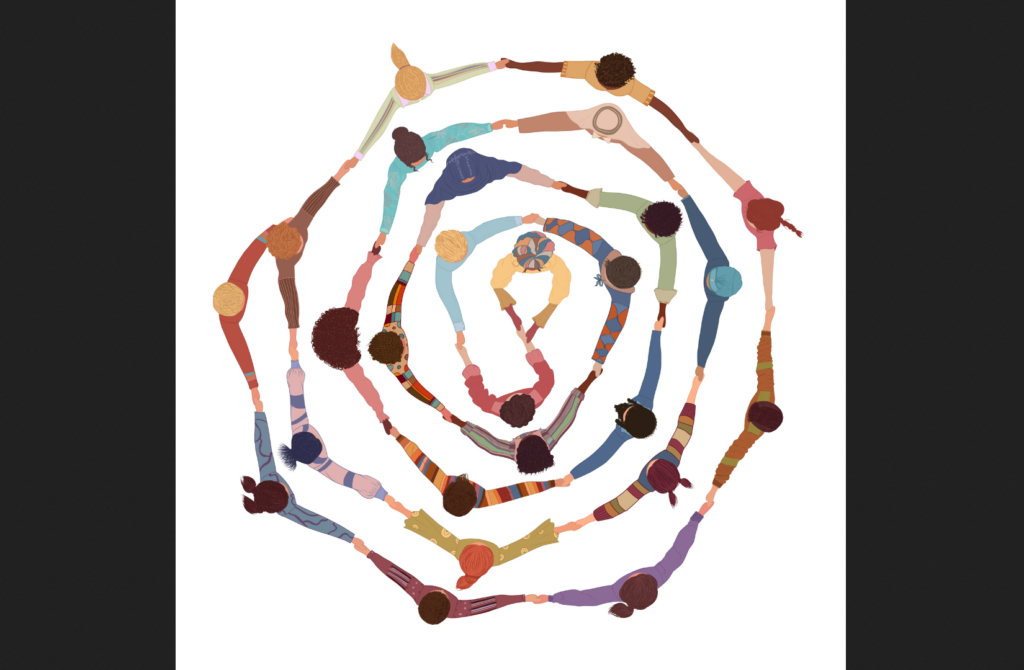
Experience taught me that the best people to help are the ones in the trenches with you
~ Jim The Jester (they/them) ~
I was deprived of my liberty at the hands of the State. Taken from my home and placed into a secure building, searched, assessed, cameras clinging to the corners of each room, recording, reporting. Privacy while pissing became a privilege, rubber-stamped depending on how much harm an individual can cause.
Risk is the language many institutions use to justify the say they have over our freedoms.
Anyone familiar with “involuntary” psychiatric inpatient admission knows exactly what that means: full body searches, locked doors, hourly observation, no privacy and various other invasive forms of monitoring. They will also be familiar with the narrative of preventing risk, not promoting safety, and how it’s often packaged alongside gratitude to, not accountability from, services.
- “You are not safe without us watching you.”
- “You should be thankful that we take care of you.”
- “We are saving you, by watching you.”
When the Establishment can package control as care, a necessary preventative measure, it legitimates the restrictions it aims to place.
This isn’t new. Vulnerable and marginalised communities have long known that Big Brother is always watching. What’s changed is the speed, the reach, and the efficiency of technology, while complacency only grows.
There is an obvious parallel between the hangover of the asylum and activist movements today. From surveillance “for safety” to the dismissal of distress, the language has shifted but the structure remains.
So what lessons can we take?
When I was sectioned, for the first time in my life I found a sense of community in the chaos. Mental illness is supposed to be isolating; self-destruction is supposed to be a private implosion. But inside those walls, amid the alarms and paperwork and locked doors, I met people who changed my life. They were acutely unwell, remarkably unhinged, entirely bonkers, but they were also the most compassionate people I’ve ever known.
Never will you meet a group more convinced that your life is worth living, no matter who you are or where you come from. Hypocrites, of course. They believed I would make it, while quietly rehearsing their own exit strategies. But even in that contradiction there was a kind of love.
Inside those walls I found a humanity that official systems couldn’t replicate. A humanity that would sit with your pain without needing to pathologise it. It laughed like it might be the last time. It had no power, no capacity, but still raised a middle finger to stuffy psychiatrists and handfuls of pills. It was scrawling anger and art across the walls. It was cockily saying “Call the police, what’s the worst you can do? Send me here?” It was doing all this while also holding someone’s shoelaces, because the reality of not intervening might mean the other person wouldn’t see tomorrow, but simultaneously not snitching to staff so if they made it to tomorrow they could keep their home leave.
People on the outside like to believe in a false sense of security. It’s easy to think it’s not happening to you, that cameras in every corner will keep everyone safe, you’re not doing anything wrong so they’re not watching you. But my experience taught me something different: The best people to help are the ones in the trenches with you.
That’s the lesson the mad hold for movements on the outside. Real safety isn’t manufactured by surveillance or managed by risk assessments. It’s built, messily, by people who have nothing but each other.
This is the kind of madness we need now: to sit with pain without turning it into pathology, never accepting we need tone down our outrage, to build bonds that can withstand despair, to smuggle in hope like contraband, to hold each other’s shoelaces. Because in the end, that’s where survival starts.
The systems built to protect us won’t. They never have. So we must find ways to protect each other. We can’t wait for permission to care.
I’ve seen people vault unscalable fences just to pet a cat. I’ve been the base of a human tower so we could smash a camera, all so a friend could watch Pointless without the voices in his head drowning it out. I’ve pilfered keys from nurses who showed me no dignity or kindness as a reminder that authority is only as absolute as the tools it holds. I’ve shared the toothpaste trick so clinical walls become murals of colour and photographs. Moments fuelled by madness to prove the obstacles around us can always be overcome.
We can counter power and create our own forms of community by:
- Challenging the narrative that collective safety depends on increased surveillance.
- Cultivating communities through everyday acts of care, resistance, and support.
- Embracing more madness: radical imagination, joyful resistance, and creative disruption. Sanity, as defined by oppressive systems, often means compliance. Madness is about celebrating self so unapologetically the whole system shakes.
This article first appeared in the Winter 2025/26 issue of Freedom Journal