~ from Neil Middleton ~
The continuous expansion and ever more ridiculous implementation of anti-terrorist laws is a shared reality across many countries. We have reached a point where anyone who protests or campaigns for a better world knows that anti-terrorist laws could be brought into play at any moment. The question of how to respond is then more pressing than ever.
Here we will look at how the anarchist movement responded during one of 21st century Europe’s key moments of tension, Greece’s decade at the centre of the capitalist crisis. During the crisis years dozens of anarchists and anti-authoritarians were charged, and often convicted, under anti-terrorist laws. While this could not be directly combated, the movement in Greece managed to turn this repression back on the State by rallying around the prisoners. Due to the actions of the movement an attempt by the State to assert control actually undermined it and increased tensions.
Anti-terrorist laws came relatively late to Greece with a specific article not added to the penal code until 2001. This was the soon-to-be-infamous Article 187A which defined terrorism as an aggravating circumstance to any crime which potentially undermined public order. The
definition, from the State’s point of view, is helpfully vague, creating the possibility that any action deemed threatening to the State, or even any international organisation, can be covered by additional penalities and police powers.
The potential to abuse that vagueness has been amply demonstrated. Not only have the principal target, anarchist guerilla groups, been impacted but the threat has hung over environmental activists campaigning against gold mining in Skouries, and members of the anarchist collective Rouvikonas for a social media post. Further enhancing the usefulness of anti-terrorism to the State are activities potentially covered by Article 187A. Far from just covering especially violent acts, both felonies and lower level misdemeanours can be considered acts of terrorism. The incitement of such acts is also covered, as is the provision of any support to people said to be in a terrorist group, with further laws on ‘terrorist financing’ brought in during the crisis. Anarchist cases often involved the question of whether it was possible to label individuals the directors of a terrorist organisation which would add extra penalities.
Anti-terrorism also brings additional police powers and media coverage. The police are allowed to use anonymous witnesses and frequently did so in cases against anarchists. Pre-trial detention for terrorism suspects was pushed up to and beyond the legal limit of 18 months, a practice that was often justified by the fortuitous appearance of additional charges as a period of detention reached its limit. As cases against anarchists mounted over the decade many found themselves involved in multiple cases with overlapping charges simultaneously. It was even possible to charge someone for actions that occurred outside of prison while they were already locked up inside. People were condemned on extremely thin evidence. Tasos Theofilou was wrongfully imprisoned for years on the basis of faulty DNA, while Irianna was convicted due to disputed DNA and her relationship to an anarchist who had already been tried, but declared innocent.
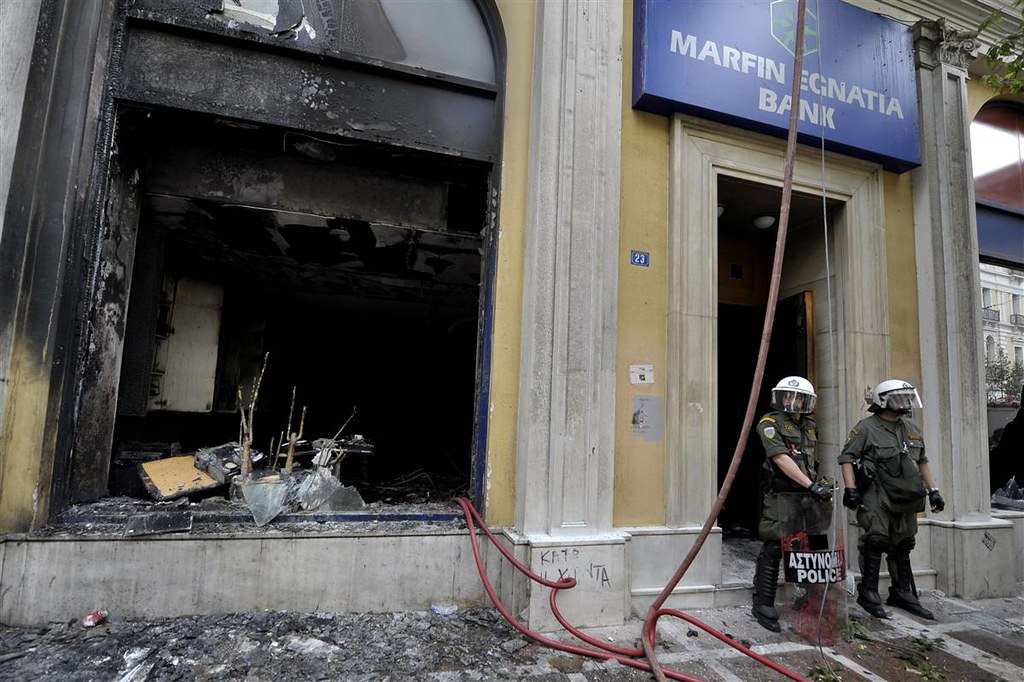
When the political crisis began in Greece following the December 2008 revolt there was an upsurge in activity by anarchist and anti-authoritarian guerilla groups targeting financial infrastructure, police, and state institutions. The State’s response was a legal campaign which began with the first arrests in 2009 and in some instances continues today. At its height in the mid-to late 2010s dozens of suspected and self-declared guerillas were tried and imprisoned. The ambition of the State was not just to target those who had, or were believed to have, taken up arms against it, but to target as much of the anarchist and anti-authoritarian space as possible. The vagueness of anti-terrorist articles allowed for the targeting of the family, acquaintances, and comrades of suspected guerillas.
There was no appetite for challenging the anti-terrorist laws in parliament. Left-wing parties did question right-wing governments about the treatment of prisoners and raise issues over the most obvious abuses of power, but there was no hope for more than this. Even though the socialist governments of the 1980s did repeal previous anti-terrorist laws amidst a high level of public sympathy for Marxist guerilla groups, parliamentary attitudes have since changed. Anarchists and anti-authoritarians did include the repeal of the laws in lists of demands but few expected any movement.
What the anarchists and anti-authoritarians were able to do was turn some of the pressure from the State back on it by rallying around the prisoners. In Greece this took the form of the movement on the street supporting prisoners’ hunger strike campaigns. The hunger strike is a frequent tactic in Greece and the movement outside would support it through an intensifying series of protests, riots, and direct actions. At times these campaigns reached significant peaks, with the largest campaigns during the crisis coming in summer 2013, November/December 2014, and spring 2015. Each of these campaigns gained a significance beyond the anarchist movement as they played a role in the period of social unrest.
The summer 2013 campaign to support Kostas Sakkas, whose pre-trial detention was being extended beyond the maximum limit of 18 months, contributed to a wave of protests. The government of the time was trying to spin a success story narrative of the crisis coming to an early end. Another wave of anti-austerity protests and solidarity for Sakkas ruined that narrative.
The late 2014 campaign in solidarity with Nikos Romanos and his request for his right to educational leave brought an end to a period of stagnation on the streets and briefly re-energised the movement at a time when the government was in a slow-motion collapse.
The spring 2015 campaign had a number of different motivations. For some it was a response to the arrest and potential charge of family members of imprisoned guerillas. For a group of prisoners it was an attempt to capitalise on the momentum of the previous autumn, and motivate the movement outside to mobilise against the negotiations of the new, left-led government for further austerity. Of the three examples, those of 2013 and 2014 achieved their objectives and threatened wider unrest. The campaign of 2015 was only partly successful, and unfortunately exposed divisions within the movement as there was a fall in the level of participation.
The anarchists were never able to directly challenge the anti-terrorist laws, but they were able to push back against aspects of their implementation and turn a method of social control into a potential spark for unrest. During times when social movements struggle to respond, the State will always seek to advance the scope of its control, with anti-terrorism being the sword. However, when it is possible to mount a sustained and strong response, that sword can be double-edged.
Everything Continues: A History of the Crisis in Greece 2008-2018 is due to be released soon
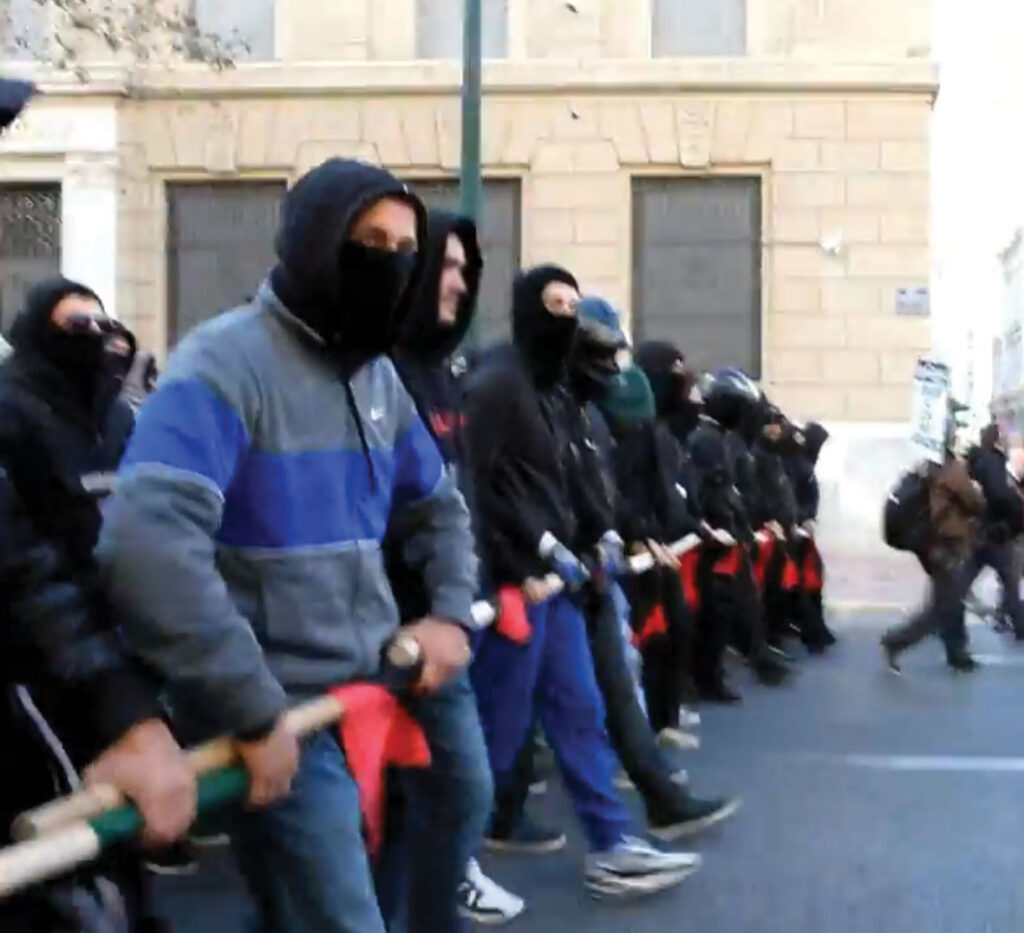
Pic: Anarchist students march in Athens on December 6th, 2013, to mark the police killing of Alexis Grigoropoulos
This article first appeared in the Winter 2025/26 issue of Freedom Journal