Second interview with Anarchist Front on repression and resilience, regional war, and internet shutdowns
~ Gabriel Fonten ~
When you last spoke to Freedom, protests in Iran were rapidly spreading and intensifying but repression was rising against them. Can you outline what has happened since then, and what your collective has been doing?
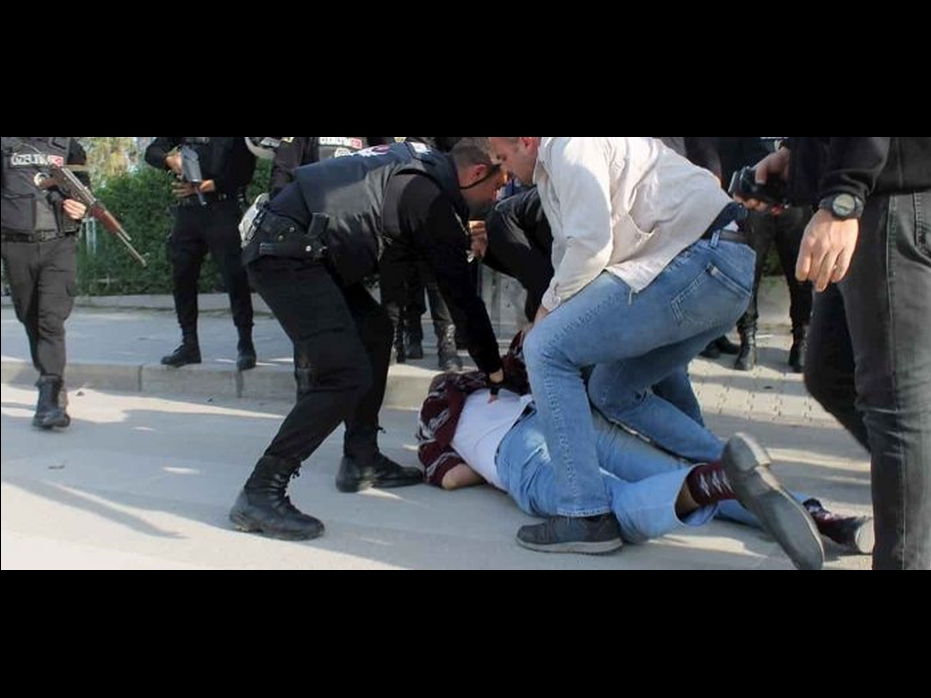
Since our last interview, the situation in Iran has changed in a violent and unprecedented way. Widespread protests across many cities were met with severe repression. Security forces attacked demonstrators using live ammunition; thousands were killed or injured, and tens of thousands were arrested. A heavy security atmosphere spread across the entire country. There are also reports and documented evidence indicating that, under the current wartime conditions, some detainees are being held in locations exposed to airstrikes and are effectively being used as human shields.
In the midst of this, before the movement had a chance to reorganise itself, another development occurred: on 28 February 2026, large-scale military attacks by the United States and Israel against Iran began, striking hundreds of targets across the country. Several senior commanders and political figures of the Islamic Republic were killed in these attacks, and the country is now in a state of war. The power structure of the Islamic Republic is facing a serious crisis, yet the political future of the country remains uncertain and contested.
U.S. and Israeli forces have targeted numerous sites in Iran, and in these attacks, in addition to military targets, civilians have also been killed. At the same time, the Islamic Republic has used its missile capabilities to strike targets in the region. These confrontations threaten the lives of millions of people across the region, and so far hundreds of civilians have lost their lives. The historical experience of the region also shows that foreign intervention has rarely led to genuine freedom and has often resulted in new forms of domination, instability, and geopolitical competition.
Under these conditions, our activities as anarchists have continued. We have tried to prevent these voices from being silenced amid repression and war by documenting events, publishing statements, maintaining networks of international solidarity, and conveying the voices of workers, women, and various sectors of society to the outside world. At the same time, we have placed an important focus on expanding discussions about self-organisation and horizontal organising in neighbourhoods, workplaces, and universities, and on connecting these nuclei to broader networks of social solidarity. We believe that without such social foundations, every wave of protest will remain vulnerable to state repression.
Have people been able to defend themselves against the repression they have faced?
In many cases, people have tried to defend themselves in different ways: from creating solidarity networks to treat the wounded and assist the families of detainees, to various forms of street resistance. However, we must be realistic: the repressive apparatus of the Islamic Republic is extremely extensive and highly organised, which has made collective defence difficult.
Under such conditions, people have developed methods such as rapid dispersal in the streets, anonymous organising, and mutual support within neighbourhoods. In some regions such as Kurdistan and Baluchistan, where there is a longer history of social resistance, local communities have in some cases been better able to protect themselves. But in large cities, repression has been extremely severe.
The most vulnerable group remains political prisoners, especially those detained during the recent protests, who are being held in extremely dangerous conditions and continue to face the threat of heavy sentences or even execution. The experience of this period shows that local social solidarity networks can play an important role in social defence and in sustaining resistance.
When we last interviewed Anarchist Front, the Iranian government had recently totally shut down the internet. Since then, have there been significant changes in your ability to communicate and access the internet? Have people been able to bypass these restrictions?
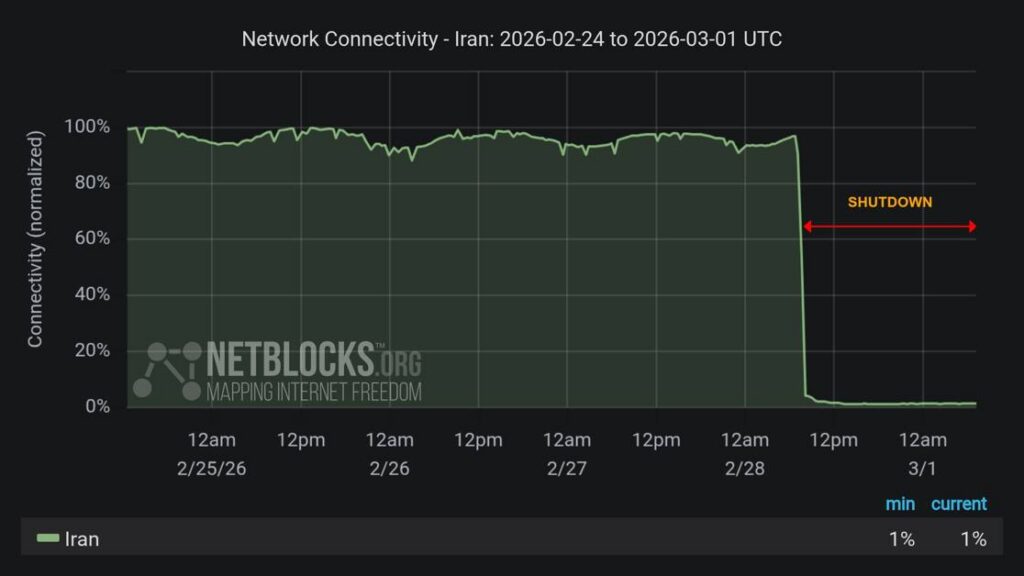
The Iranian government continues to use internet shutdowns or restrictions as one of its main tools of repression. Over the past years, whenever the internet has been widely cut off, it has usually coincided with violent crackdowns and direct shootings at protesters.With the outbreak of war, internet shutdowns were once again implemented on a wide scale, depriving millions of people of online communication. Even before the war, during the recent protests, internet restrictions had become more severe and prolonged than before, disrupting communication among activists for weeks.
Nevertheless, people have gained significant experience and skill in circumventing these restrictions. Tools such as V2Ray protocols and applications like Psiphon and Lantern are widely used, and whenever a connection is available, Telegram remains one of the most important communication platforms. Satellite internet has also become important for some activists, although access to it remains limited.
At the same time, the experience of these years has shown that no social movement can rely solely on the internet. The real foundation of any social movement is built through direct relationships, mutual trust, and real connections among people.
You have warned against the threat of royalists (who were a small minority in the protests) attempting to use them as a launching point for their own political movement. To what extent do you think they have been successful in this?
Monarchist currents have tried to present themselves as the only political alternative by using media platforms under their control and with the support of certain foreign governments. Reza Pahlavi and his supporters have actively attempted to position themselves as a transitional government and have received support from Persian-language media outlets and some Western governments.
However, the real social base of this current inside Iran is far more limited than its media presence suggests. Many of the people who participated in the protests essentially came to the streets against all forms of authoritarianism and do not see the return of monarchy as a solution.
In fact, a large part of Iranian society understands very well that replacing one form of authoritarianism with another is not a solution. For this reason, we continue to emphasise that the future of freedom in Iran lies neither in the restoration of monarchy nor in the continuation of other authoritarian structures, but in social self-governance and democratic forms of organising society.
From our perspective, the liberation of the people of Iran cannot be the result of projects imposed by foreign powers. Freedom can only emerge from the struggle and will of the people themselves, and turning social movements into instruments of state rivalries will ultimately harm society.
Is there anything else you think our readers should know about the situation in Iran, and do you have any ways by which they can provide support?
It is important to understand that the people of Iran are not merely passive victims of this war. Within Iranian society there are many social movements: workers, women, students, ethnic communities, and anarchist activists who continue to resist and organise under extremely difficult conditions. Iranian society is complex, multi-ethnic, and dynamic, and the struggle for freedom continues in many forms. What matters most is international solidarity among popular movements, not support for state projects or alternatives imposed from above.
Readers outside Iran can play an important role by amplifying and translating independent voices, organising solidarity events, and helping make social struggles in Iran more visible. The more these voices are heard, the harder it will be to silence them.
We are here. We continue to organise and resist.
Neither Mullahs, Nor Shah!
Woman! – Life! – Freedom!
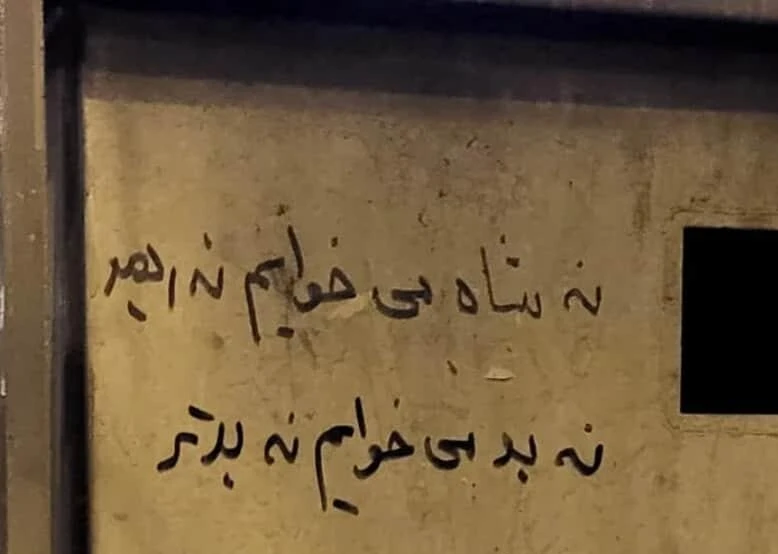
Top photo: “We want neither king nor (supreme) leader; neither bad, not worse”. Radical Graffiti. Other media: Anarchist Front on Telegram