Populist right government with cartel links re-elected amid surge in homicides
~ Semillas collective ~
For the past four years, the Costa Rican State has been led by a right-wing conservative government that has slowly intensified authoritarian measures against people, in alliance with regimes like Bukele’s El Salvador and Trump’s United States. It is led by the current president Rodrigo Chávez and his successor, Laura Fernández. They began their term in 2022, after their political party (now called Partido Pueblo Soberano PPSO) gained the support of a large percentage of the population through populism, manipulation, and the exploitation of discontent — discontent stemming from a long line of corrupt and neoliberal governments that failed to meet the needs of the population, especially those in the country’s peripheries.
Recently, as an electoral strategy, the government has made direct threats to suspend citizens’ rights and liberties, including due process, freedom of expression, and freedom of movement, among others, under the pretext that this will help bring “security to our communities” These measures would undoubtedly affect the most vulnerable people, not the leaders of the criminal organisations they are supposedly targeting. In the meantime, links between cartels and the Chávez regime have emerged over and over again.
On 1 February, the continuation of this narco-fascist government was re-elected by a majority for a second term in the national elections. Faced with this heartbreaking news, activist groups around the country are striving to formulate a plan of autonomous resistance and resilience. They will not defeat us.
Over the past four years, living conditions for the population have deteriorated. We have lived through the bloodiest four years in our recent history. Homicides, disappearances, kidnappings, and collateral victims of drug trafficking related violence have increased. Femicides have also increased significantly. People are afraid to leave their homes. The education, agriculture, health, and tourism sectors – one of the largest sources of income for people in rural areas – are facing severe crises.
Today, the government regularly attacks institutions and the press, persecutes activists, silences the opposition through the use of institutional power, and galvanises its supporters to intensify its violent tendencies. These are all historical signs of a dictatorship on the verge of being established. Costa Rica has not had an army since 1948, but the government has strong ties to cartels and criminal organisations that have access to military-grade weaponry. There is also a significant police force that is often used to repress movements, as in all nation-states.
Capitalist electoral democracy has once again failed to meet the needs of the people and has paved the way for fascism. Although there are checks and balances in the legislation that present obstacles to the Presidency carrying out its agenda, the power of these governmental institutions only extends so far, and it is unclear what that limit is.
We recognise this situation as part of a global trend toward fascism and we stand in solidarity with other peoples and their struggles. We consider it important to continue strengthening our communication channels and sharing knowledge and resources with all peoples who resist. We cannot destroy the monster of fascism without cooperation and mutual aid.
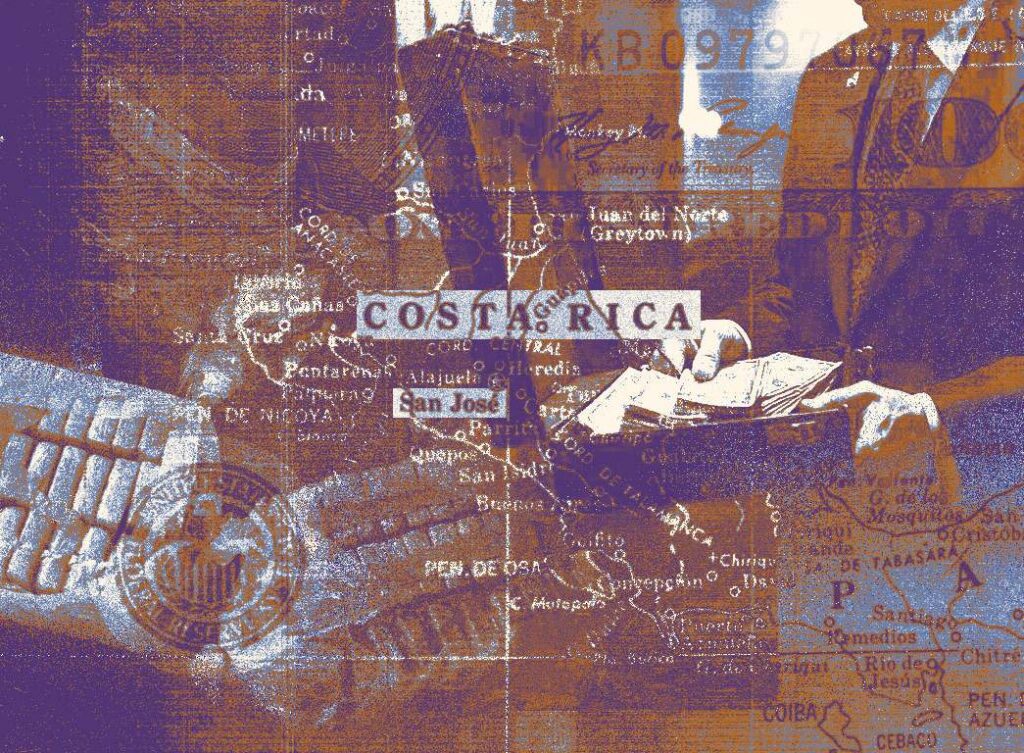
Image: InSight Crime CC BY-NC