Watching spycop Jim Boyling at the public inquiry, I felt like he had actually always held us in contempt
~ Helen Beynon ~
Earlier this month, the latest tranche of the public inquiry into undercover policing in the UK heard from police officer Jim Boyling, who spied on protest groups including Reclaim the Streets (RTS) and Earth First! in the late 1990s. Like other spycops questioned at the inquiry, Boyling was asked about the personal relationships he formed with female activists – a practice the Metropolitan Police has admitted was wrong, although many of the women involved feel this does not go far enough.
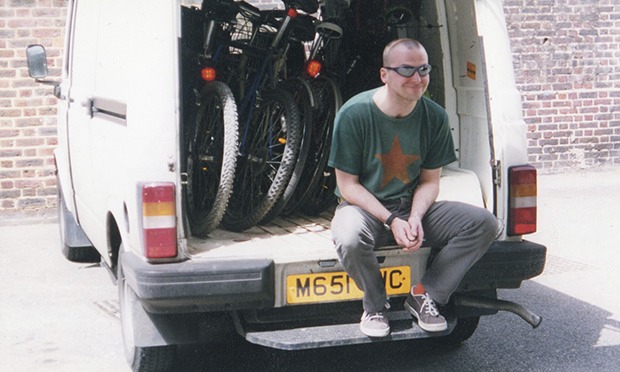
I knew Jim (Sutton, as he then called himself), and others involved with RTS, through my work with Road Alert!, which was an information hub at the heart of the British road protest movement. I remember him seeming often short tempered, and disgruntled with activists’ sometimes-ramshackle organising. Watching him being questioned, I felt like he had actually always held us in contempt; he also appeared to be completely unmoved by the impact he had had on the young women he deceived into relationships.
However, I have also been left with more questions than answers. It remains a failure of the inquiry that to date it has not formally recognised the infiltration of Earth First!. This means that we are not directly represented as core participants and unable to ask these questions.
Earth First! in the UK got underway in early 1992, a network of autonomous groups with a similar goal of taking direct action on environmental concerns. During the 1990s, many EF! activists put much of their energy into fighting destructive road building schemes. The first of the road protests, at Twyford Down, was the focus of several actions under the EF! banner.
For my book Twyford Rising, I interviewed a police officer who had engaged with policing the protests. At that point, he told me, the national police units who deployed spycops were not involved. This, it seems, possibly came several years later with the campaign against the M11 bypass in north-east London. Those protests were much larger than at Twyford, covering several streets of squatted houses and land, with a number of long-drawn evictions involving hundreds of people. The M11 campaign was also more overtly political and, by late 1993, it was clear that the road protest movement was an important part of radicalising a generation, with the environment and anarchist organising at its core.
It is not clear from Boyling’s evidence why the decision to infiltrate these protests was taken, when it actually began, and what happened in the four years between Twyford Down and his own deployment in 1996. Were there other spycops in our midst then, or were the police just focused elsewhere? It is highly unlikely that any evidence to answer these questions will come to light through the inquiry.
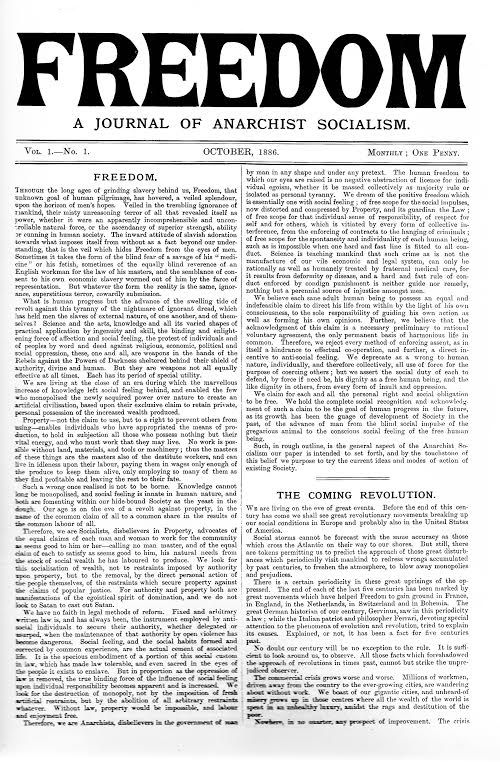
In his evidence Boyling referred to a pamphlet, circulated at a gathering for environmental activists, which mentioned the role of arson in covert sabotage of things like bulldozers and other ecologically destructive machinery. One anonymous publication is a tenuous reason to spend a lot of public money on infiltrating an activist group, and Boyling’s mention of it sounded like a means to justify his job. What it does not excuse is the lifelong damage he inflicted on several women.
Mention of the pamphlet also revealed how the British state struggled with Earth First! and its allies. Unlike the more traditional leftist, anti-fascist and anti-racist campaigns that the Special Demonstrations Squad had infiltrated up to that point, Earth First! organised without leaders or even central policies. Decisions on actions were taken by those involved, not by a central committee, and disagreements were common, but this was often seen as healthy debate rather than leading to factionalism.
The only creed was “No compromise in defence of the Earth” and there was a tacit agreement that no harm should be done to living things; in retrospect this sounds a bit wooly, but it meant that an action like the torching a digger would normally be rejected on the grounds that it would cause a pollution incident or initiate a wildfire. Had Boyling been reporting back to his masters in a truthful way, all this would have been mentioned.
The inquiry will hear further evidence this year and for those involved, especially the women who have led the work on exposing the spycops, it is going to be a tough one.