Coordinated settler attacks, backed by the Israeli army, are displacing thousands of villagers in the West Bank
~ Josie Ó Súileabháin ~
It was at night when the settlers arrived. Yusef Zawahreh and his wife ‘Ayidah al-‘Adrah were getting ready for bed when suddenly they heard dogs barking. Yusef, still in his pyjamas, went out to see what the fuss was all about. He came back to the house quickly and locked the door.
From the Sde Yonatan outpost, about 1.5km from the village of Khallet A-Sidrah in the occupied West Bank, 50 masked and armed Israeli settlers were making their way to the Palestinian community on 17 January 2026. Some were holding clubs while others were armed with flammable liquids and chemical weapons.
All of the residents of Khallet A-Sidrah managed to flee before the pogrom started. All except for Yusef and ‘Ayidah. The settlers started to surround their home and attacked it with stones, smashing all four of their windows as the couple hid inside their bedroom. Suddenly they couldn’t breathe, as pepper spray was deployed through the broken windows.
“Then they broke down the bedroom door,” ‘Ayidah tells ‘Amer ‘Aruri, a field researcher for B’Tselem. “They were in black with masked faces and were holding clubs, they attacked Yusef and knocked him down. They beat him badly for about five minutes, while he screamed in pain.”
Another three masked settlers entered the house and turned their attention to ‘Ayidah, smashing her head against the wall. “I was dizzy and fell down, and then they hit me with clubs.” They dragged ‘Ayidah outside where she saw her husband Yusef continuing to be beaten by the first settlers.
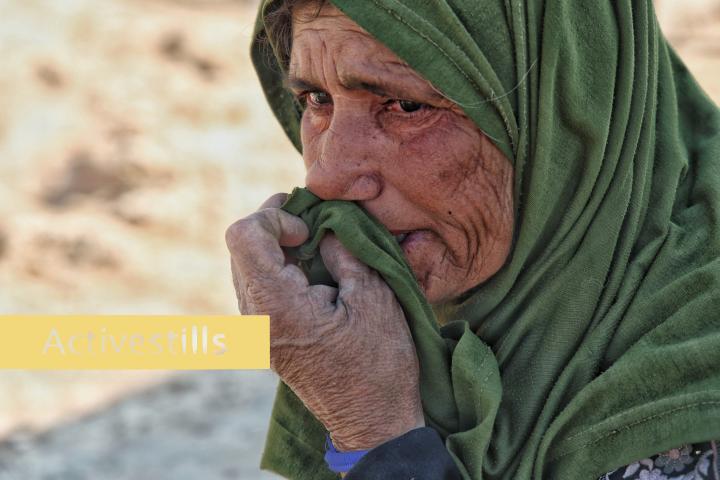
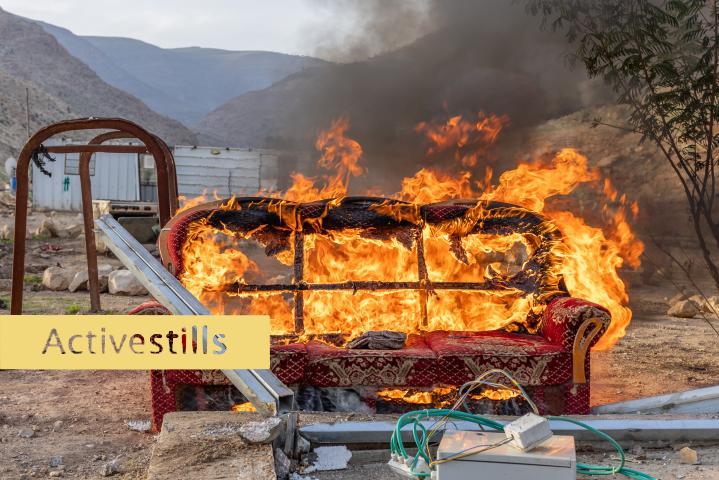
“They pulled my headscarf off,” ‘Ayidah recalls. “It hurt me deeply, as a religious Muslim woman, to have strangers expose my hair.” They continued beating her for another three minutes and then torched the couple’s home with flammable liquid, as well as three other neighbouring homes.
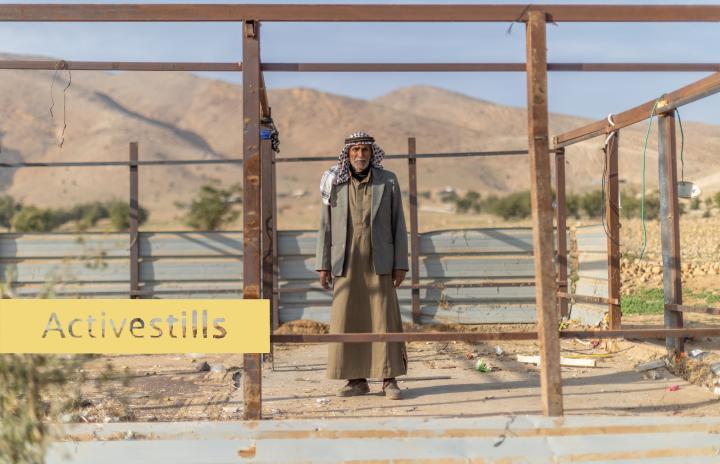
It was only when flashlights appeared from the neighbouring village of Mikhmas that the settlers decided to flee. Several young men found Yusef and ‘Ayidah outside of their burning home and immediately took them to a hospital in Ramallah.
It was only after the settlers had left that the Israeli army arrived. They took some pictures of the damage and then quietly left, back into the darkness.
‘Shaping Operations’
Ten days after the attack on Khallet a-Sidrah, Palestinian journalist Basel Adra witnessed “one of the most devastating pogroms on the Palestinian communities of Masafer Yatta in recent memory,” as residents from three villages were attacked simultaneously by settlers, coordinated by the Israeli army.
Those living in Al-Fakheit, Al-Tuban, and Al-Halawa all reported that settlers were stealing livestock, attacking families and starting fires. In one case, a woman and her children were locked in a shed when a group of settlers attempted to set fire to the structure. Ambulances were blocked and the army watched as approximately 300 sheep were stolen from eleven families.
Basel himself was restricted from entering and passing the flying checkpoints set up to protect the settlers, who attempted at one point to attack an ambulance driver outside of Al-Halawa.
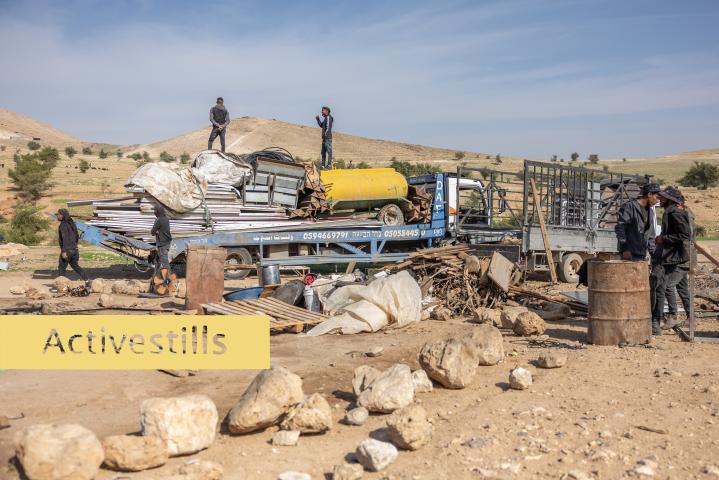
Since 2022, the number of illegal settlements and outposts have risen by 50%. Following 7 October 2023, settlers have violently dispossessed 44 Palestinian communities in the West Bank with a total of 2,701 people removed from their homes. In January and February 2025, more than 40,000 people were forcibly displaced by the Israeli army from refugee camps in Tulkarem and Jenin.
The systematic nature of what is termed as ‘settler violence’ can be summed up by Maj. Gen. Avi Bluth, Head of Israeli Army Central Command. “Every village and every enemy must know that if they carry out an attack against the residents (settlers), they will pay a heavy price,” Bluth announced. “They will experience a curfew, they will experience a siege and they will experience shaping operations.”
‘Shaping operations’ is an Orwellian term for the Israel government’s policy of physically re-engineering areas in the West Bank where Palestinian resistance has emerged. It means supporting settlers with pogroms, destroying olive trees and homes, building fences, checkpoints and destroying the land with bulldozers.
One of the countless examples of this include the assault of Palestinian journalist and Oscar Academy Award winning co-director of ‘No other land’; Hamdan Ballal al-Huraini. On the evening of 24 March 2025 as Hamdan was preparing the Iftar meal of Ramadan, settlers descended on the village of Susiya and began to attack it’s residents.
Hamdan went outside to film using his phone but then returned home as the violence escalated. “I was afraid for my family who were alone in the house. So I ran home. I shut the door and stood outside to protect them. They approached me,” Hamdan tells +972 Magazine, “I kept filming with my phone.”
Two Israeli soldiers raised their automatic weapons at Hamdan, as the settler Shem Tov Lusky walked behind him and hit him on the back of his head. “I fell to the ground,” Hamdan recalls, “my phone fell from my head.”
He was beaten on the floor by Lusky at least 10 times to the head at gunpoint. They left Hamdan bleeding on the floor in front of his family when he was approached by an Israeli police officer. ‘Do you need help?’ Hamdan was asked by the cop. Instead of calling for an ambulance, the Israeli army arrived again and detained Hamdan and two other residents of Susiya.
‘No future’
The tactic is simple but the consequences are deadly. First an outpost is set up close to a Palestinian village by settlers with the protection of the Israeli army. For those living in Area C of the occupied West Bank, only the Israeli authorities have the power to approve structures built within the area, sometimes under the guise of building a military base.
Then the settlers come with their livestock, using grazing as a means to overrun the Bedouin shepherds who live on the land as an attempt to seize the lands. Either this provokes a response from the residents or the settlers later claim to the authorities that their sheep has been stolen. According to the Israeli NGO Kerem Navot, 14% of land in the West Bank has been seized in this way since April 2024.
For the village of Ras ‘Ein al-‘Auja, the process was a slow but systematic. On 8 January 2026, Israeli photojournalist Avishay Mohar documented the forcible displacement of 26 families from the West Bank village, considered one of the largest shepherding communities and last remaining Palestinian communities in the north Jericho region.
Naif Ghawanmeh, a former resident of Ras ‘Ein al-‘Auja described the process to Al Jazeera, amounting to “two years of psychological pressure at night,” he said. “If you sleep, the settlers will burn your house.”
In February 2024, five settlers from a neighbouring outpost came to the village of Ras ‘Ein al-‘Auja armed with clubs, knives and firearms to chase the Palestinian shepherds away. They claimed that the shepherds has stolen their sheep and came accompanied by Israeli police and occupation soldiers. The authorities shot live rounds into the air and the settlers stole the livestock owned by Ahmad Rashaidah.
While this was happening, the police arrested Ahmad’s brother Muhammad, handcuffed him and took him away to a military base where he was interrogated for four hours. Meanwhile the settlers had already torn the identification tags from the sheep and had taken them away. The process is repeated again and again until it moves beyond farce and into the realm of systematic erasure.
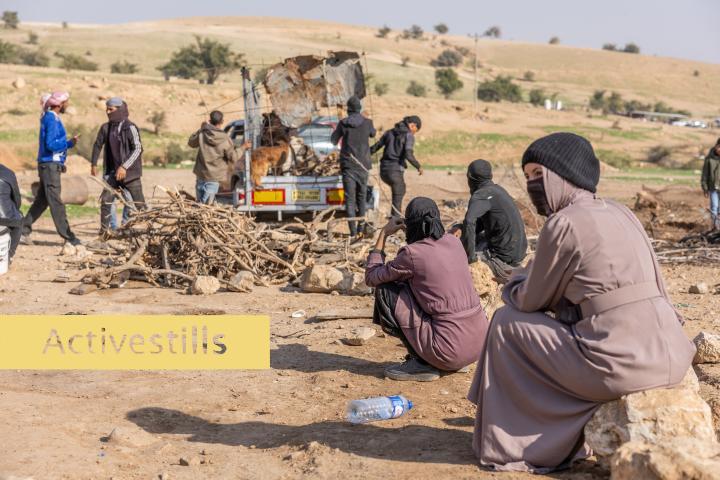
By the end of 2025, a settler had entered Ras ‘Ein al-‘Auja with a herd of goats and walked between the homes, lighting a fire on the land. When solidarity activists called the police, they were themselves predictably detained under the false testimony of a settler. By the afternoon, the entire community was raided by settlers, border police and the army.
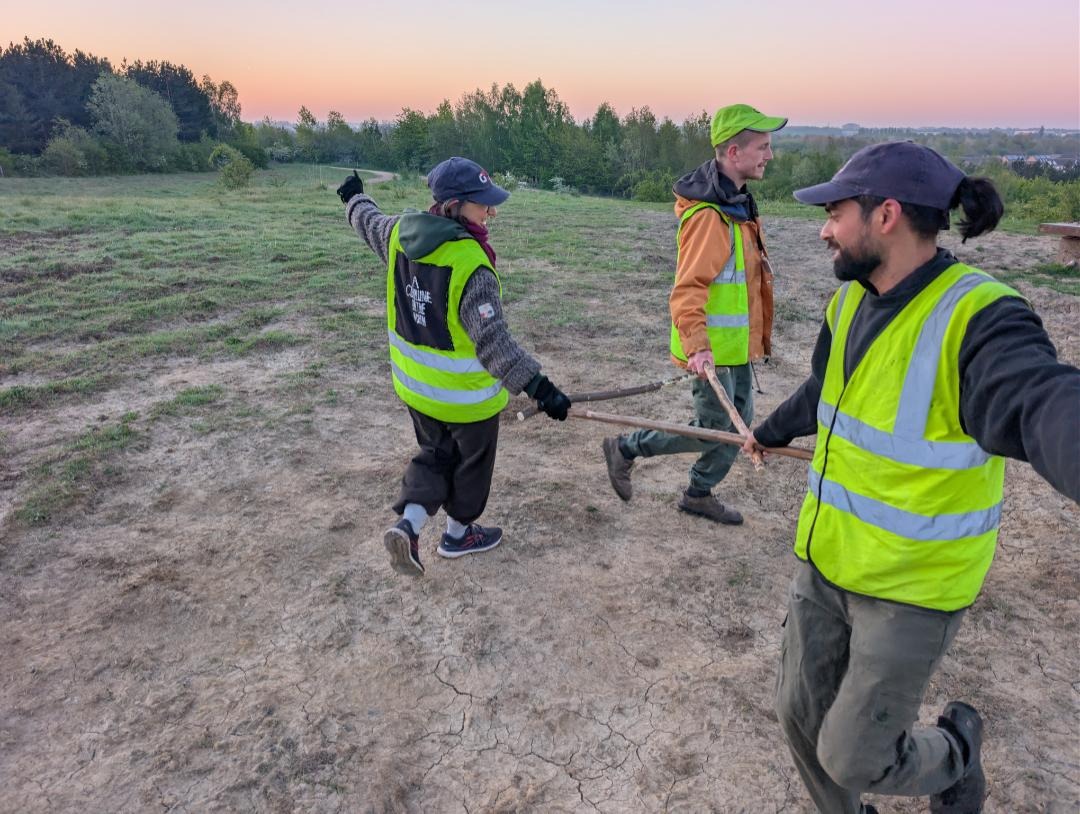
Protective groups such as Looking the Occupation in the Eye attempt to document and physically block the harassment, theft, home invasions and daily intimidation tactics used by settlers. Children were harassed on their way to school, land was destroyed and power cables cut by settlers riding on tractors. Water tanks, vital for keeping sheep, were emptied.
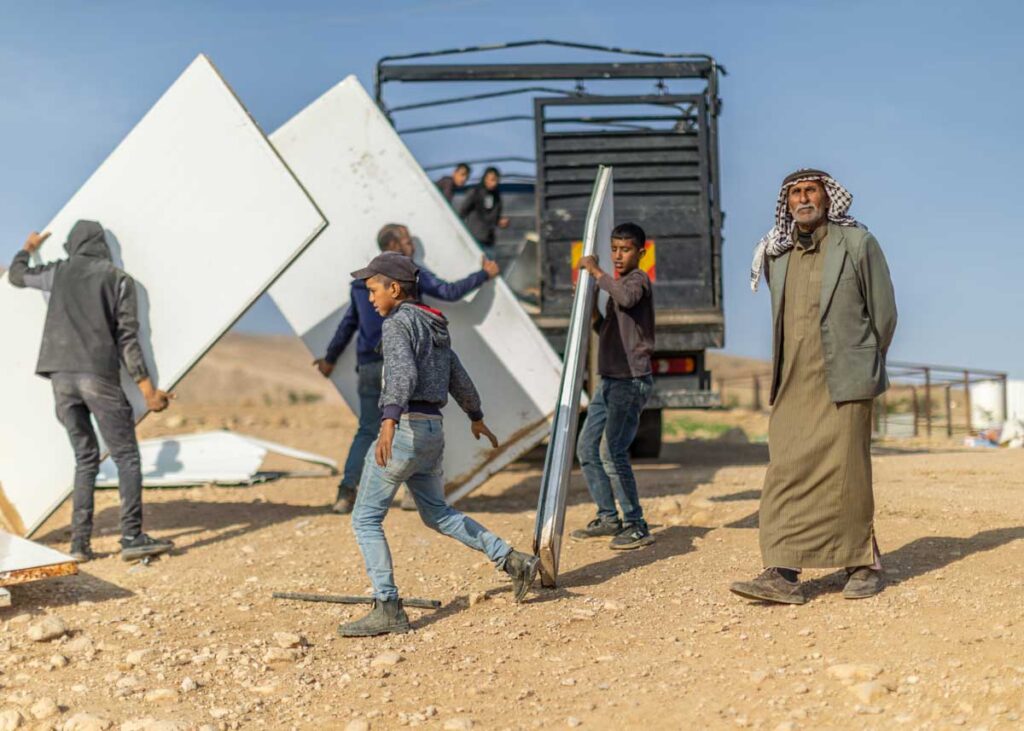
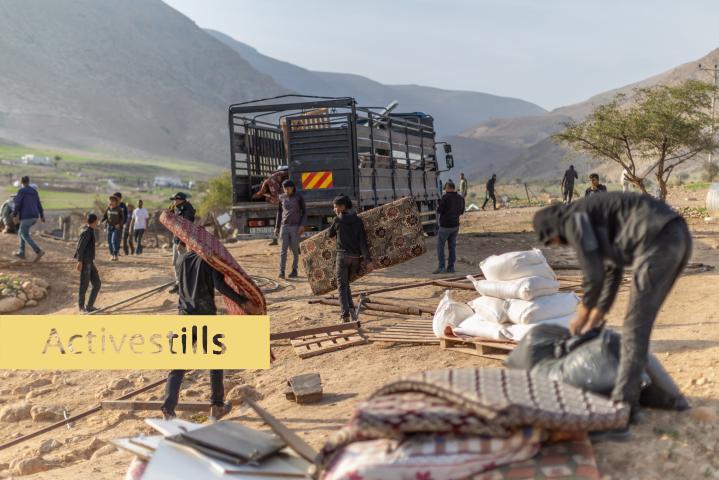
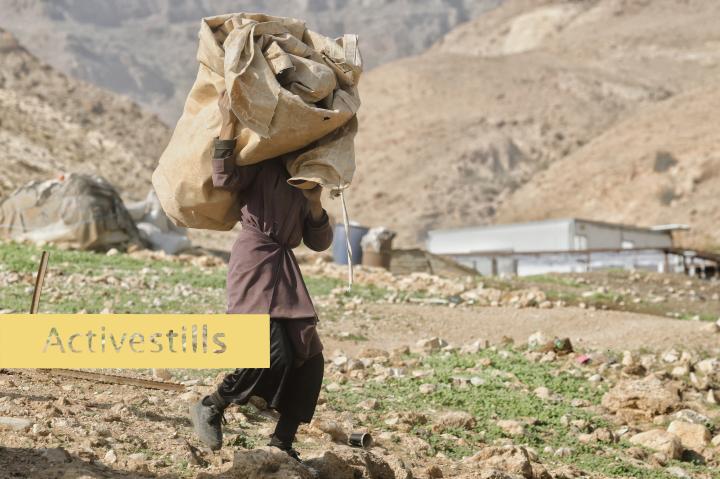
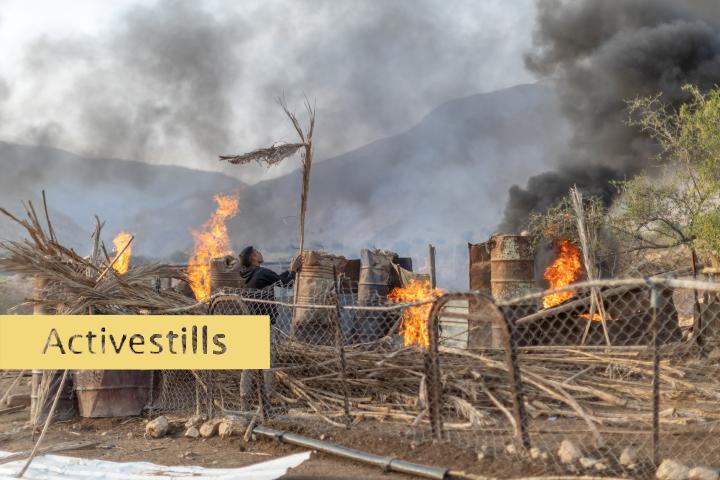
By the end of January 2026, residents were dismantling their own homes and setting fire to what was left – to leave nothing behind for the settlers who had forcibly displaced them from their lands. “Many are becoming refugees for the third time,” reported Oren Ziv for Active Stills. “after initially being displaced from the Naqab in the 1948 Nakba, and in 1967 from the southern West Bank and again from the Jordan Valley.”
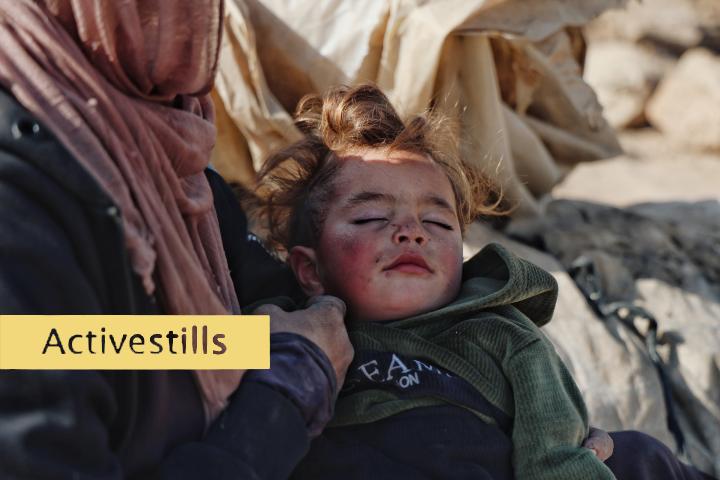
“There is nothing harder than dismantling your own home,” former resident Husseini Rashid told +972 Magazine. “You lost,” the settlers had told them before they left. “Wherever you go, we’ll come. There is no future.”
Working collectively
On 21 January 2026, three journalists were riding together in a vehicle operated by the Egyptian Committee for Gaza Relief to document a newly established displacement camp in central Gaza. Anas Ghoneim, Abdul Raouf Samir Shaat and Muhammad Salah Qasht were riding together along the so-called Netzarim Corridor when their car was targeted by an Israeli airstrike, instantly killing the three journalists.
Two of the bodies of these Palestinian journalists were taken to the Al-Shifa hospital where the scene of grieving was captured by Yousef Zaanoun for Active Stills. Their names join the long list of journalists directly targeted by the Israeli military since 7 October, estimates of which range from between 200-300 media workers.
It has been constantly reported that international journalists cannot enter Gaza but this in itself is a lie. Shaat was a regular contributor to Agence France-Presse (AFP) and filed regularly for U.S. broadcaster CBS News, his images of the genocide in Gaza reached an international audience. It seems what we mean by ‘international’ is not Palestinian.
In the days following 7 October, Israel’s communication minister Schlomo Karhi informed both the New York Times and Reuters that freelance journalists in Gaza had prior knowledge of the attacks on southern Israel, labeling them “terrorists disguised as journalists.” While Karhi told western media organisations they were not targeting journalists, he also admitted they could not “guarantee the safety of their journalists in Gaza.”
In order for those working on the frontline of systematic erasure to survive, resources must be shared. This collective spirit can be seen with Activestills, “a group of activist photographers who use photography to serve the struggle for liberation and decolonization in Palestine/Israel,” as the Palestinian journalist Ahmad Al-Bazz described the collective to Jewish Currents in 2022.
“We established a collective,” Ahmad says, “because working together is more powerful than working individually. It’s a horizontally structured collective. There is no boss, no-one assigning tasks.” Both Oren Ziv and Avishay Mohar, their reporting a vital contribution to this investigation, are members of the Active Stills collective.
For the production of ‘No Other Land’, a collaborative effort between Hamdan, Yuval Abraham, Racheal Szor and Basel Adra, the documentation is a fight against erasure. It is a permanent record of destruction.
“In one scene from the film,” Hamdan tells +972 Magazine, “the mother of the late Haran Abu Aram – a Palestinian resident who was shot and paralyzed by Israeli soldiers while they confiscated his generator – laments the constant presence of journalists and cameras in her makeshift home, coming to photograph her disabled son…”
‘They take photos’ she says, ‘but what help are they actually offering?’
“The film is our attempt to answer that demand: to take the camera, and the years of documented protests, demolitions and violence, and do something to change the lives of the people of Masafer Yatta,” Hamdan said.