Solidarity begins where we acknowledge that our withdrawal and escapism has consequences for others
~ Lola, Barrikade ~
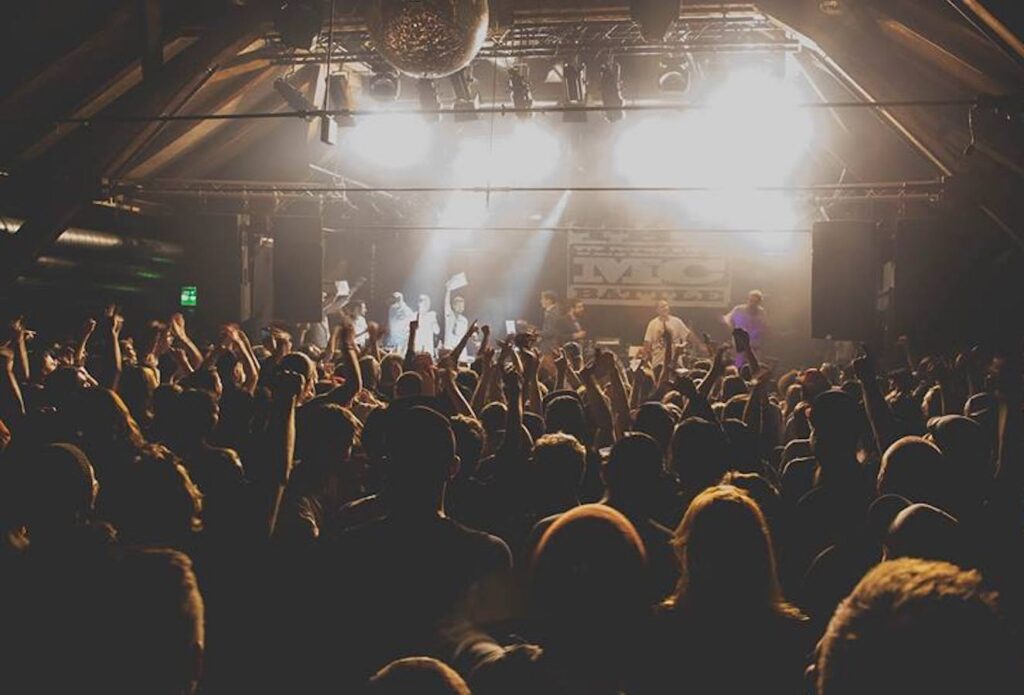
Partyvism is not a music genre, not a subculture. It’s an attitude. The conscious or unconscious practice of suppressing societal tensions through constant partying, scene consumption, and escapism, while minimising or completely outsourcing political participation. Partying is experienced not as a supplement, but as a substitute for engagement, organisation, and responsibility.
As the rightward shift accelerates, militarisation is ruthlessly pursued, authoritarian policies become mainstream, crises escalate, people are systematically exploited and slaughtered for resource colonialism, and genocides continue or are relativised — a segment of the scene withdraws. Partyvism is not a harmless side effect; it’s dancing rather than fighting, intoxication rather than solidarity, the scene rather than organising.
The problem isn’t partying itself. The problem is partying as a substitute activity. Partyvism transforms collective powerlessness into short-term ecstasy and sells it as freedom. While others use all their resources to build structures, mitigate repression, support those affected, and fend off attacks, a large segment remains on the margins, often politically informed, but rarely practically involved.
This isn’t about condemning partying. Joy, physicality, intoxication, and community are legitimate needs. Many people are exhausted, overwhelmed, psychologically burdened, or simply preoccupied with surviving their daily lives because they are oppressed by the system day after day. Maximum participation cannot be demanded of anyone at all times. Those who ignore this reproduce precisely the performance-driven and exploitative logics that helped create these crises.
But: Those who systematically stay out of it leave the field to others and indirectly profit from their work. Partyvism shifts responsibility downwards and risks outwards. It thrives on others taking the fall. No one owes permanent activism. But there is a difference between taking breaks and permanently withdrawing. Between self-protection and political complacency.
The illusion that one can simply stay out of it is deceptive. As if one’s own body, one’s own scene, or the club were an apolitical space. But the shift to the right doesn’t stop at the door, repression doesn’t bypass dance floors, and political decisions affect us all, whether we’re partying or not. Solidarity cannot be postponed or relegated to after-hours parties.
This is how invisible hierarchies emerge: Some organise, others consume. Some slowly burn out. This isn’t subculture; this is political division of labour without consultation, always at the expense of those who stay.
The question isn’t whether we’re allowed to celebrate, but what for. Whether spaces are merely places of distraction or places where relationships are forged that will sustain us when things get serious. Whether pleasure is connected or becomes an excuse.
Solidarity also means asking ourselves: Who keeps the structures running? Who pays the price for political passivity? Who can even afford escapism?
Not everyone has to do everything. But no one is completely uninvolved. Solidarity begins where we acknowledge that our withdrawal has consequences for others. That our escapism generates real costs and creates real imbalances: Some keep struggles going while others consume. Some burn out while others dance. This is rarely malicious intent, but it weakens movements and deepens isolation.
Machine translation