One day people will look at today’s global Apartheid the way we look at American Segregation
~ Joseph Chen ~
Whenever I turn back to the history of Jim Crow, my teeth clench with rage.
What enrages me is not only the humiliation, dispossession, and brutal degradation Black people endured then, but also the fact that, in the twenty-first century, so many people can denounce that history with perfect moral confidence while remaining blind to the Jim Crow still standing before them—now clothed in different garments and shielded by different laws.
From the moment I set foot on this land, I have come to realise that I am still in the land of Jim Crow.
To enter this country is to pay a price others are never asked to bear: tuition several times higher than what locals pay, admissions policies that openly discriminate against us, employment fenced off behind layer after layer of restrictions, and our right to remain suspended under the constant threat of expulsion, entirely dependent on the shifting mood of those in power. Our fate is held captive by a sheet of paper, a visa stamp, and a line drawn on a map.
Is this natural?
Again and again, people repeat the same refrain: our presence on this land is not a right but a privilege.
Yet I cannot help wondering: what a Black person under South African apartheid, stopped at the boundary of a “whites-only” area, would have thought upon hearing those words.
Why is it that some people stand on a piece of land and call their presence there a right, while others, standing on the very same earth, are told their presence is merely a tolerated privilege?
Is it because different blood runs through their veins?
Is it because of the colour of their skin?
Because their parents hold different documents?
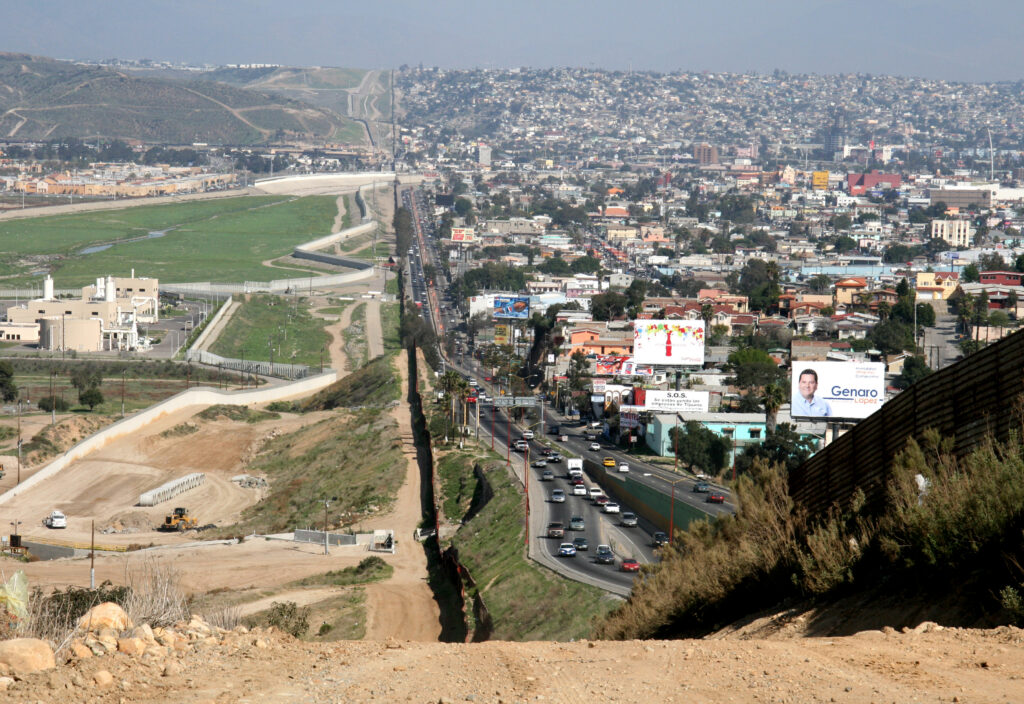
Because they happened to be born on the other side of an imaginary line?
Whether a person is accepted or rejected, respected or degraded, permitted to stay or ordered to leave, granted a future or stripped of one—none of it is decided by character, effort, or contribution. Instead, it is dictated by conditions they did not choose and can hardly change.
Birthplace. Nationality. Parentage. These labels, dropped upon a human soul before it has even learned to speak, are packaged as the “natural order,” governing the trajectory of an entire life.
Is this not another form of caste?
Is this not another form of segregation, polished by modern law and perfumed with the language of order?
Those who imagine that they naturally possess a land merely because they were born on it must confront a deeper question:
Can land truly belong to anyone?
Almost everything owned in this world is shaped by those who labour, then passed from hand to hand through exchange until it reaches you or me.
Land alone stands apart.
No human hand made the land. It existed before the first human breath, and will remain long after the last human empire has fallen.
Yet human beings have mastered one art above all others: seizing what belonged to no one, declaring it belongs only to some, and then proclaiming that others, though born into the same world, are unworthy to enter.
Claiming ownership of land is as absurd as claiming ownership of the sky, the air, sunlight, or time itself.
Yet this absurdity has been enthroned as common sense.
Just as Jim Crow was a historical monstrosity that lasted only a few generations, today’s immigration systems and deportation regimes are not sacred facts of nature. They are not ancient. They are not sacred. They are not natural. They are historical constructions, shaped largely in the modern age and hardened by the politics of fear. And yet this system—neither old nor holy nor inevitable—has been packaged, through generation after generation of political indoctrination, as something beyond challenge, beyond doubt, beyond touch: an iron law of the world.
The place where I was born does not belong to me simply because I was born there, and the place where I stand now does not belong to you simply because you were born here.
Land belongs to no one—and to everyone.
It should not be forged into a weapon to exclude others. It should not be used as an excuse to humiliate the foreigner. It should not become a tribunal before which human beings are judged worthy or unworthy of dignity, opportunity, and the right to be fully human.
One may feel powerless before an institution of discrimination, especially when it appears deeply rooted in the world. Yet measured against the long arc of history, the border system we have built is no more solid than the “Southern way of life.”
Every human being is born with a soul un-corrupted by prejudice; the oppressor must labour to poison it, whereas justice need only wash away the lie.
One day, people will look back on our age the way we now look back on Jim Crow.
They will be baffled that so many could cry out for equality while accepting a world in where dignity is rationed by nationality.
They will be horrified that so many, fully aware of the evil of discrimination, nevertheless tolerated institutions that stripped people of opportunity solely because of where they were born.
They will be disgusted that such naked injustice survived so long beneath the respectable disguises of “sovereignty,” “order,” and “legality.”
Just as we mark one era of the American South as the “Jim Crow era,” they may well mark the era in which we now live as the “Global Apartheid Era.”
But I also believe this.
History does not belong forever to those who build walls.
In the end, history belongs to those who dare to ask why the walls were there at all.
It belongs to those who refuse to baptise injustice as normal.
The ones who will light this darkened world are coming.
They will speak for all who, in this age, are crushed by borders, humiliated by status, and hunted by the institutions designed to expel them.
They will tell the world that human dignity must not be determined by nationality; that human worth must not be judged at a border; that human freedom must not be fenced in by birthplace.
And when that day comes, the barriers that seem so unquestionable now will be nailed, like Jim Crow before them, to the pillar of history’s shame.
Image: Wikimedia Commons