Truncheons and voluntary price caps are only appearing now because people have refused to pay what supermarkets demand
~ Nic Beuret ~
Last year Iceland, one of Britain’s big budget supermarket chains, reported underlying profits of £317.6 million off the back of £4 billion in sales. Its CEO, Tarsem Dhaliwal, took home a tidy pay packet of £3.8 million. Iceland is privately owned by Labour peer, Baron Walker of Broxton, so his take home is undisclosed. But as his family have a controlling stake in the supermarket chain, and an estimated net worth of £265 million, you can bet it’s not pennies.
Lord Walker is also the government’s cost of living tsar, and seems judicious in pursuing his brief. Which is why he has submitted a private members bill to the House of Lords to enable supermarket security guards to be armed with truncheons and pepper spray to combat shoplifters, and for them to be given additional police-like powers.
We can contrast this with Chancellor Rachel Reeves’s already-aborted ‘effort’ to institute price controls for food essentials in supermarkets. As a timid policy it never got close to actual price controls on essentials. The plan was to offer a delay or easing of regulation on supermarkets in exchange for voluntary price caps. But even this meek plan was scuppered when supermarket bosses, who collectively earn around £35m a year, declared the idea preposterous and unworkable. In the end we’ll get a few tariffs dropped on imported food and free bus rides for kids over summer.
Why this sudden concern with the cost of living? After all, it’s not too long ago that senior politicians and bankers were telling us all that we would just have to get used to living with less.
Where Reeves momentarily looked like she might sprinkle a little social democracy over neoliberal Britain’s carcass, Lord Walker was far more explicit – it’s because of shoplifting.
Direct action, once again, gets attention and the goods.
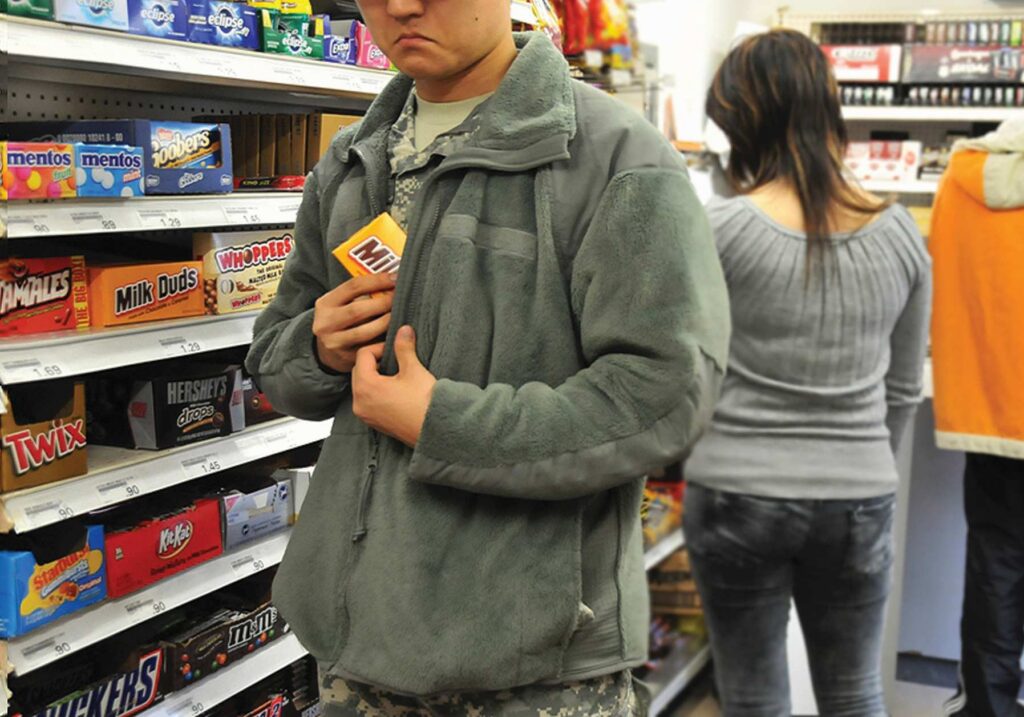
Britain is in the grip of a shoplifting “epidemic”. In 2025 alone there were a reported 530,000 incidents, 50% up from pre-COVID pandemic figures. This is around 600 incidents every hour, and likely a massive under-estimate as many businesses don’t bother reporting thefts. The Association of Convenience Stores reports that their own surveys suggest the figure is over 6 million each year. Some surveys put the figure even higher, at 8 million, with at least one in every six people shoplifting in any given year.
High inflation, increased rents and bills, government austerity and stagnant wages have all combined to create a profound cost of living crisis. And so it’s not surprising theft has increased; it’s an organic response to increasingly unaffordable lives. There is one overlooked factor in the cost of living crisis though, which will only get worse – climate change. Shoplifting not only price-controls from below but is a nascent form of climate activism.
Climate change has increased the cost of food essentials, driving up prices by close to 15% per year for some. The ECIU has found that inflation rates for butter, beef, milk, coffee and chocolate were six times higher than the 2.6% average inflation rate for all other food and drink. And while they make up just 11% of the average shopping basket, they account for 40% of all food inflation. Why are they increasing in price so rapidly? Climate change.
We’ve long known climate change would negatively impact crop yields and increase prices through droughts, floods, pest infestations, diseases and other disasters. But as it creeps in alongside other factors, we often don’t ‘see’ it. Worse, while there are more obvious direct connections between drought and higher cereal prices, climate change drives up prices in other ways as energy and operating costs increase, workers become less productive due to more extreme temperatures, and everyday breakdowns and disruptions escalate. The inflationary impacts of climate change will only increase from here on out. While we will see shortages on British shelves in the next few years, in the global South we are already seeing an increase in malnutrition and famine. The climate squeeze is only getting started.
Truncheons and price caps are two top-down mechanisms to try to control the mob – the stick and the carrot. But they have to be understood to come after people have already refused to pay the price supermarkets demand of them.
While there are organised thefts, largely for resale (“organised crime”), shoplifting hasn’t yet been politically collectivised as happened in Italy in the 1970s or England in the 1800s. In the former, political militants organised “proletarian shopping” actions where they would descend on-mass into supermarkets and fill their trolleys to take what they needed. This was part of a broader movement of price-controls from below – of “auto-reduction” of bills, train and bus fares, and rents. In England in the 1800s, crowds, often led by women, would beat and rob merchants accused of unjustifiably increasing food prices, rioting to ensure “fair” prices.
There have been collective pushes for price controls in Britain over the past few years, most notably around rents through renters’ unions, and over utility bills with the Don’t Pay campaign being the most prominent effort. Shoplifting is not viewed politically in the same way as refusals to pay rent or electricity bills, and shoplifters are rarely defended as class combatants. But we should not only see shoplifting as a broadly legitimate form of social refusal, but in a world of escalating climate inflation, as a form of environmental protest, where the front line is not a power station or oil well but how climate change impacts us right now, in the most immediate of ways.
Image: Lee, Seung bin on Flickr CC BY-NC-ND 2.0