Corporate Watch briefing warns of “two‑tier” system where civil injunctions pre‑empt dissent and criminal law punishes persistence
~ Scott Harris ~
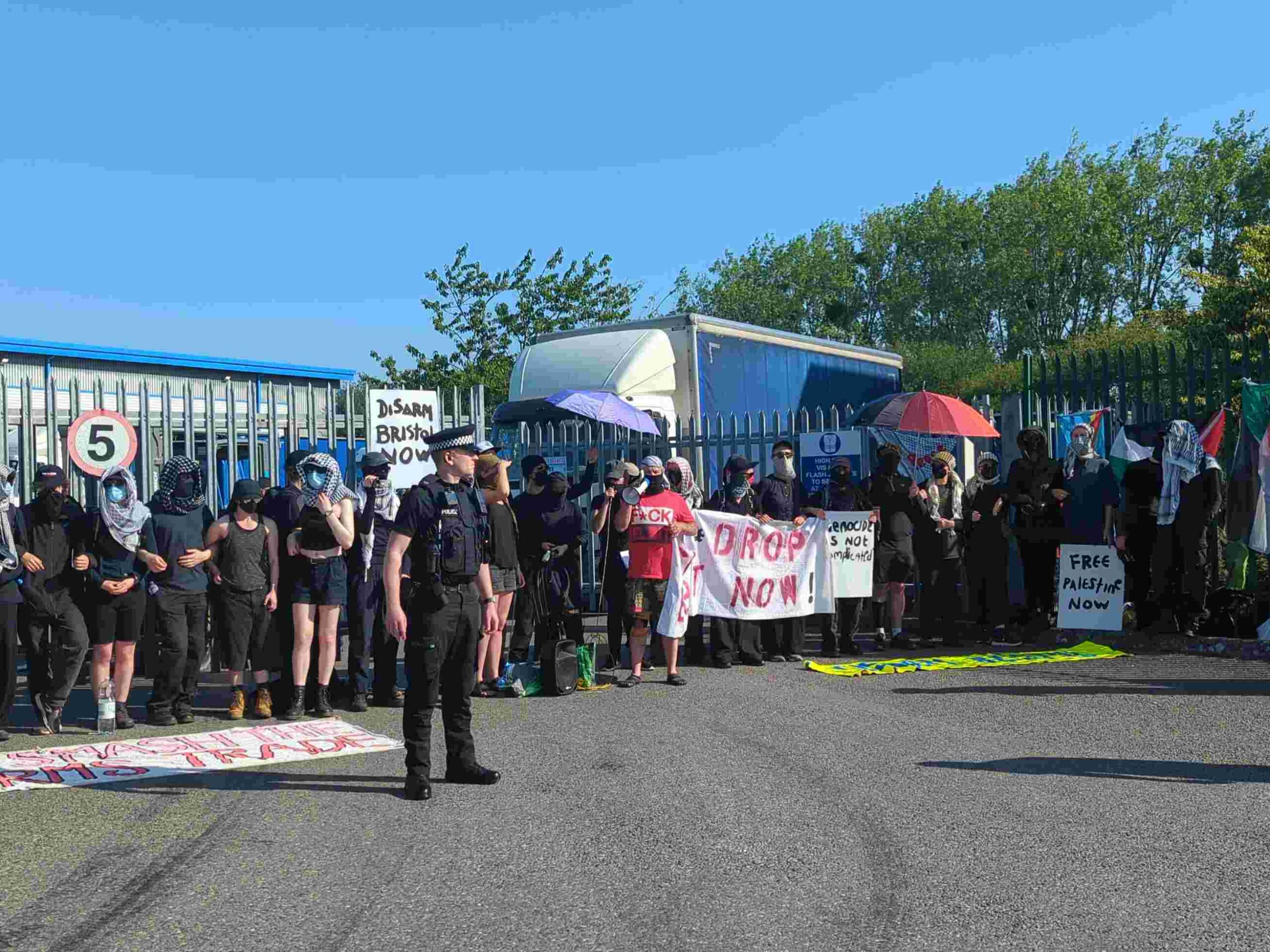
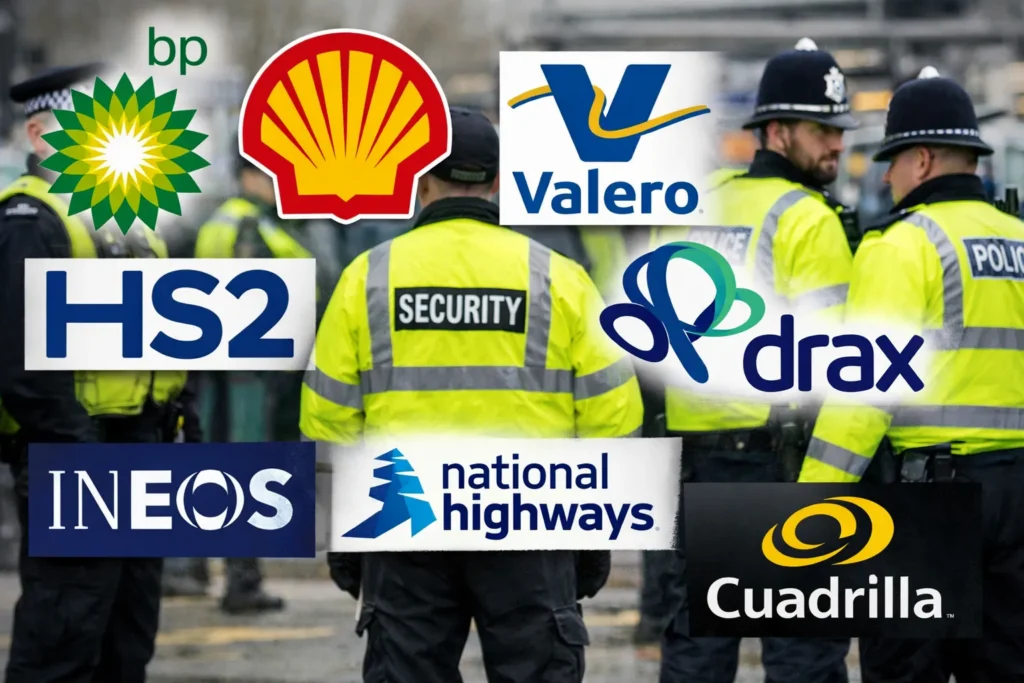
A briefing from Corporate Watch maps an accelerating trend: private companies are turning to civil injunctions – backed by recent legislation – to keep demonstrators away from sites of protest against the corporate drivers of climate change, animal testing, and militarisation.
The report notes the use fo injunctions has “increased dramatically” as corporations exploit a legal framework that allows courts to order even “persons unknown” to stay away from a defined area, with police acting as the enforcement arm.
Data released by the BBC shows that more than 400 campaigners have been named in orders covering over 1,200 locations, from oil terminals and gas depots to racetracks across England and Wales.
Sarah Benn, a retired GP from Birmingham, was jailed for 32 days after repeatedly breaching a High Court injunction that barred her from a grass verge outside the Kingsbury oil terminal. She says the police could have arrested her for a standard obstruction offence, but the civil order meant imprisonment.
A breach can attract up to two years’ imprisonment or an unlimited fine, which exceeds the maximum for comparable criminal offences. Because the initial hearings are civil, there is no legal‑aid support, leaving activists to shoulder potentially huge costs.
Barrister Adam Wagner has described the situation as “triple jeopardy”: a single act of protest can lead to a criminal conviction, a civil contempt order, and a bill for the company’s legal costs. Legal scholars warn that the “persons unknown” wording makes it possible to prosecute anyone who inadvertently crosses an exclusion zone, even if they were unaware of the order. The threat of such blanket orders is prompting activists to map injunction zones and issue guidance on how to avoid accidental breaches.
Corporate Watch places today’s injunctions in a historical line that begins with the 1983 Greenham Common women’s peace camp, where authorities first used court orders to limit protest activity. Subsequent campaigns – anti‑road blockades in the 1990s, the animal‑rights campaigns of the early 2000s, and more recent climate actions such as Extinction Rebellion and Just Stop Oil – have each been met with increasingly broad civil orders.
The legal landscape has been reshaped by a series of statutes: the 1997 Protection from Harassment Act, the 2005 Serious Organised Crime and Police Act, the 2022 Police, Crime, Sentencing and Courts Act, and most recently the Public Order Act 2023, which gave the Home Secretary power to attach arrest warrants to injunctions and allowed police to intervene before a protest even began. Together they create what Corporate Watch calls a “two‑tier” system in which civil injunctions pre-empt dissent and criminal law punishes persistence.
As the number of injunctions climbs, activists argue that the British public’s right to assemble – protected under Articles 10 and 11 of the European Convention on Human Rights – is being eroded by a growing alliance of corporate interests, the state and the police.
If the trend continues, warns the briefing, the quiet, legally‑driven suppression of protest could become a permanent feature of the UK’s public‑order regime